Bare Beans Raises $2.8M to Scale Ready-to-Eat, Minimally Processed Legumes for High-Protein Shoppers
Bare Beans, a minority- and women-owned Idaho startup, has closed a $2.79 million seed round from Raven Indigenous Capital Partners and launched five varieties of preservative-free, ready-to-eat beans online. The move targets U.S. shoppers who want protein and fibre without the ultra-processed profile of many plant-based meat alternatives—and without the time cost of dry beans or the additives common in canned legumes.
Founder and CEO Michelle Huff, a member of the Turtle Mountain Chippewa tribe and a produce-industry veteran, argues retail beans have long offered only two bad options: dry beans that take hours, or cans cooked inside the tin with salt, firming agents and preservatives. Bare Beans’s third path rehydrates beans overnight, cooks them in kettles, rinses and drains them, then packs them cold in vacuum-sealed packs with no seasonings or preservatives. The company says the process preserves shape and fresh-cooked aroma, with about 90 days of refrigerated shelf life and a year in the freezer.
Vertical integration from Idaho farm to pack
Most of the legumes—chickpeas, black, gravy, navy and red beans—are grown on the family’s Idaho farm alongside local partners. Huff’s husband, a fourth-generation farmer, helps select varieties for taste and texture; the company also owns the cook-and-pack facility and runs its own food-safety protocols rather than relying on a co-packer. Earlier retail tests used pillow packs with shorter shelf life; investment in vacuum sealing extended life and quality enough for a broader e-commerce push, with supermarket expansion next.
Foodservice already proved the model. Bare Beans supplies restaurants and institutions via Sysco’s Cutting Edge Solutions programme and US Foods, appears on Sizzler menus, and provides pinto beans for Bitchin’ Sauce’s Costco dip range. Huff told trade press the channel grew 300% in its first post-pandemic year and 20–25% annually thereafter. Raven’s Paul Lacerte said the firm invested because Huff had already built revenue and national distribution from the family farm—rare for Indigenous founders, who receive a vanishingly small share of U.S. venture capital.
Protein, fibre and the GLP-1 basket
The consumer timing is favourable for minimally processed legumes. Innova Market Insights data cited in coverage shows U.S. weight-loss medication use rising from 10% in 2024 to 18% in 2025, with those consumers eating roughly 40% more protein and 30% more fibre. Shopper surveys also show strong willingness to swap meat for beans at least weekly on health and cost grounds, while ultra-processed foods face rising distrust. American Heart Association guidance further elevates legumes, nuts and seeds as preferred plant proteins.
For CPG and retail buyers, Bare Beans is less an alt-meat story than a cold-chain convenience play: farm-controlled varieties, kettle cooking, vacuum packs and a refrigerated ready-to-eat SKU that fits high-protein, high-fibre, low-UPF shopping missions. Whether e-commerce can convert foodservice traction into household penetration—and whether vacuum-packed beans can win shelf space against cheap cans—will decide if the seed round seeds a national retail brand or stays a specialty channel product.
Implications for CPG and retail assortment
Ready-to-eat legumes sit at the intersection of meal convenience, clean-label protein and fibre density. If Bare Beans can keep cold-chain costs manageable and win repeat purchase online, conventional grocery buyers may treat vacuum-packed beans as a refrigerated protein adjacency rather than a dry-grocery SKU. That would change slotting, margin structure and how private-label teams respond.
The Indigenous and women-founded ownership story also matters to retailers running supplier-diversity programmes, but the commercial filter remains unchanged: consistent cook quality, food-safety documentation and a price that does not collapse when shoppers compare a vacuum pack to a can. The seed capital buys time to prove that trade-off at household scale.
Sources & Credits
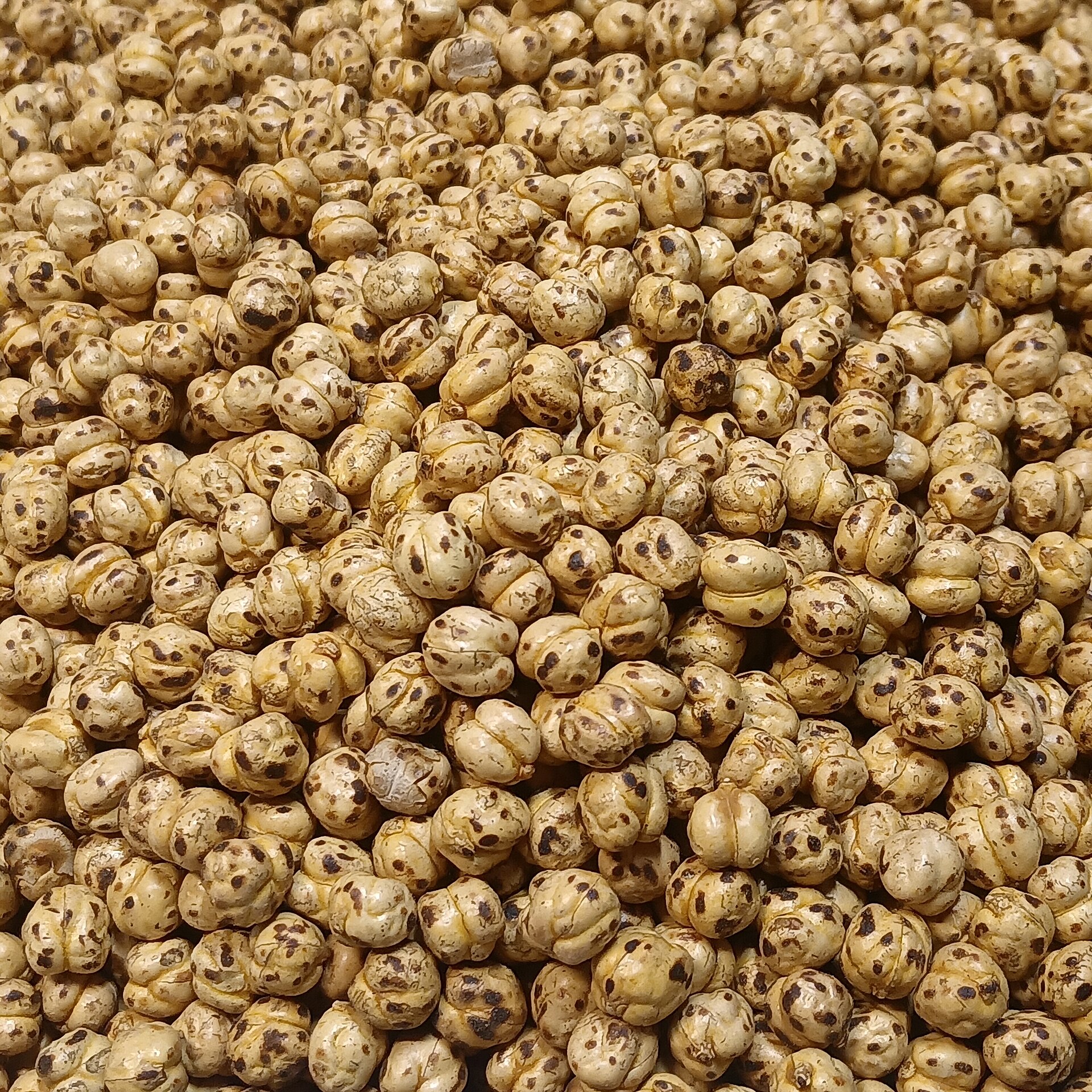
Featured image: Roasted chickpeas by Fumikas Sagisavas, via Wikimedia Commons (CC0).
Reporting is based on the publicly available sources listed above and has been independently written by Food Tech Insider.