Finches Raises €2 Million to Scale AI Sourcing Intelligence for Food Manufacturers
Finches, a Bavaria-based agritech startup, has raised €2 million in pre-seed funding to scale an AI platform that turns agricultural risk signals into procurement actions for food manufacturers. The round was led by High-Tech Gründerfonds with Vanagon Ventures as co-lead; Bayern Kapital joined, alongside UnternehmerTUM Funding for Innovators and returning industry and technology angels.
The product thesis is narrow and commercial. Finches does not sell another generic crop-yield forecast. It builds a working model of what an individual manufacturer buys—raw materials, origins, suppliers, specifications and contracts—then interprets weather, satellite imagery, soil data, pests, tariffs, regulation and local-language news against that private context. An alert is supposed to name which supplier, variety or contract needs attention, not merely that a region is getting hotter.
Closing the gap between knowing and acting
CEO Catharina van Delden, who also manages her family’s pecan farm in Uruguay, says crop trouble can become visible months before a buyer feels the shortage. “Closing that gap between knowing and acting is why we started Finches,” she summarised. CTO Dr. Stefanie Glenn brings a Cambridge genetics PhD and prior data and AI leadership at Google and BMW. Co-founder Alexandra Vázquez Bea, who joined as CFO/COO in January 2026, previously held roles at Oetker Digital and as CFO of Veganz during its IPO.
Finches Field, the ground layer of the system, lets agronomists record farm visits by voice, photos and notes offline; those observations become structured records tied to plot, supplier, variety and season. That field data sits beside regional signals instead of living in notebooks and WhatsApp threads.
Why food manufacturers are listening now
Europe’s 2026 heat and drought cut the June-to-September grain production forecast by 16.7 million tonnes, according to an Energy and Climate Intelligence Unit reading of COCERAL figures—lost output valued around €3.2 billion. Attribution science has also found western Europe’s spring soil drought roughly five times more likely in today’s climate. For procurement teams, the commercial question is whether AI can translate that climate noise into earlier sampling, dual-sourcing or contract moves before a lab failure or missed delivery forces the issue.
Finches says early users include a leading organic baby-food manufacturer and a North American Fortune 500 food group, neither named publicly. The platform is still in a capped Early Access Program. Core pricing is an annual licence partly tied to agricultural raw-material spend, with the field app priced per user and connectors or custom models sold as add-ons.
What the €2 million has to prove
Hosted infrastructure already carries ISO 27001 and SOC 2 Type 2 certifications; Finches GmbH itself targets company-level certification in the second quarter of 2027. The funding will push product development and sales. For food and beverage manufacturers dependent on agricultural inputs, the test is whether supplier- and contract-level alerts consistently beat spreadsheet-and-weather-dashboard workflows before shortages hit the plant.
How this sits in the foodtech stack
Food manufacturers already buy weather overlays, ERP modules and supplier scorecards. Finches is betting that the missing layer is a living map of each buyer’s specific bill of materials—so satellite and disease signals are scored against the exact origin and contract at risk. That is closer to decision support for procurement than to agronomic dashboards sold to growers.
Integration can start light: the company says the platform can run without an initial system connection, with SAP, laboratory and other connectors added later. For risk and IT teams, the near-term diligence items are model transparency, data residency and whether Early Access results survive a full harvest cycle with measurable reductions in emergency buys or quality holds.
Sources & Credits
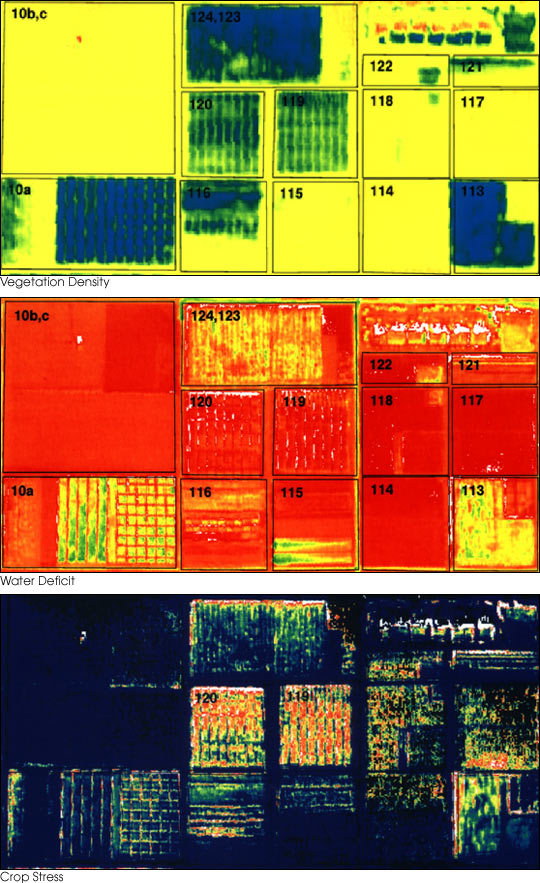
Featured image: Daedelus comparison, remote sensing in precision farming by Susan Moran, Landsat 7 Science Team and USDA Agricultural Research Service / NASA Earth Observatory (Public domain).
Reporting is based on the publicly available sources listed above and has been independently written by Food Tech Insider.