Wonder Targets 100 Texas Food Halls by 2027, Leaning on Kitchen Automation and AI Ahead of Possible IPO
Wonder, the food hall and delivery company founded by Marc Lore, plans to open at least 100 locations in Texas by the end of 2027 as it leans harder on kitchen automation and AI-driven products ahead of a possible initial public offering, CNBC reported on Sunday.
Lore told the broadcaster he wants to take the company public to raise the capital needed to build a “generational business” and to have a public currency for more acquisitions, though he declined to discuss timing. He has previously told Fortune that Wonder will be “ready and prepared to go public early next year.”
A $9 billion bet on vertical integration
Wonder has raised $3.3 billion to date from investors including DoorDash, Alphabet’s venture arm GV and Gwyneth Paltrow. A Series D round earlier this year lifted its pre-money valuation to $9 billion. The company has spent more than $1 billion on acquisitions, including Grubhub, delivery and logistics provider Relay, meal-kit company Blue Apron and several New York restaurant brands.
Lore now describes Wonder as a “vertically integrated food technology platform.” Food is prepared in commissary kitchens and transported to storefronts, where staff unseal, cook and finish dishes from more than two dozen restaurant concepts. The stores run fully electric with no gas or venting, which the company says lets it move into new sites quickly with less renovation and permitting. Wonder has opened about 170 storefronts from Virginia to Massachusetts over the last three years.
Owning Grubhub means customers ordering through Wonder’s app pay no delivery fee, and menu prices are not marked up to cover third-party commissions.
Automation roadmap to 2040
The cost case rests on automation. Wonder is already automating some kitchen tasks, such as assembling salads and bowls, with sauces and beverages next. Lore said the goal is fully autonomous food preparation and delivery by 2040, and the company plans to lower meal prices through automation and drone delivery. CNBC noted that Wonder has been operating at a loss since buying Blue Apron and Grubhub, citing reporting by The Information, and that building out that infrastructure will not be cheap.
AI-built restaurants and personalised meals
From November 17, Wonder plans to launch Wonder Create, which lets influencers, entrepreneurs and brands pay $10 a month to run their own “restaurant” out of a Wonder location and earn a share of order revenue. AI tools will help users generate a brand name, logo, pricing and recipes from Wonder’s pantry. A second AI platform, MEL, is designed to plan meals from a customer’s health data, including wearable data and blood biomarkers, but is not yet available to customers.
Retention data versus quality questions
The model has drawn comparisons with ghost kitchens, several of which, including Kitchen United, have sought bankruptcy protection. Lore rejects the comparison, pointing to Wonder’s dine-in front of house and vertical integration. Social media reviews of Wonder’s food are mixed, and dining-out frequency remains under pressure from budget-conscious consumers.
On the other side, transaction data from Indagari cited by CNBC showed Wonder with a higher weighted average retention rate and higher customer lifetime value than Cava and Sweetgreen. Lore said the company collects thousands of daily customer ratings on taste, temperature and portion size, and that taste scores have improved over the past 12 months. Wonder hired former Worldpay executive Gabrielle Scheibe Rabinovitch as chief financial officer in March.
Why it matters for foodservice tech
A Wonder listing would be one of the largest public-market tests of a centralised, automated restaurant production model. For suppliers of kitchen robotics, commissary equipment and delivery logistics, its Texas rollout will show whether all-electric, commissary-fed storefronts can scale into suburban and rural markets, where Lore sees the largest opportunity, while bringing unit economics close enough to profitability to satisfy IPO investors.
Update — 26 October 2026: Wonder and Avride expand robot delivery to four urban markets
Last-mile automation joins the kitchen automation push. Wonder has expanded its partnership with autonomous technology developer Avride to scale AI-powered sidewalk robot delivery in Jersey City and Hoboken in New Jersey, Arlington County in Virginia, and Philadelphia. The rollout brings robot delivery to dozens more merchants on the Grubhub marketplace, which Wonder owns, including at least one Wonder location in each market, with more to be added over time.
Pilot results. The expansion builds on a Jersey City pilot launched in October 2025, the first time Wonder enabled autonomous delivery on its marketplace beyond Grubhub’s college campus operations. According to the companies, nearly 20% of deliveries from Wonder’s Jersey City location have since been completed by robots. Customers ordering from eligible restaurants may be assigned a robot if they opt in and live within the service area, using the standard Grubhub ordering flow.
Scale context. Avride says the robots use its latest fully autonomous driving stack to make real-time routing decisions and handle changing sidewalk and weather conditions. Through Grubhub’s campus offering, the companies already run robot delivery on dozens of US campuses, including a 120-robot programme at The Ohio State University completing up to 2,000 deliveries a day. For Wonder, the move extends automation from commissary-fed kitchens to the last mile, a cost line that matters as the company builds its case for a potential listing.
Sources & Credits
- CNBC – Marc Lore’s Wonder bets on Texas, automation and user-built restaurants as it mulls IPO (25 Oct 2026)
- Robotics 24/7 – Wonder expands Avride partnership for more autonomous deliveries on Grubhub Marketplace (26 Oct 2026)
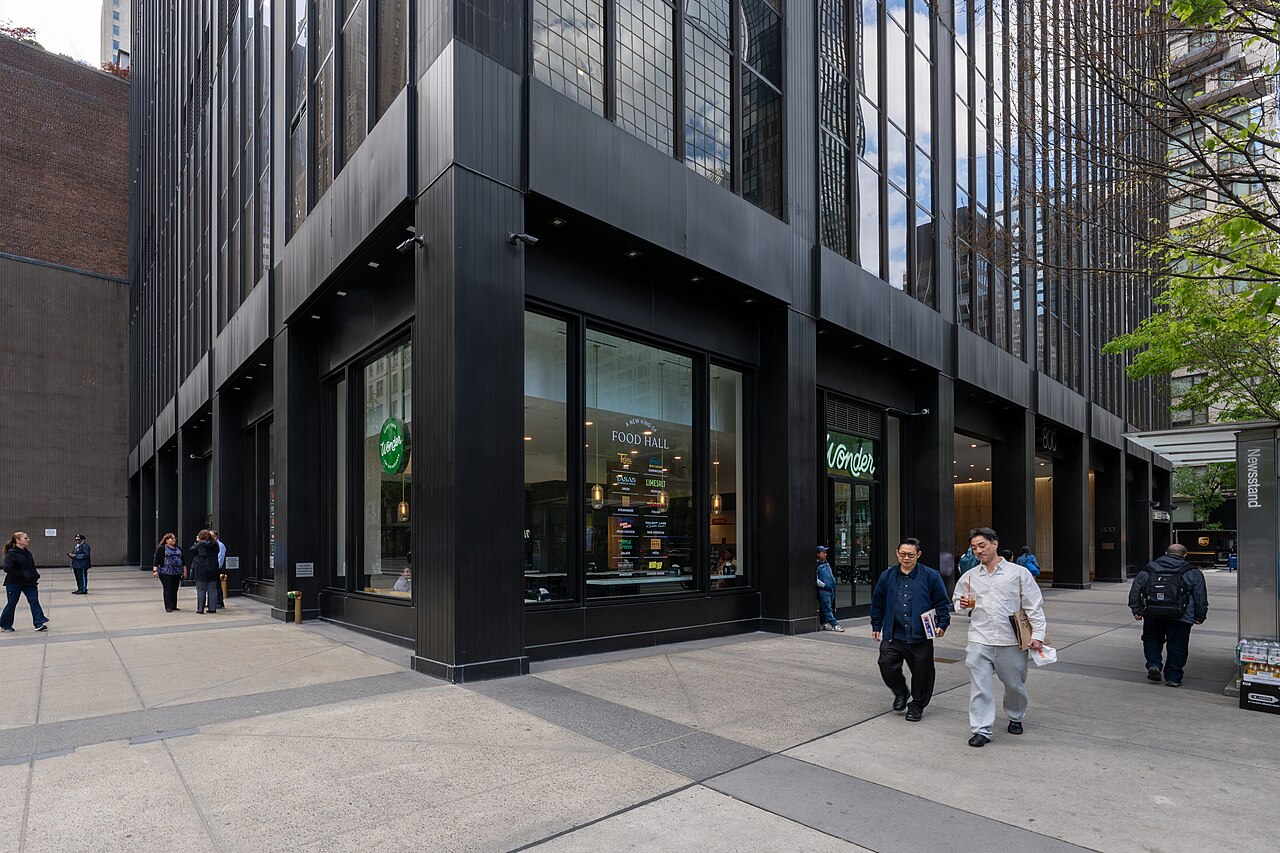
Featured image: Wonder Food Hall by Ajay Suresh, via Wikimedia Commons (CC BY 4.0).
Reporting is based on the publicly available sources listed above and has been independently written by Food Tech Insider.