East Africa Foods Raises $40M to Scale Processing, Storage and Digital Sourcing Into Kenya
East Africa Foods has raised a $40 million financing package to push its farmer-to-retailer supply chain from Tanzania into Kenya, betting that owned processing, storage and trucking—plus a digital coordination layer—can cut post-harvest loss where pure marketplace agritech has struggled. InfraCo, the investment arm of the Private Infrastructure Development Group, led the round with FMO and Oikocredit; a $26 million Series B equity slice sits alongside debt from the Schmidt Family Foundation and follow-on capital from Acumen Resilient Agriculture Fund, Goodwell Investments, Africa Eats and FINCA International.
The Dar es Salaam–based company already works with more than 28,000 registered farmers and supplies over 10,000 urban retailers in Tanzania under brands such as Onja, Golden Banana, Onion King and Potato King. A fleet of more than 100 trucks moves produce from aggregation points into cities. Management says the model has cut food losses across its own network by about one third, attributing the gains to better aggregation, storage and reliable transport rather than higher farm yields alone.
Infrastructure first, software second
The timing is pointed. Twiga Foods, once Kenya’s best-known food-distribution startup, saw its operating entity enter administration in August 2026, with the parent following in September after raising more than $110 million. Twiga leaned on tech-enabled matching between producers and informal retailers while outsourcing much of the physical logistics. East Africa Foods is taking the opposite bet: control warehouses, processing lines and long-haul trucks, then overlay digital tools for sourcing, branch operations, route planning and storage-condition monitoring.
Founder and CEO Elia Timotheo has framed the Kenya expansion around the same bottleneck—post-harvest infrastructure gaps that leave smallholders selling cheap to middlemen and cities paying for spoilage. New capital is earmarked for collection centres in key Kenyan growing regions, more warehousing and processing capacity, and long-haul vehicles that link rural hubs to urban distribution nodes. The company aims to engage about 100,000 smallholders across both countries, with a target that 45% of those farmers are women, and to expand training in drought-resistant varieties and soil management.
Why cold-chain and processing capital still matters
For food-system investors, the raise is a reminder that software alone does not refrigerate bananas. East African retail demand is rising, but fragmented production, thin margins and weak cold and ambient logistics keep loss rates high. Digital coordination helps once physical nodes exist; without them, marketplace apps amplify volume into the same broken pipes. East Africa Foods’ pitch is that owning the pipes—and proving loss reduction on its own books—creates a replicable template for Kenya without repeating Twiga’s cost structure.
Regulatory clearances from COMESA and East African competition authorities are already in place for the package. The open questions are unit economics at Kenyan scale, working-capital discipline as truck and warehouse fleets grow, and whether farmer cooperatives can deliver consistent grade and volume into branded retail SKUs. If the model travels, it offers a concrete data point for foodtech capital looking past delivery apps toward processing and cold-chain infrastructure that actually moves calories.
What success in Kenya would prove
If East Africa Foods can stand up Kenyan collection centres without exploding working capital, it will give development-finance and foodtech investors a clearer template than marketplace-only models. Metrics that matter include loss rates on owned routes, days of inventory in ambient and chilled storage, retailer fill rates on branded SKUs, and farmer payment cycle times. Those are operational KPIs, not app downloads—and they are what food manufacturers and retailers eventually underwrite when they source from emerging-market aggregators.
Sources & Credits
- US Techs Register – East Africa Foods raises $40M to expand into Kenya
- AI Startups News – East Africa Foods and Israeli AI startups raise $80M in a week
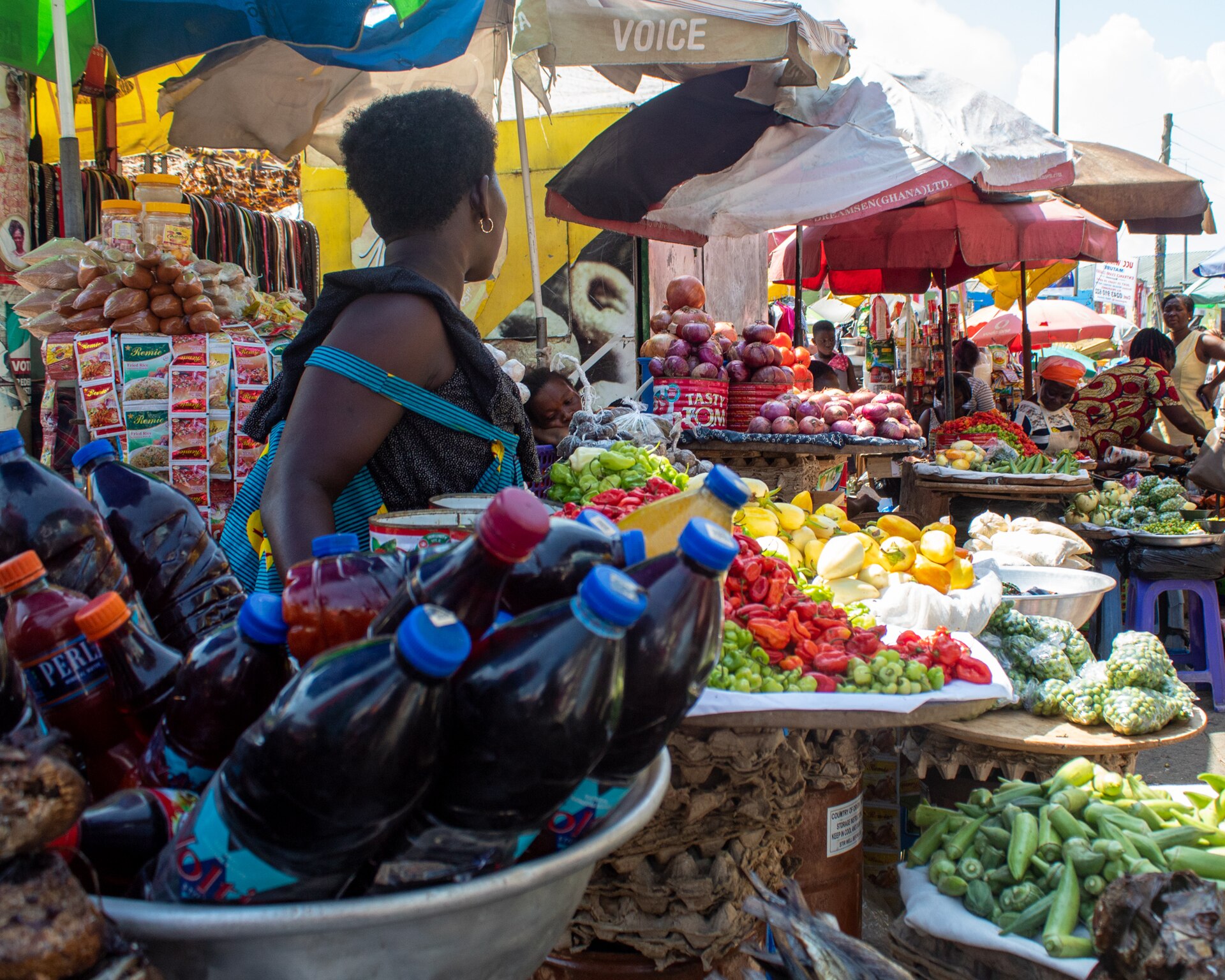
Featured image: Freshly and locally cultivated healthy vegetables in Takoradi Market Circle, Ghana by Canny Kay, via Wikimedia Commons (CC BY-SA 4.0).
Reporting is based on the publicly available sources listed above and has been independently written by Food Tech Insider.