Non-UPF Verified Label Passes 300 Products as AHA Poll Finds 57% of Americans Say Ultra-Processed Foods Can’t Be Healthy
American shoppers are sure they want to avoid ultra-processed foods, but far fewer can say exactly what the term means. That is the central finding of new polling for the American Heart Association (AHA). It lands as private certification schemes move quickly to fill the gap left by the still-unpublished U.S. federal definition, led by the Non-GMO Project’s Non-UPF Verified seal, which has now been applied to more than 300 products.
For manufacturers, the combination matters: consumers say on-pack labels strongly shape their judgement, and certifiers rather than regulators are currently setting the criteria behind them.
What the AHA poll found
The Harris Poll surveyed 2,007 U.S. adults online for the AHA between 16 and 18 June 2026, and the AHA published the results on 12 October. Ninety per cent of respondents had heard the term “ultraprocessed foods”, but only 35% said they were very or extremely familiar with it. Even so, 72% felt confident they could tell whether a food is ultra-processed, although only 25% were very confident, and 66% said they could explain the term to someone else.
Attitudes are firm. Seventy-one per cent say they try to avoid ultra-processed foods. According to Green Queen’s reading of the survey, 57% believe no food can be both ultra-processed and healthy, 54% say processed foods are always better than ultra-processed ones, and 83% say whole foods beat processed foods. When asked what makes a food ultra-processed, 38% pointed to artificial additives, chemicals, dyes or hard-to-pronounce ingredients, 23% to heavy industrial processing, and only 15% to junk foods high in sugar, salt or fat.
Labels carry the weight
The figures that matter most for brand owners concern labelling. Three-quarters of respondents (76%) believe foods labelled “ultraprocessed” are unhealthy, and 62% believe foods labelled “not ultraprocessed” are healthy. Most are concerned about high levels of added sugar (80%), sodium (79%) and saturated fat (78%).
Trust in who draws the line is uneven. Green Queen reports that 87% of respondents trust their healthcare provider and 78% trust health non-profits to classify foods as whole, processed or ultra-processed, compared with 45% for the federal government. The AHA is using the results to press the Office of Management and Budget to release the federal UPF definition, which it says has been held in draft for months.
“Defining ultra-processed foods would represent an important step to encourage healthy eating, but additional policy actions are also needed,” said Mariell Jessup, the AHA’s chief science and medical officer, adding that consumers need clear information on nutrients and overall nutritional quality as well as processing. The AHA also continues to call for mandatory front-of-package nutrition labelling.
Non-UPF Verified sets its own bar
The Non-GMO Project launched its Non-UPF Verified label earlier this year. Chief executive and founder Megan Westgate told Food Dive that more than 300 products have since been verified, with snack and baking brand Simple Mills among the first. The standard, now at version 1.3 (published 1 September 2026), assesses products on two dimensions: ingredient integrity and formulation, and processing limits. It restricts engineered additives and sets category-specific thresholds for added sugar. NSF acts as one of the independent technical administrators that evaluate each product. NSF notes that the scheme does not assess overall nutrient adequacy or dietary suitability.
Westgate said the pilot phase forced changes. Added-sugar rules that began very strict were refined by category, because even minimally processed products may blend sweeteners for flavour, function or cost. Baking mixes led to provisions that judge products as prepared and eaten, not just as the dry mix. She said some companies are already using the standard “as more than a label”, as a framework for sourcing and reformulation decisions.
The Non-GMO Project is not the only scheme in play. Green Queen notes that California Governor Gavin Newsom recently signed legislation creating a front-of-pack “Non-Ultraprocessed Certified” seal, and that other non-UPF verification programmes have appeared, including those from the Non-UPF Program and Wisecode. Westgate acknowledged the risk that competing labels could add to confusion, and said any national definition should reflect how food is actually processed rather than reduce the issue to a handful of additives or nutrient numbers.
What it means for CPG and ingredient suppliers
Three implications stand out for manufacturers. First, ingredient-deck optics now carry outsized weight: additives, colours and unfamiliar names are what consumers most associate with ultra-processing, which favours clean-label reformulation and simpler ingredient systems. Second, certification is becoming a commercial lever before regulation arrives, so brands will need to decide which seals to pursue and how to document processing steps for auditors. Third, nuance is a hard sell. Even the AHA has cautioned that some ultra-processed foods, such as many high-fibre plant-based meat products, can be beneficial, yet most consumers in its own poll reject the idea that a UPF can be healthy. Categories such as plant-based protein, protein snacks and fortified products will need clear nutrition stories alongside any processing claim. That adds to reformulation pressure from FDA’s sodium-reduction rule and GLP-1-driven shifts in food spending.
Sources & Credits
- American Heart Association – Consumer polling reflects limited public familiarity with ultraprocessed foods (12 Oct 2026)
- Green Queen – 57% of Americans Think UPFs Can't Be Healthy, As Wait for Federal Definition Continues (16 Oct 2026)
- Food Dive – The Non-GMO Project wants to set the standard for non-ultraprocessed foods (15 Oct 2026)
- Non-UPF Verified – Non-UPF Verified Standard (Version 1.3)
- NSF – Non-UPF Verification
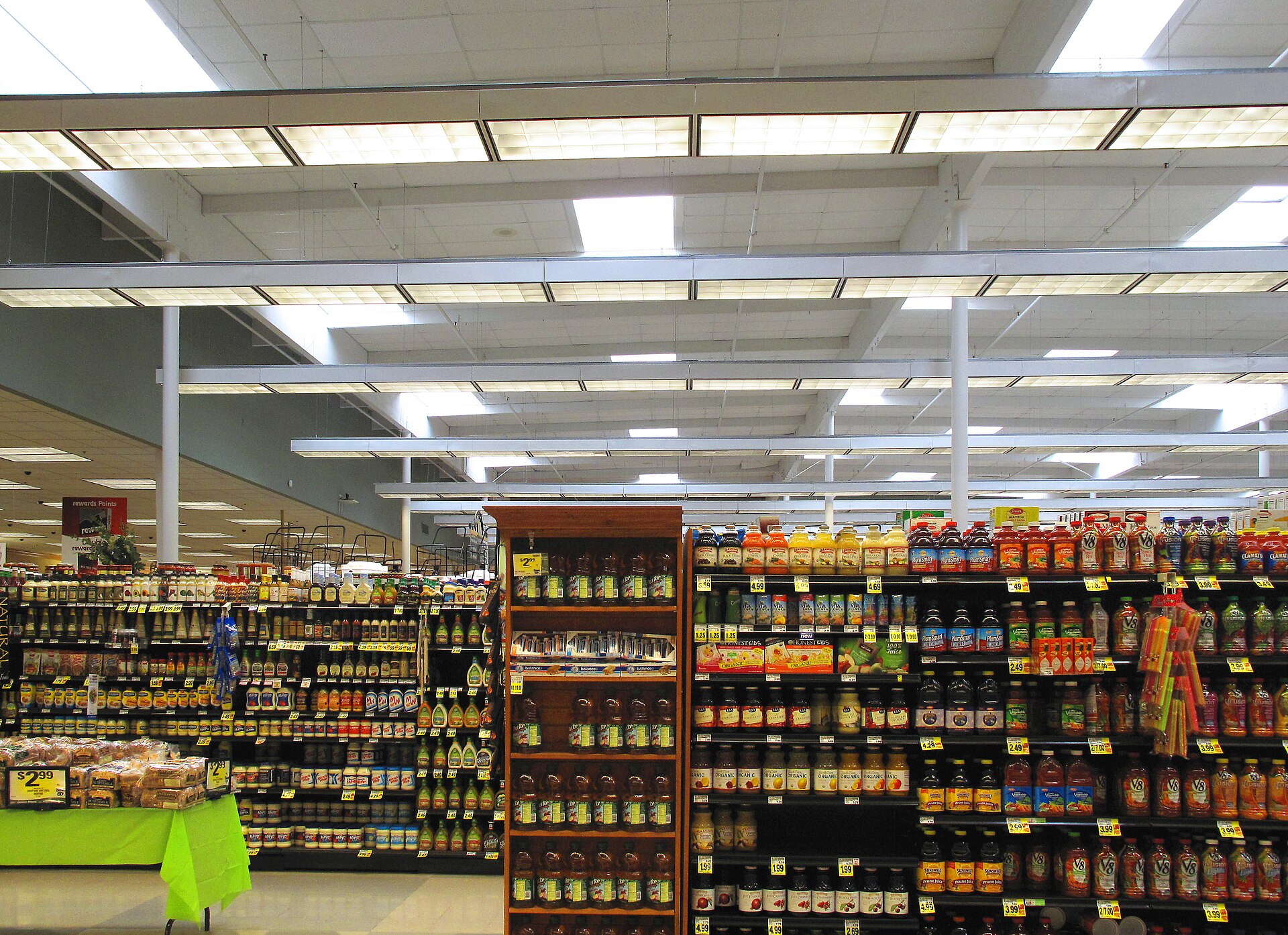
Featured image: Shelves in a Ralphs grocery store by Downtowngal, via Wikimedia Commons (CC BY-SA 3.0).
Reporting is based on the publicly available sources listed above and has been independently written by Food Tech Insider.