New Foods RegLab: Dutch Think Tank Opens EU Novel Food Sandbox Pilot for Cultivated Meat and Precision Fermentation Firms
The Ministry of Future Affairs, a Netherlands-based think-and-do tank, has opened applications for the New Foods RegLab. The programme is a cross-border learning platform for companies preparing applications under the EU novel food regime, which covers cultivated meat, precision-fermented proteins and other new ingredients. It is a direct response to the European Commission’s decision to leave novel foods out of the regulatory sandboxes proposed in its first Biotech Act.
The first cohort meets in Brussels on 19 and 20 January 2027; applications close on 30 November 2026.
How the RegLab will work
Up to ten companies will spend two days with regulatory specialists who have taken novel food dossiers through EU authorisation for more than 15 years. Atova Regulatory Consulting leads the workshop under the Chatham House Rule, reviewing each participant’s regulatory position to identify gaps and next steps, and a policy session will cover the expanded pre-submission advice that the European Food Safety Authority (EFSA) is set to offer under the Biotech Act.
The cohort will mix non-competing companies of different sizes and product categories. Non-EU applicants are eligible, and no finished dossier or full regulatory strategy is required. Anonymised findings will go to EFSA and the Commission as part of a set of policy recommendations. The project is supported by the Dutch Province of Zuid-Holland, the Limburg development agency LIOF and ROM-Nederland.
The RegLab is not a sandbox in the formal sense. Founder and managing director Anna Handschuh told FoodNavigator that regulators will not run it and no rules will be relaxed. The aim is to build a systematic picture of how applicants read and apply existing EFSA guidance, and where that guidance falls short.
Why the Biotech Act exclusion matters
When the Commission presented the first Biotech Act in December 2025, it expanded EFSA’s pre-submission advice for applicants but excluded novel foods from the new food and feed sandbox scheme. FoodNavigator reports that the Commission cited the potential for these products to “trigger ethical or cultural concerns among various consumer segments”. Trade associations, member states and MEPs have pushed back, and the exclusion could still be reversed while the file is negotiated in the European Parliament and Council.
Handschuh argues that one-to-one advice does not fix the system. “The EU wants to introduce a much broader pre-submission advice for novel-food applicants. However this would only help one applicant at a time,” she said. “Shared cross-border learning platforms as enhanced collaboration mechanisms can inform a whole system and support food safety, competitiveness, and strategic autonomy.”
The timeline problem in numbers
A paper published alongside the pilot on 15 October, written by Handschuh and Dr Anne-Gaelle Collot and building on Mario Draghi’s call for closer EU collaboration, sets out the scale of the delay. EU rules allow roughly 18 months for a novel food approval, nine of them for EFSA’s scientific opinion. Drawing on an independent analysis of 292 applications submitted between 2018 and 2024, the paper says reaching an EFSA opinion takes 31 months on average and has taken as long as 76 months. The Commission’s decision phase, of up to seven months, starts only after that. Singapore’s equivalent process takes nine to 12 months.
The think tank’s diagnosis is that the rules are workable but knowledge transfer and process design are not. Applicants, consultants and national authorities each learn separately how to navigate the system, with no mechanism to pass those lessons to EU level. FoodNavigator notes that long authorisation times have been cited as one reason for weaker investor interest in categories such as cultivated meat.
The paper proposes voluntary platforms through which groups of member states share what they and applicants learn. Because these would grant no authorisations and leave safety standards unchanged, the think tank says no change in EU law is needed to start them.
A bridge to the UK sandbox
The model borrows from the UK Food Standards Agency’s £1.6 million cultivated meat and seafood sandbox, which launched in February 2025, runs until February 2027 and has already produced guidance for applicants. UK firms are encouraged to apply, a link that matters as the UK and EU finalise a sanitary and phytosanitary agreement that Green Queen says could leave UK-bound companies facing the EU’s longer process. “Britain has been running Europe’s first novel foods sandbox and has produced a strong body of regulatory learnings, but with novel foods sitting outside the Biotech Act’s sandbox, there has been no formal route for any of it to reach EU regulators,” said Marnie Hewat, programme manager at the Alternative Proteins Association.
What it means for novel food companies
For founders, the practical value is a structured review of their EU strategy by experienced dossier specialists before filing, when additional data requests are a known source of delay. For the sector, the test is whether anonymised findings from ten companies can shape EFSA’s expanded pre-submission advice and the Biotech Act talks. Other markets are moving faster, from Abu Dhabi’s pre-approval tasting pathway to the WHO’s new alternative protein work in Asia-Pacific, so EU approval timelines will keep shaping where cultivated meat and precision fermentation firms launch first.
Sources & Credits
- vegconomist – Think Tank Recruits Novel Food Firms for EU Regulatory Pilot After Biotech Act Sandbox Exclusion (15 Oct 2026)
- Green Queen – European Think Tank Launches Regulatory Sandbox for Novel Food Startups (15 Oct 2026)
- FoodNavigator – Learning platform for EU novel foods launched by think tank (15 Oct 2026)
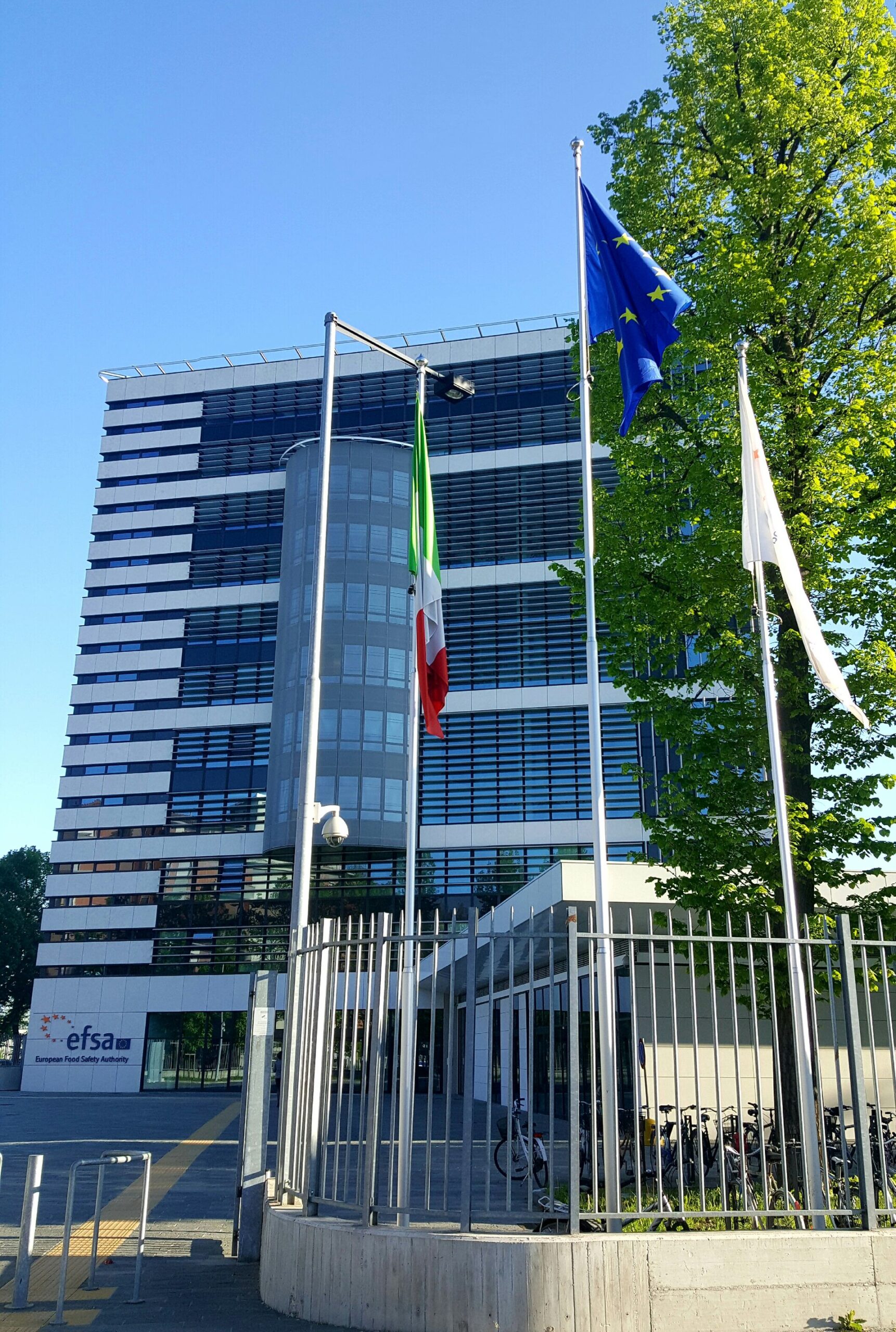
Featured image: EFSA Parma Headquarters by Carlo Dani, via Wikimedia Commons (CC BY-SA 4.0).
Reporting is based on the publicly available sources listed above and has been independently written by Food Tech Insider.