Volare Completes 5,000-Tonne Black Soldier Fly Insect Protein Factory in Finland, Raises €7.1M to Replicate Model
Finnish insect protein company Volare has completed Volare 01, its first industrial-scale black soldier fly factory, in Pori, Finland, and raised €7.1 million to ramp up the plant and prepare further sites. The 10,000-square-metre facility is designed to turn food-industry side streams into up to 5,000 tonnes of insect protein meal and 2,000 tonnes of insect oil a year.
The company says the plant was delivered on schedule and within its €15 million capital expenditure budget. That stands out in a sector where several European pioneers have collapsed under construction delays and cost overruns.
From side streams to protein and oil
Volare uses black soldier fly larvae (Hermetia illucens) to convert locally available food-industry by-products into protein, oil and fertiliser. Finnish broadcaster Yle reported that the larvae are fed side streams such as oat- and sugar beet-based biomass. Founded in 2021 as a spin-off from VTT Technical Research Centre of Finland, the company has developed its own fly strain adapted to the side streams it uses.
Volare 01 is a 1,000-fold scale-up of Volare’s demonstration plant, which ran for more than four years using the same process and remains in operation. The company says its protein meal has more than 90% digestibility and is already used commercially in aquafeed, pet food and poultry feed.
A lean factory model
Rather than building from scratch, Volare fitted out a former newspaper printing plant in about nine months. CEO and co-founder Jarna Hyvönen told Tech.eu the reuse probably saved at least a year compared with a new build. The plant’s heavy-duty floors, made for printing presses, suit the equipment.
Operational claims from the company include:
- Four people per shift running the 10,000 m² site, using automation and established industrial equipment.
- All processes powered by electricity rather than natural gas or other fossil fuels, with no process wastewater.
- A patented dry-processing approach that the company says lowers energy use while maintaining product quality.
- Four to ten times lower capex, around 50% fewer full-time staff and 30% less energy in end-product processing than other insect protein producers. These comparisons come from the company and have not been independently verified.
Volare kept engineering and project management in-house instead of using outside consultants, which Hyvönen said gave the team tighter control over both capital spending and how the plant will run.
Offtake and funding
A significant share of Volare 01’s capacity is already sold under offtake agreements, including with aquafeed producer Skretting and a global chemicals company that has not been named. Earlier commercial uses include insect-based dog treats with Alvar Pet, cat food under Vafo Group’s Dagsmark brand, and rainbow trout feed with Alltech Fennoaqua.
The €7.1 million round was raised through Finnish investment platform Springvest, with new and existing investors including Maki.vc. It will fund the ramp-up of Volare 01 and groundwork for further facilities. Volare says its second factory is planned to have roughly five times the protein capacity of the first.
Why it matters for sustainable feed protein
The insect sector has had a bruising few years. Ÿnsect went into judicial liquidation in 2025 after raising more than €600 million. Denmark’s ENORM was declared bankrupt in October 2025, and Germany’s FarmInsect entered insolvency in 2026. In each case, high production costs and competition from soy and fishmeal weighed on the economics.
Volare is betting that low capex, electrified processing and upcycled local feedstocks can close that cost gap. Its case also leans on fishmeal supply: the FAO estimates that 84.5% of assessed marine fish stocks were fished at or beyond maximum sustainable levels in 2023, while aquafeed demand keeps rising.
The real test is commissioning. How quickly Volare 01 reaches nameplate output, and at what cost per tonne against fishmeal and soy protein concentrate, will decide whether the replicable-factory model works, and whether insect protein can become a dependable European feed ingredient rather than a cautionary tale.
Sources & Credits
- Tech.eu – Volare opens €15M 10,000 m² insect protein factory, secures €7.1M to scale across Europe (26 Oct 2026)
- PetfoodIndustry – Volare opens insect protein plant in Finland
- Volare – Volare celebrates the opening of Volare 01 in Pori (25 Jun 2026)
- Yle – Insect protein factory in Pori set to begin production (in Finnish)
- Springvest – Volaren tehtaan avajaisia juhlittu Porissa (in Finnish)
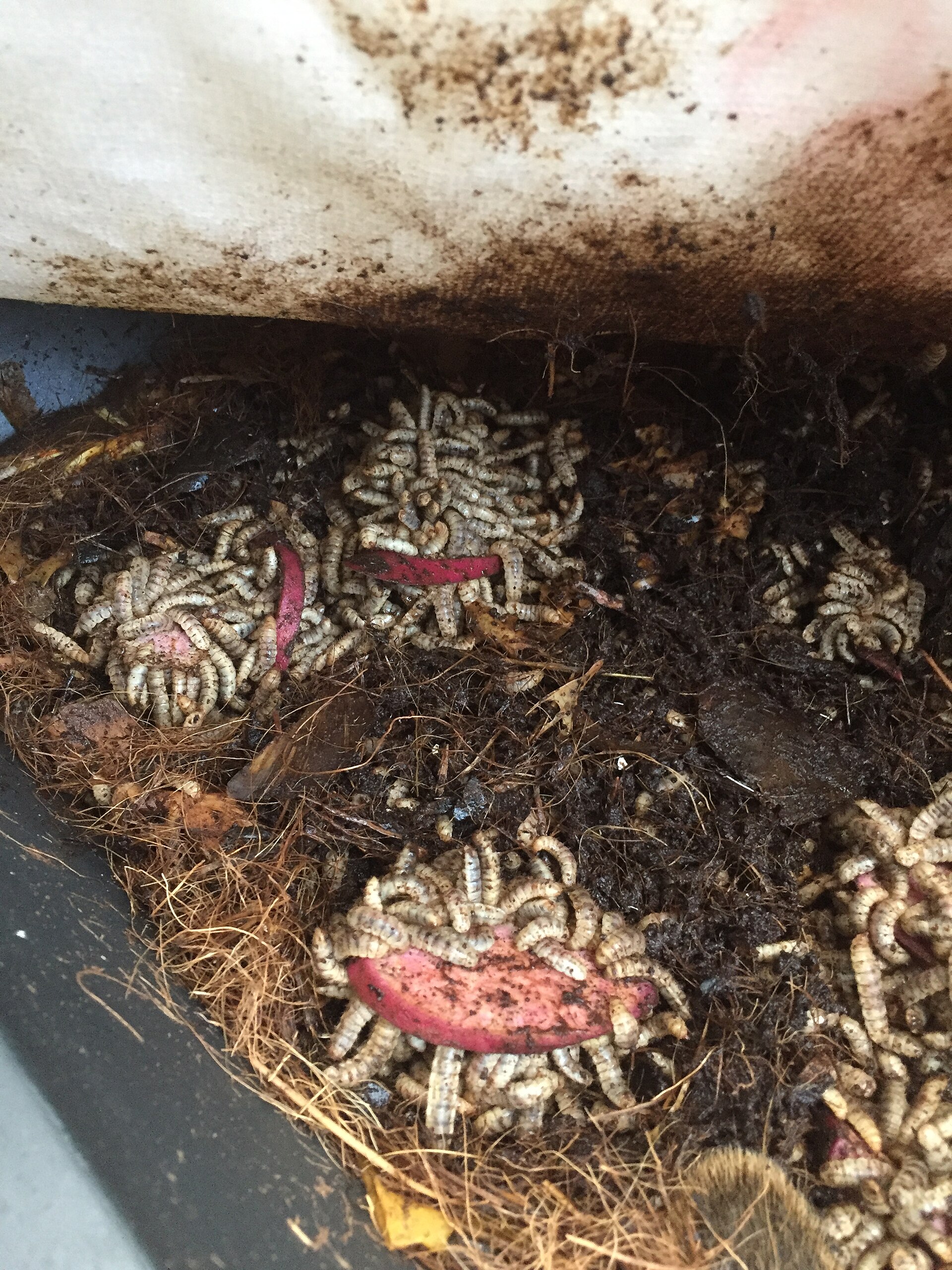
Featured image: Black soldier fly larvae eating yam by Zenyrgarden, via Wikimedia Commons (CC BY-SA 4.0).
Reporting is based on the publicly available sources listed above and has been independently written by Food Tech Insider.