iBoxit Raises £962K to Commercialise Plant-Based Biofoam for Seafood and Food Cold-Chain Packaging
Norwich-based packaging startup iBoxit has closed a funding package now reported at £962,000 to commercialise a plant-based biofoam aimed at replacing expanded polystyrene in seafood logistics, food processing and related cold-chain uses. The British Design Fund contributed £230,000 of an earlier £400,000 equity slice; Innovate UK’s Growth Catalyst Investor Partnership Grant added £562,000, with ESG Natural Capital and private investor Kevin Johnson also participating. Cornwall fish supplier Flying Fish is already running the material in commercial shipments and feeding performance data back to the company.
EPS fish boxes and protective inserts remain ubiquitous in chilled seafood and meat logistics because they are light, insulating and cheap. They are also difficult to recycle at scale and increasingly awkward under retailer and regulator pressure on single-use plastics. iBoxit’s pitch is a recyclable, biodegradable plant-based foam that can take that role without the polystyrene waste stream—first in the UK, with operations starting in Australia and Sweden named among next markets.
Cold-chain packaging as a foodtech bottleneck
For seafood processors and food manufacturers, packaging is not a side SKU: broken cold chain and crushed boxes destroy margin as surely as a bad harvest. Biofoam alternatives have to match thermal performance, crush strength, moisture behaviour and unit cost under wet, iced conditions. Early capital of this size will not build a global EPS replacement overnight, but it funds the commercial-readiness work—tooling, certification, customer trials—that buyers demand before they switch a high-volume liner or box programme.
The Flying Fish deployment matters because it moves the story past lab samples. A working fish supplier generating field data on insulation and handling gives iBoxit a reference account that packaging buyers in seafood and chilled protein can diligence. Expansion into Australia also tracks where aquaculture and long domestic cold chains create demand for lighter, lower-impact protective packaging.
Where this sits in the sustainable packaging stack
iBoxit is one node in a broader push to swap fossil foams for fibre, starch and mycelium cushioning. Starch-based loose-fill and moulded fibre inserts already serve e-commerce and dry goods; wet-chain seafood is a harder environment. Success will hinge on whether plant-based foam can hold ice melt, stack in trucks and clear food-contact rules without a price spike that processors simply pass back to polystyrene.
Investors and CPG packaging leads should watch three markers over the next year: published thermal and compression specs versus EPS fish boxes, offtake beyond the first UK seafood customer, and whether Australian and Swedish pilots convert into recurring volume. If those land, biofoam becomes a credible line item in food cold-chain RFPs—not only a sustainability slide.
Procurement checklist for food manufacturers
Buyers evaluating biofoam should ask for ice-hold duration at stated wall thickness, compressive strength after moisture exposure, food-contact documentation for the specific polymer or fibre chemistry, and end-of-life pathways that work in the ports and processors where boxes actually accumulate. A £1 million-scale round is a commercialisation bridge, not a capacity build; the next financing will likely need named offtake or multi-site tooling plans if iBoxit wants to threaten EPS share in seafood and chilled protein logistics beyond early adopters.
Sources & Credits
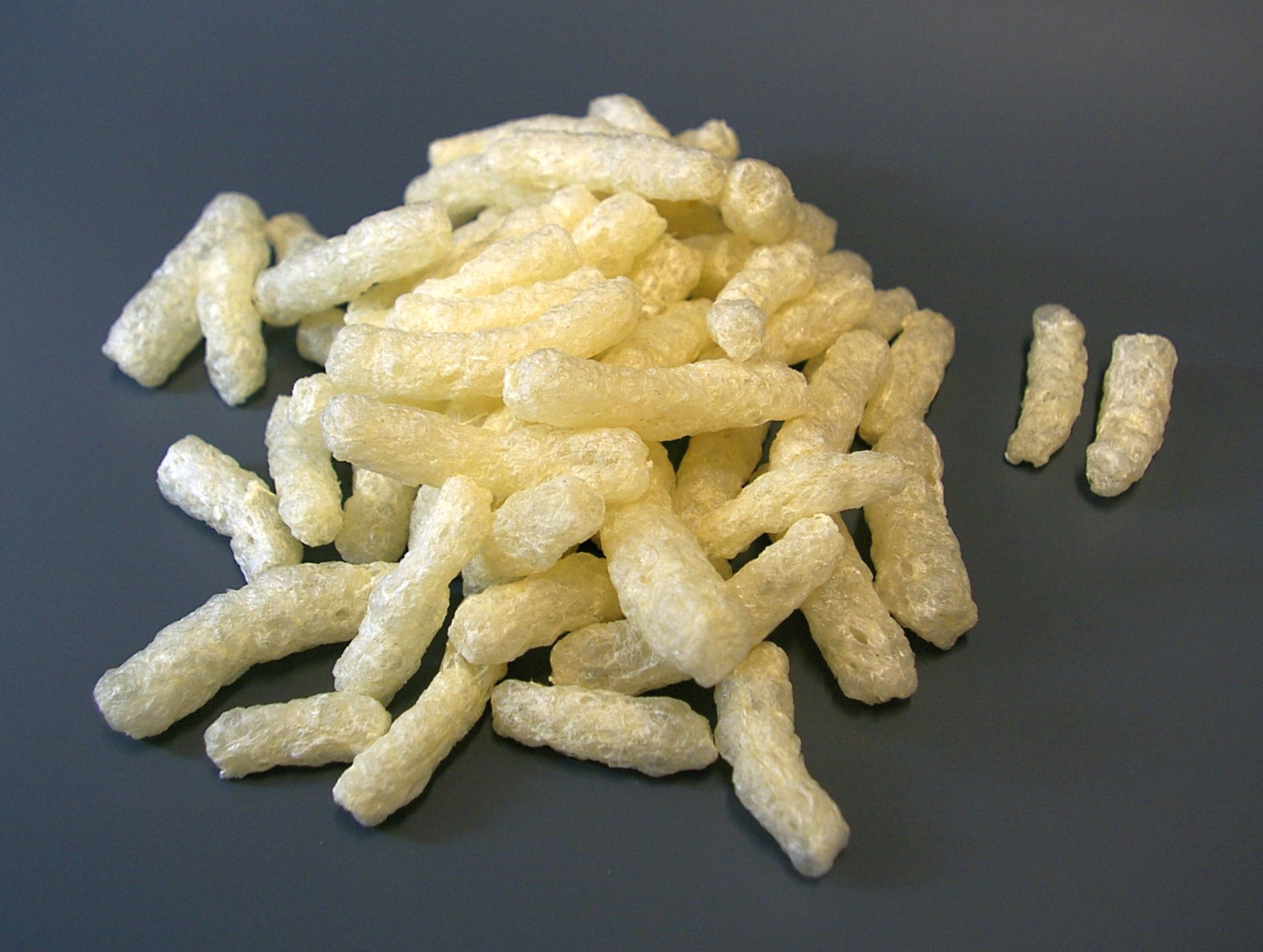
Featured image: Stärke-Packstoff Pömpel CG by Christian Gahle, nova-Institut GmbH, via Wikimedia Commons (CC BY-SA 3.0).
Reporting is based on the publicly available sources listed above and has been independently written by Food Tech Insider.