FDA Issues First “No Questions” Letter for Precision-Fermented Casein, Clearing Those Vegan Cowboys and Formo for US Cheese Alternatives
The US Food and Drug Administration has issued its first “no questions” letter for a casein made by precision fermentation. The response covers recombinant αS1-casein notified jointly by Dutch start-up Those Vegan Cowboys and Berlin-based Formo, and it gives both companies a regulatory route to sell animal-free casein to US food manufacturers, starting with cheese alternatives.
Those Vegan Cowboys announced the letter on Wednesday 28 October for its ingredient brand Margaret’s Finest, and Formo announced the same outcome for its Enhanced Casein. Both companies describe it as the first time a precision fermentation-derived casein has completed this stage of FDA review.
What the GRAS notice covers
The FDA’s GRAS Notice Inventory lists the filing as GRN 1312: recombinant αS1-casein from Bos taurus, produced by Escherichia coli strain DSM 35603. The notifiers are NewMilkBuzz BV, the company behind Those Vegan Cowboys, and Formo Foods GmbH.
The intended use is narrow. The notice covers the protein as an ingredient at up to 25 g per 100 g in cheese analogues, and it excludes infant formula and products under the jurisdiction of the US Department of Agriculture. According to Protein Production Technology International (PPTI), the FDA review examined the ingredient’s identity and composition, manufacturing process, allergenicity, toxicology and dietary exposure.
A no-questions letter is not a product approval. It means the agency has no questions about the notifiers’ conclusion that the ingredient is generally recognised as safe under the stated conditions of use. Both companies also stress that the protein remains a milk allergen. It is lactose-free, but it is not suitable for people with a milk allergy, and labelling will need to reflect that.
Two companies, two commercial routes
The two firms worked together on the safety dossier through a research collaboration that ended in 2025. They now develop and sell their caseins separately.
Those Vegan Cowboys positions Margaret’s Finest as a protein discovery platform. The company says it has already developed mozzarella, burger slices, cream cheese, feta and camembert with the casein, and that it works with Hochland on burger cheese, XXL Nutrition on sports nutrition and Dutch cheesemaker Westland Kaas. “FDA clearance opens the door to the US market, and things will now move quickly,” CEO Hille van der Kaa said. “We are looking for bold food companies who want to build new applications with us.”
CTO Will van den Tweel told FoodNavigator that cheese is only the start, pointing to medical nutrition, chocolate, yoghurt and drinks. He also named the main hurdle to scale: the protein has to be made cheaply in an integrated way, which means finding partners with access to low-cost feedstocks and energy.
Formo plans to build on the existing dossier with a further GRAS notification for wider food and nutrition uses, according to PPTI. The company is targeting clear protein drinks, coffee foams and ready-to-drink beverages. It reports that Enhanced Casein stayed soluble at pH 3–4 at up to 6% protein in clear, acidic test formulations. It also reports foaming performance suitable for high-protein barista cold foams.
Why casein matters for animal-free dairy
Casein makes up most of the protein in cow’s milk and does much of the work in cheese: melt, stretch, structure and emulsification. That is why plant-based cheese has struggled to match dairy, and why casein has been a central target for precision-fermentation dairy developers. Most US commercial activity so far has centred on whey proteins such as beta-lactoglobulin, which do not deliver the same curd formation and stretch.
The clearance arrives as other routes to animal-free dairy move forward. This week, Dutch dairy ingredients group Hoogwegt agreed to buy the first production batch of Opalia’s cell-based whole milk to test in cheese and butter. Those Vegan Cowboys has also been working on sports-nutrition formats with Dutch grant support.
What to watch
For US cheese and plant-based brands, the letter removes the main regulatory question for casein-based cheese analogues within the 25% limit. Uses outside that scope, such as beverages, yoghurt and infant nutrition, will need further notices or their own GRAS work. The commercial questions are now cost per kilogram, fermentation capacity, and which manufacturers sign up first. Expect partnership announcements around cheese slices and pizza-style mozzarella, the formats where casein’s melt and stretch matter most.
Sources & Credits
- FoodNavigator – No cows, no questions: FDA greenlights animal-free casein (28 Oct 2026)
- US FDA – GRAS Notice Inventory: GRN 1312, recombinant αS1-casein produced by Escherichia coli DSM 35603
- Protein Production Technology International – Formo secures FDA ‘no questions’ letter for precision-fermented casein
- Protein Production Technology International – Those Vegan Cowboys seeks US food partners as Margaret’s Finest casein clears FDA review
- Those Vegan Cowboys – Ready for the US market: Margaret’s Finest
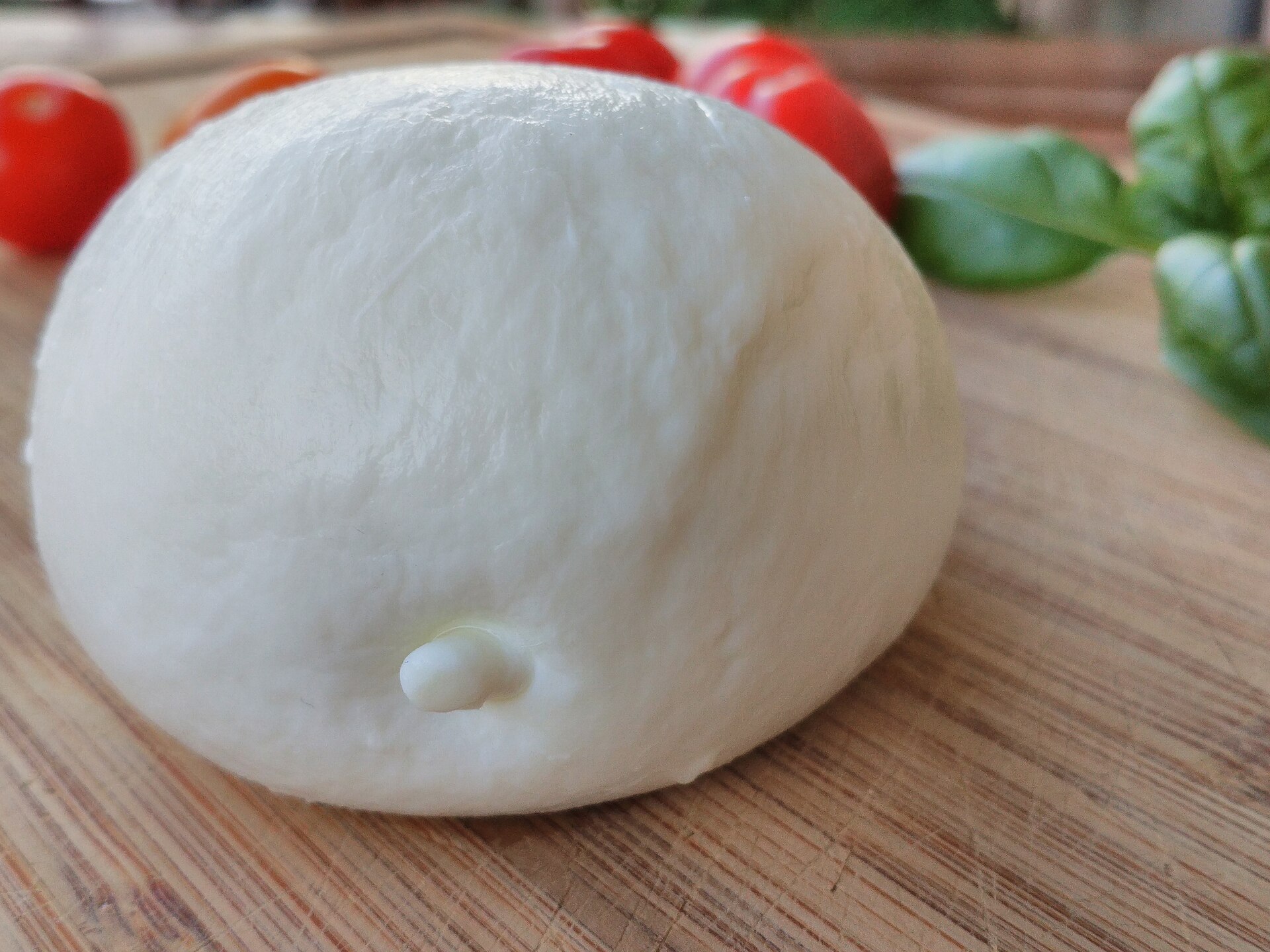
Featured image: Mozzarella di bufala by Popo le Chien, via Wikimedia Commons (CC BY-SA 3.0).
Reporting is based on the publicly available sources listed above and has been independently written by Food Tech Insider.
One Comment