EU “Protein Shock” Warning: Former Commissioners and Generals Urge Domestic Precision Fermentation and Single-Cell Protein Capacity
Former European Commissioners Connie Hedegaard, Janez Potočnik and Tonio Borg have signed an open letter with former military leaders and academics. It urges EU leaders to build domestic fermentation capacity as a buffer against a “protein shock,” meaning a sudden cut-off of imported animal feed, feed additives and fertiliser. The letter was published by the NGO WePlanet together with a policy report, Building the EU Food Firewall. The report estimates that 29.9% of the EU’s protein supply depends directly on imports.
Other signatories include Tom Middendorp, the former Dutch Chief of Defence. Retired Dutch Lieutenant-General Kees Matthijssen warned that a continent unable to feed its livestock or fertilise its fields when a strait is closed or a supplier halts deliveries “is too vulnerable, no matter how much it spends on defence,” vegconomist reported.
Feed amino acids are the weak point
The report was written by WePlanet senior policy advisor Martin Reich, using modelling by Germany’s nova-Institut. It finds that the EU’s calorie supply is secure but its protein supply is exposed. Once imported inputs such as synthetic amino acids, vitamins, mineral fertilisers and natural gas are counted, about 84% of EU protein relies on imports at one or more stages of production. The report says this number measures how far dependence reaches through supply chains. It does not estimate how much protein would be lost in a disruption.
Feed additives are the most exposed. More than 95% of the lysine used in the EU is imported, threonine is no longer made in the EU at all, and China supplies 70% to 80% of the feed amino acids the EU imports. Possible triggers for a shock include extreme weather, geopolitical conflict, trade disputes, pandemics and animal disease. The signatories warn that the risk of several hitting at once is growing.
A three-layer “food firewall”
WePlanet describes its plan as a complement to conventional farming, not a replacement. It has three layers:
- EU-based fermentation capacity: single-cell protein to replace some imported feed soy, plus precision and biomass fermentation for food. The report cites MicroHarvest’s plant in Leuna, Germany, which is designed to produce about 15,000 tonnes of single-cell protein a year from early 2028.
- Flexible plants that can switch to other feedstocks, such as agricultural residues, during shortages, or move from non-food products to feed and food.
- R&D into production that does not rely on photosynthesis, such as gas fermentation using CO2 and hydrogen, the approach being developed by Finland’s Solar Foods.
Imported alt proteins would deepen dependence
The report’s key finding for the alternative protein industry is that new proteins only reduce import dependence if they are made in the EU. In a 2045 scenario where novel proteins are widely eaten but imported, direct import dependence rises from 29.9% to between 36.4% and 49%, depending on market share. In the highest scenario, imports of feed and animal protein fall by 1.9 million tonnes, but 5.3 million tonnes of imported new proteins are added. The model does not separate plant-based from fermented proteins.
The report applies the same reasoning to plant protein isolates sourced from China. It points to the European Commission’s anti-dumping duties on Chinese pea protein, imposed provisionally in April 2026 and made definitive in September 2026 at 40.5% to 67.1% for five years. That kind of trade defence is only possible where an EU industry already exists, the report argues, which is not yet the case for fermented proteins.
Policy asks: critical infrastructure and faster approvals
The letter calls for public investment in scale-up infrastructure, authorisation procedures with reasonable timelines, and a clear signal that the EU means to be a producer of these proteins as well as a consumer. The report goes further. It proposes moving responsibility for biomanufacturing to DG GROW, treating fermentation capacity as critical infrastructure and creating open-access pilot facilities modelled on the US BioMADE programme. It also wants novel foods included in the regulatory sandboxes of the first EU Biotech Act, which the Commission’s December 2025 proposal leaves out. The report criticises Regulation (EU) 2026/1739, which restricts meat-related names for plant-based and cultivated products, saying it discourages investment.
The European Commission’s Protein Action Plan, published in July 2026, aims to raise the share of feed protein from EU-grown oilseeds and protein crops from 25.8% to 35% by 2035. It treats fermentation as a complementary approach with limited medium-term impact, a view WePlanet rejects. GFI Europe and other alternative protein groups had already criticised the plan for lacking funding commitments to scale up fermentation and plant-based proteins.
For precision fermentation and single-cell protein companies looking for European sites, the letter adds security-policy voices to the industry’s case for capital support and faster novel food approvals.
Sources & Credits
- vegconomist – Former EU Commissioners and Generals Urge EU to Build Domestic Fermentation Capacity Against “Protein Shock” (25 Nov 2026)
- Handelsblatt – Lebensmittel: Experten warnen vor einem Protein-Schock in Europa (Nov 2026)
- Bezpieczna Żywność – Raport WePlanet: bezpieczeństwo żywnościowe Europy (24 Nov 2026)
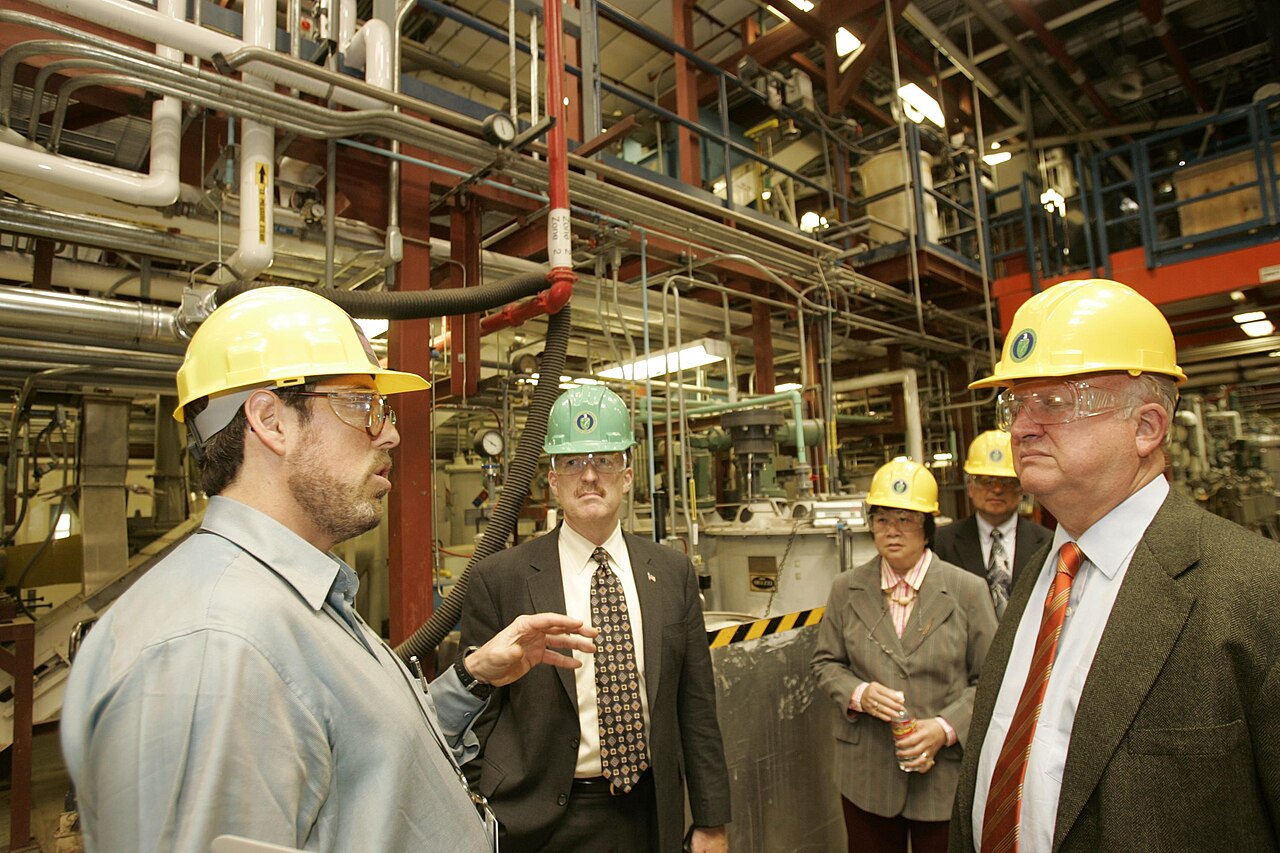
Featured image: NREL fermentation pilot plant tour by U.S. Department of Energy, via Wikimedia Commons (Public domain).
Reporting is based on the publicly available sources listed above and has been independently written by Food Tech Insider.