CarbonFarm Raises €7M Series A to Scale AI and Satellite MRV for Low-Methane Rice Supply Chains
Paris-based CarbonFarm has closed an oversubscribed €7 million Series A to scale its digital measurement, reporting and verification (MRV) platform for low-methane rice. The round was led by Colam Impact, with participation from Proparco, Suma Capital, elea, Working Capital Fund, Albo and Bpifrance. Existing investors Serena and makesense (via Racine²) and Techmind also returned.
The company combines AI analysis of satellite imagery with field-data collection and greenhouse gas modelling to track how rice is grown and to quantify emissions at field level. That evidence is used for carbon credits and, increasingly, for food companies’ own supply-chain climate claims.
Why rice is a methane problem
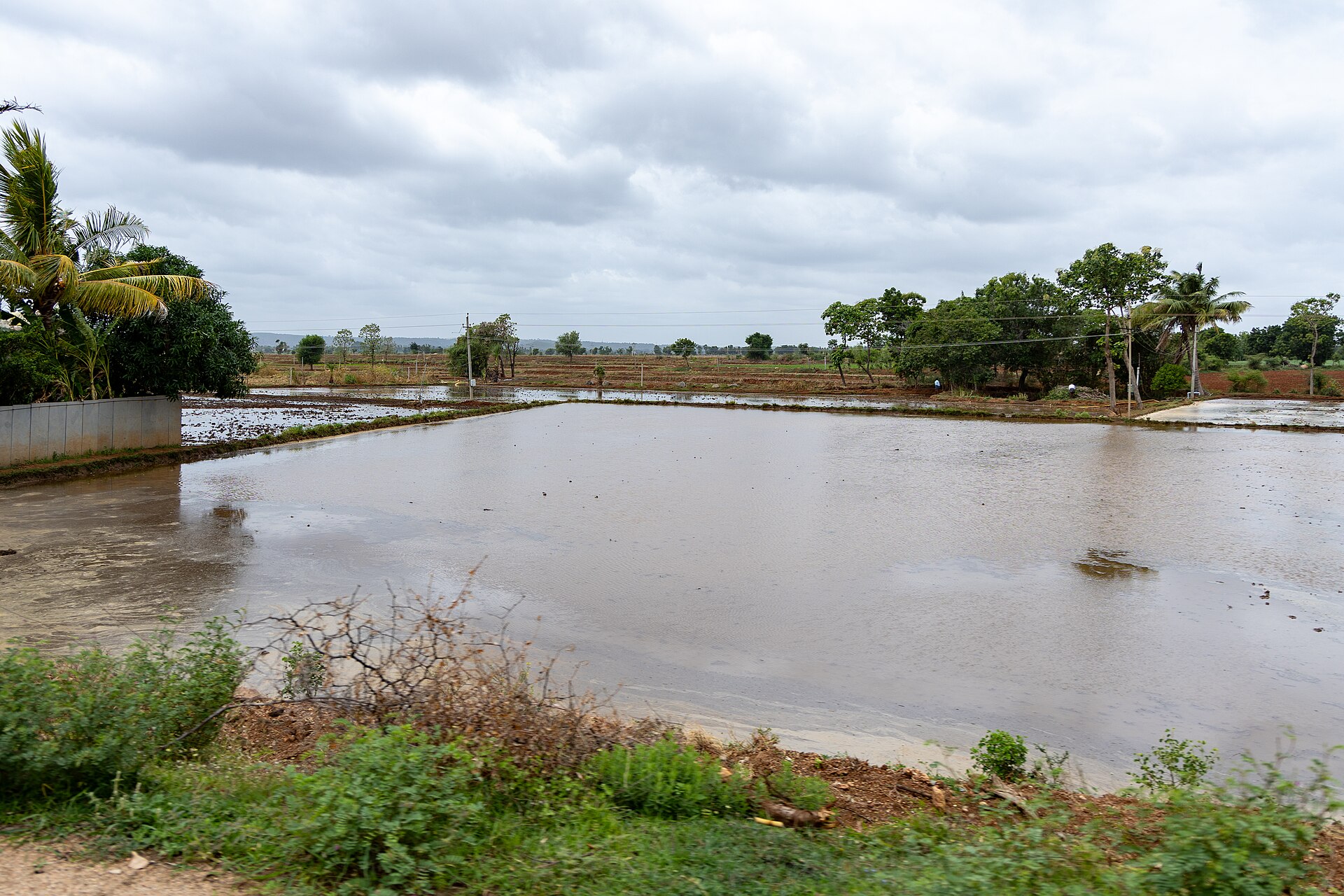
CarbonFarm says rice cultivation produces around 12% of global human-caused methane and uses as much as 28% of the world’s freshwater. Much of the methane comes from keeping paddies flooded for long periods, which creates oxygen-free (anaerobic) soil conditions that promote methane production.
The main fix is a water management practice known as alternate wetting and drying (AWD), in which fields are allowed to drain periodically instead of staying continuously flooded. CarbonFarm and its investors cite reductions of up to 50% in methane and around 30% in water use without lowering yields. Suma Capital cites the International Rice Research Institute (IRRI) for the methane figure.
The difficulty is verification. Rice is grown mostly by smallholders. Proparco notes that the average rice area per farm in Asia is about 1.15 hectares, so a credible programme has to confirm practice changes across tens of thousands of small plots. That is the gap CarbonFarm’s remote monitoring is built to fill.
Who is using it
CarbonFarm says it now operates in 19 countries across Asia, Europe, Africa and the Americas. Its partners include food and ingredient companies Mars Food, Diageo, Ebro and Tilda, BASF Agricultural Solutions, carbon-finance groups Livelihoods Funds and myclimate, development organisations including the World Bank, the Asian Development Bank, SNV, Helvetas and Action Against Hunger, and Google. EU-Startups reports that the technology was developed with Cornell University, INRAE and the European Space Agency.
Suma Capital highlights two programmes. In Vietnam, CarbonFarm is part of the TRVC project with SNV, which aims to reach 200,000 hectares of low-emission rice cultivation by 2028. In Spain, it works with Ebro on the Oryzonte project, which encourages rice farmers in Seville to adopt more water-efficient practices, and it collaborates with Ebro brands Tilda in the UK and Ebro India.
“Carbon accounting is becoming much more rigorous, whether it underpins a carbon credit or a corporate Scope 3 claim,” said co-founder and CTO James Hastwell. “Independent, field-level evidence is becoming the expectation.”
Co-founder and CEO Vassily Carantino said the company’s model is to support, not replace, existing rice value-chain players. “Scale will not come from replacing local value-chain players; it will come from equipping them,” he said.
Investor angle
Proparco, the private-sector arm of the French development agency group AFD, put in €1 million as part of the round under its Natural Capital strategy. It says more than 90% of CarbonFarm’s current clients and projects are in countries where it operates, particularly in Asia, and that the investment benefits from the EDFI Carbon Sinks guarantee funded by the European Union under its EFSD+ programme.
For Suma Capital, the deal is the first investment in a non-Spanish company from its SC Climate Tech Ventures I fund. Partner Xavier Sánchez said CarbonFarm tackles the challenge of “turning changes in farming practices into impact that is measurable, verifiable and financeable.”
The new money will fund deeper presence in Asia, Africa and Europe and a faster push into Latin America, as well as more technology and project-development capacity.
What it means for food supply chains
For rice buyers, the round reflects two pressures meeting. Methane is getting more attention in corporate climate targets, and CarbonFarm notes that rice credits are now compatible with most regulated carbon markets, with Amazon and Google among recent buyers of rice-carbon deals. At the same time, as Hastwell notes, the carbon accounting behind credits and Scope 3 claims is becoming more rigorous.
Remote, satellite-based MRV is one way to make low-methane rice programmes affordable to verify at smallholder scale. The test for CarbonFarm will be whether its field-level data holds up to certification bodies and buyers as programmes grow from pilots to hundreds of thousands of hectares.
Sources & Credits
- CarbonFarm – CarbonFarm raises €7 million Series A to scale high-integrity rice decarbonisation worldwide (Oct 2026)
- Proparco – Proparco invests in CarbonFarm to reduce methane emissions from rice farming
- Suma Capital – CarbonFarm raises €7 million to scale its rice decarbonisation technology with the participation of Suma Capital
- EU-Startups – Paris-based CarbonFarm raises €7 million to tackle methane emissions from rice farming (Oct 2026)
- Tech.eu – CarbonFarm raises €7M to tackle methane emissions from rice cultivation (13 Oct 2026)
Featured image: Flooded paddy field Raichur Karnataka India monsoon irrigation July 2025 by Vraj Acharya, WELL Labs, via Wikimedia Commons (CC BY-SA 4.0).
Reporting is based on the publicly available sources listed above and has been independently written by Food Tech Insider.