Vertical Oceans Plans $28M AI-Powered Indoor Shrimp Farm in Ireland, Raising $20M Equity and $20M Debt to Scale Automated Aquaculture
Singapore-based Vertical Oceans plans to build a US$28 million automated shrimp farm in Ireland. The company says it has proven its high-density, AI-driven indoor aquaculture system at commercially relevant scale in Singapore. Vertical Oceans has raised just under US$18 million so far. It is now raising another US$20 million in equity and arranging US$20 million in debt to fund its international expansion, cofounder and CEO John Diener told AgFunderNews.
AgFunderNews notes that its parent company, AgFunder, is an investor in Vertical Oceans.
From 52 tanks to 800
The company has finished preliminary feasibility engineering for the Irish site. The plant will have 800 growing tanks, compared with 52 in Singapore, and Vertical Oceans aims to start installing equipment by the end of 2027. Diener said the Singapore farm has completed more than 60 production cycles without disease problems, and that its techno-economics have matched the company’s projections.
The system uses vertically stacked, movable tanks the company calls “intelligent habitats” (IHABs). As the shrimp grow close to a crowding threshold, a tank is automatically pulled from the racks and taken to a “pit stop,” where half the shrimp are moved into an empty tank. Both tanks then go back onto the racks. Diener says this keeps average stocking density 6.5 times higher than conventional systems. Combined with faster growth, he says it delivers 20 times more output per cubic metre of tank water. These are company figures.
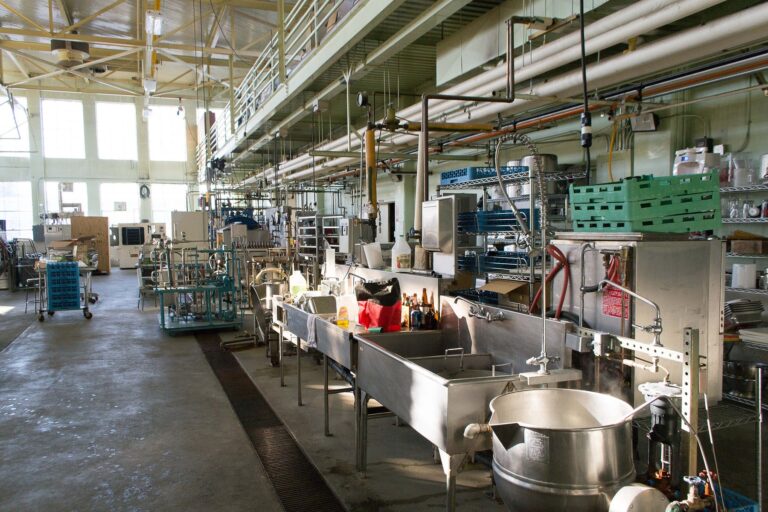
Warehouse installation, not construction
Many land-based aquaculture and shrimp recirculating aquaculture system (RAS) projects have failed because of high build and operating costs. Vertical Oceans says its modular equipment can go into existing high-bay logistics warehouses rather than custom-built facilities. Installation takes about nine months, and first harvests come within 12 months. “It’s an installation, not a construction,” Diener said, arguing that this makes projects easier to finance.
The financing plan reflects that model. New equity will cover operating, market development and commissioning costs while the Irish plant ramps up, and non-dilutive finance is meant to cover capital costs. In the longer term, the company wants third parties to own the production assets while Vertical Oceans runs the farms and owns the shrimp. Diener expects the business to fund itself from cash flow once the Irish facility reaches steady-state production.
Physical AI and autonomous experimentation
Diener says the company has been “doing physical AI for six years.” Each tank runs on software called Tide OS, and a farm-level application called Moana coordinates the whole operation. An optimisation function uses production data to suggest better growing conditions, tests them in selected tanks and feeds the results back into the company’s causal models without human involvement. The Singapore farm needs only four full-time staff, and the company is aiming for a fully “lights out” facility within five years.
On the biology side, water from the shrimp tanks is filtered and part of it is passed through a three-species macroalgae system that removes ammonia. Vertical Oceans says it has not used ultraviolet disinfection for two and a half years and does not use ozone or antibiotics. It is also looking at adding bivalves to turn waste solids into saleable biomass.
Why Ireland, and which markets
Diener said Ireland was chosen ahead of the US for its seafood distribution networks, engineering talent, government support and faster access to funding. The company’s global engineering team will also be based there. The Irish farm will first serve the UK, France and Germany, with an expected sales split of 60% retail and 40% restaurants. It will also supply US customers until production capacity is built in the US.
Vertical Oceans aims at the premium shrimp segment, which is still dominated by wild-caught product. However, Diener says its farmgate costs are comparable to those of producers growing 25-gram shrimp in Vietnam and India. If the economics of the 800-tank Irish plant hold up, it would be one of the more significant tests yet of whether automated, AI-run indoor aquaculture can reach commercial seafood scale in Europe.
Sources & Credits
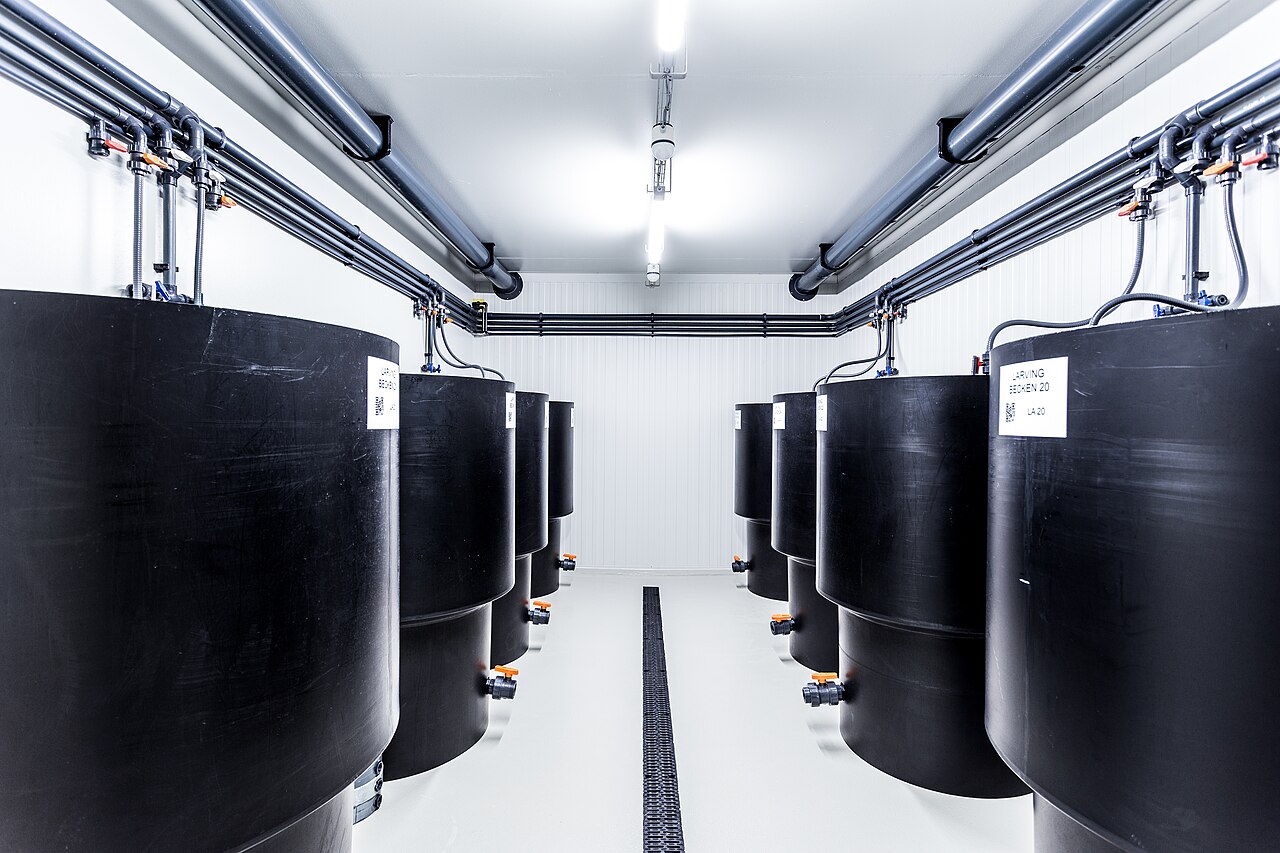
Featured image: Heated indoor shrimp aquaculture tanks by Rgpb, via Wikimedia Commons (CC BY-SA 4.0).
Reporting is based on the publicly available sources listed above and has been independently written by Food Tech Insider.