Biomatter Raises $18M Series A Led by Astanor to Scale AI Enzyme Design for Food and Industrial Biomanufacturing
Lithuanian AI enzyme design company Biomatter has closed an oversubscribed $18 million (about €16.3 million) Series A round led by agrifood technology investor Astanor, with existing investors UVC Partners, Inventure and Metaplanet also taking part. The Vilnius-based startup announced the round on 12 November 2026 and plans to use it to build a dedicated enzyme design-and-testing facility, expand its commercial team and grow its US presence.
The round is one of the larger recent bets on AI protein design aimed at industrial and food biomanufacturing rather than drug discovery. It also adds to a run of investment in the enzymes, strains and fermentation inputs behind precision-fermented food ingredients.
Designing enzymes from the reaction up
Founded in 2018 by Donatas Repečka, Laurynas Karpus, Rolandas Meškys and Vykintas Jauniskis, Biomatter does not start from a natural enzyme and improve it step by step, as conventional enzyme engineering does. It starts from the target reaction a customer needs and designs a catalyst for it. The company says this relies on years of generating its own experimental enzyme data far from natural sequences, so its models can make larger jumps in sequence and structure. Every design is tested in the lab before delivery, and the results feed back into its proprietary dataset.
As an example, Biomatter cites a methylase for mRNA vaccine manufacturing that works without S-adenosyl methionine (SAM), the expensive co-factor natural methylases depend on. Food-relevant work is less publicised, but in 2024 the company described a collaboration with Kirin Holdings in which it redesigned an α1,2-fucosyltransferase to selectively produce the human milk oligosaccharide LNFP I in fermentation while keeping 2′-fucosyllactose by-product to trace levels. That kind of selectivity problem matters for fermentation process economics.
Customers and commercial traction
Biomatter says it has delivered more than 50 custom enzymes to more than 25 enterprise customers in Europe, the US and Japan, including AstraZeneca, BASF, Kirin Holdings, Neogen, Sanofi and sugar and starch group Tereos. It says several accounts have grown from one-off projects into multi-year, multi-enzyme programmes. One design is already in a commercial product: Biomatter worked with Thermo Fisher Scientific to improve the oxidation resistance of the Invitrogen SuperScript V reverse transcriptase, supporting ambient shipping and room-temperature storage for up to six months.
The company has not published revenue figures, and its valuation and total funding to date were not disclosed. Earlier funding included a €6.5 million seed round in August 2024.
What the $18 million will fund
- A 2,000 m² design-and-testing facility in Vilnius, opening in 2027, to bring more of the design–build–test loop in-house. Biomatter says its programmes already run in weeks rather than the months or years typical of conventional enzyme projects, and the new site is meant to cut that to days.
- US expansion, where roughly half of its customers are based.
- A larger commercial team and continued investment in its computational platform and enzyme dataset.
“Our goal is to make a custom enzyme as easy to order as a catalogue product, including for reactions that don’t have one today,” said chief executive and co-founder Laurynas Karpus.
Astanor partner Harry Briggs linked the investment directly to food: “Enzymes power hundreds of billions of dollars in food production and biomanufacturing. But because improving them takes months or years of trial and error, companies settle for suboptimal enzymes.” He added that the field has been limited by training data drawn from nature, and that Biomatter’s own data on non-natural enzymes is what sets it apart.
Why it matters for food and ingredient makers
Food and ingredient manufacturers rely on enzymes for sugar and starch processing, dairy, brewing and baking, specialty carbohydrates such as HMOs, and a growing number of precision fermentation pathways. Faster access to custom enzymes could shorten development timelines for new ingredients and improve yields and selectivity on existing lines.
Biomatter is not alone. Cradle, Imperagen and ZYMVOL are among the companies applying AI and computational methods to protein and enzyme engineering. For food manufacturers weighing these suppliers, the practical questions are commercial as much as technical: who owns the designed sequence and the performance data, how much of the value comes from one-off design services versus royalties tied to production volumes, and whether AI-designed enzymes hold up at plant scale. The Vilnius facility, due in 2027, will be the first real test of the company’s promise to compress development from weeks to days.
Sources & Credits
- Business Wire – Biomatter Raises $18M Series A to Scale Its AI-Powered Enzyme Design for Global Industry Leaders (12 Nov 2026)
- Tech Funding News – Biomatter lands $18M from Astanor and UVC Partners to build a Vilnius enzyme lab (12 Nov 2026)
- EU-Startups – Vilnius-based Biomatter raises €16.2 million to make AI-designed custom enzymes (12 Nov 2026)
- FoodEdge – AI enzyme design: Biomatter raises €16.3M (14 Nov 2026)
- SynBioBeta – Breaking Nature’s Limits: Enzyme Design for a Sustainable Future (Kirin LNFP I collaboration, 2024)
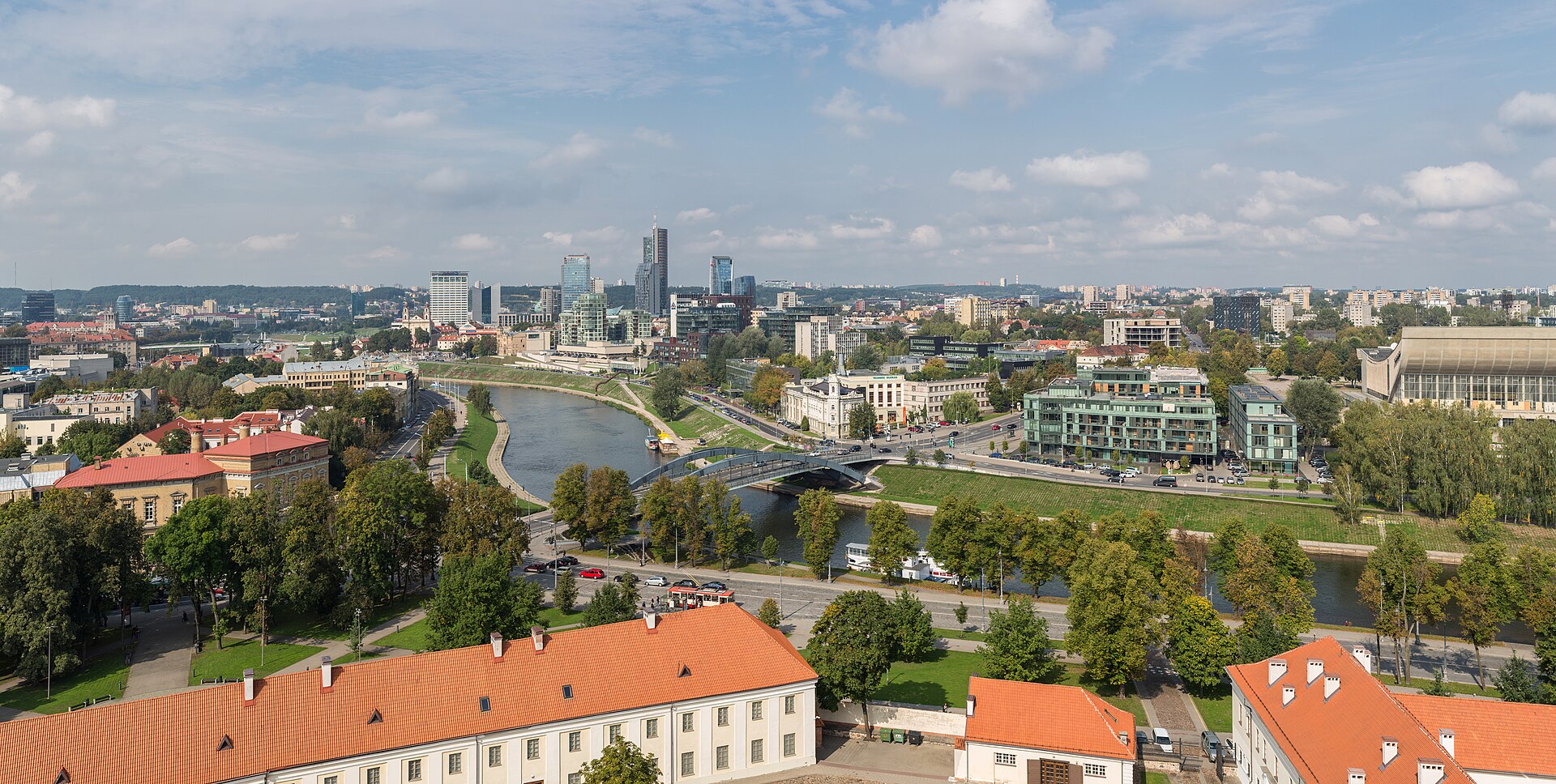
Featured image: Vilnius modern skyline, Lithuania by Diliff, via Wikimedia Commons (CC BY-SA 3.0).
Reporting is based on the publicly available sources listed above and has been independently written by Food Tech Insider.