Bel Group and Dassault Systèmes Build AI Digital Twin of The Laughing Cow Cheese to Predict Taste and Texture Before Physical Trials, Targeting 2028 Rollout
Bel Group is building what it calls the world’s first “digital twin of a cheese” with Dassault Systèmes. The model is designed to predict taste, texture and nutritional properties from a recipe before a single physical trial is run. The project uses The Laughing Cow as its pilot product and is targeting operational use in 2028, according to an interview with Bel published by Food Ingredients First.
The work builds on a strategic partnership the two companies signed in 2024. It brings the 3D modelling and virtual simulation tools Dassault Systèmes sells into aerospace, automotive and life sciences into food formulation.
Modelling the product, not the production line
Most digital twins in food and beverage so far have modelled processes: virtual production lines, bioreactor simulations for alternative proteins, or supply-chain scenarios. Bel’s project models the food itself. The goal is to link ingredients, formulation, manufacturing conditions and physicochemical properties to how consumers perceive creaminess, flavour intensity and overall liking.
“We are developing a predictive tool that anticipates a cheese’s taste and texture from the ingredients in its recipe,” Anne Pitkowski, research and application director at Bel Group, told Food Ingredients First. The longer-term aim is to make the model generative. “Rather than starting with a recipe and predicting the resulting taste and texture, we aim to start with consumer expectations and work backward to generate the ideal cheese recipe to meet them,” she said.
3,000 recipes a year as the baseline
The business case rests on the cost of physical experimentation. Bel’s research, innovation and development teams test about 3,000 recipes a year across some 150 innovation projects. Each formulation needs time, ingredients, pilot equipment and expert sensory evaluation.
The plan is to screen thousands of scenarios virtually and then focus pilot-scale trials on the formulations with the best chance of meeting nutrition, taste, texture and environmental targets. Bel says it is not trying to eliminate physical or consumer testing, which remain essential for validation before launch. Bel has made more than 350 recipe improvements across its portfolio since 2012, and nutritional reformulation of The Laughing Cow is one explicit goal.
Where the model still falls short
Pitkowski was clear that the project is still at the research stage. Cheese brings together biological, physicochemical, nutritional and sensory behaviour that interact closely, so a change to one ingredient or process parameter can shift stability, texture and flavour perception at the same time. The hardest step, she said, is connecting what can be measured objectively in a lab with what a consumer actually experiences.
Consumer preference adds another layer. The Laughing Cow is sold in about 120 countries with more than 100 recipe variants, so Bel is drawing on a large multi-country consumer panel and says the twin “cannot be treated as a universal predictor of consumer taste.” Expanding the underlying datasets and validating predictions against physical and sensory trials will come before any wider rollout.
What changes for food scientists
Bel positions AI as augmenting rather than replacing R&D staff. The tasks it expects to automate are the data-heavy ones: analysing experimental results, comparing formulations, finding relationships between variables and screening candidate recipes. Scientists would still set objectives and constraints, interpret outputs, run sensory evaluations and sign off products. “The role of food scientists will increasingly combine deep product expertise with the ability to interpret data, work with predictive models, and make informed scientific decisions,” Pitkowski said.
Why it matters
Predictive formulation is one of the most practical uses of AI in food manufacturing, and dairy is one of the hardest matrices to model. If Bel and Dassault Systèmes can reliably link recipe and process inputs to sensory outcomes for processed cheese, the same approach could shorten reformulation cycles for salt, fat and sugar reduction and lower ingredient and energy use in pilot plants. The 2028 target and Bel’s emphasis on validation suggest a gradual adoption curve. The project also signals that large CPG groups now see product-level digital twins, not just plant-level ones, as part of their R&D infrastructure.
Sources & Credits
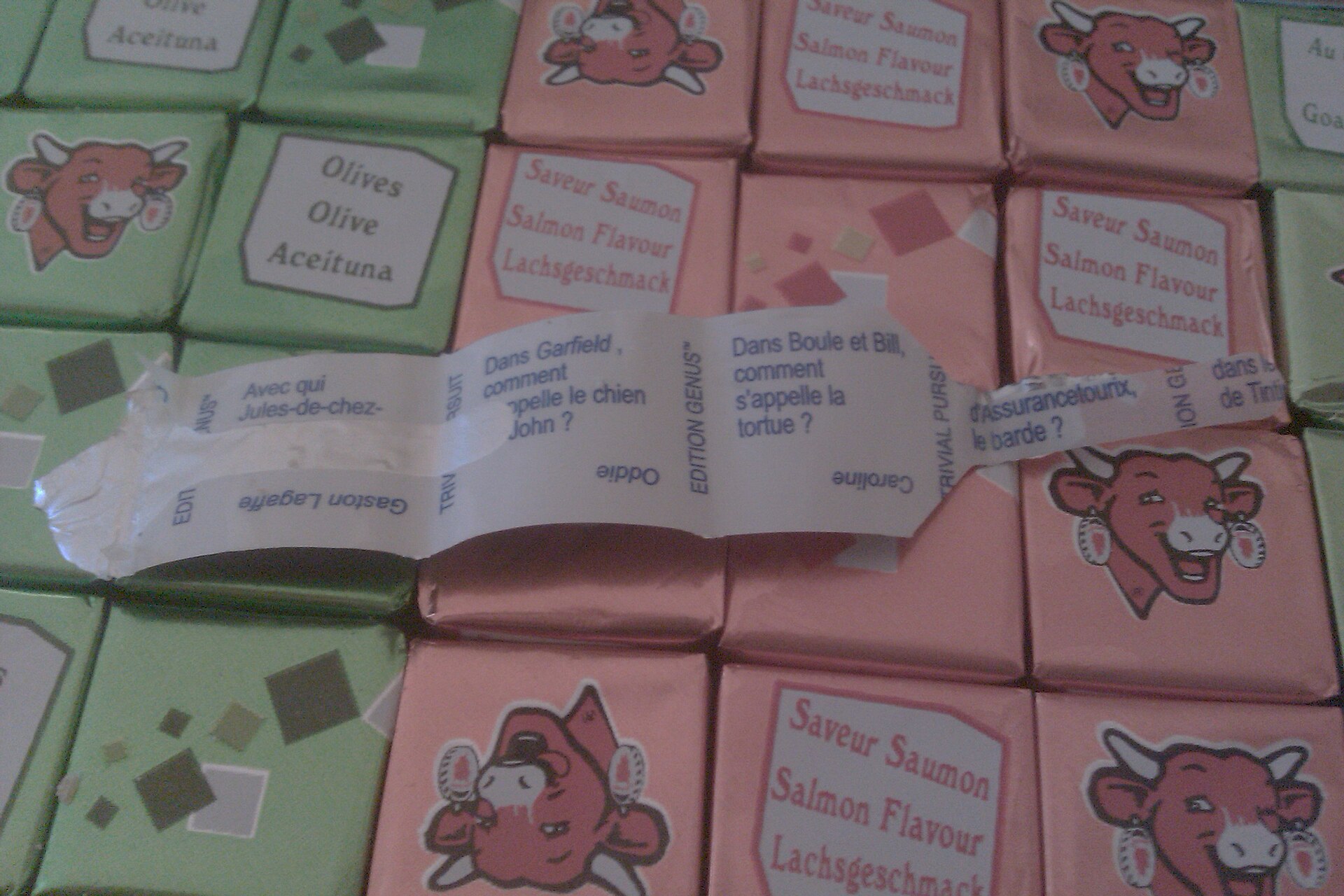
Featured image: Fransk ost med spørgsmål by Ole Palnatoke Andersen, via Wikimedia Commons (CC BY-SA 2.0).
Reporting is based on the publicly available sources listed above and has been independently written by Food Tech Insider.