Ahold Delhaize Cyber Incident Takes Food Lion, Stop & Shop and Giant E-Commerce Offline, Exposing Grocery Tech Dependencies
A cybersecurity incident at Ahold Delhaize has kept the websites and apps of its five U.S. grocery banners offline for several days. The outage at Food Lion, Hannaford, Stop & Shop, Giant Food and The Giant Company has cut off online ordering, while stores, pharmacies and fuel stations stay open. For grocery technology teams, it is a clear example of how much of the modern supermarket now runs on shared digital systems.
The Zaandam-based group first disclosed a “security issue within its network” on 12 October and said it had taken some systems offline as a precaution. On 13 October it said it was beginning a controlled re-launch of certain systems, working with external cybersecurity experts and the relevant authorities, and had no evidence so far that customer or associate data had been taken. It has not described the cause, confirmed or ruled out ransomware, or given a full restoration timetable.
What went dark
As of 14 October, Grocery Dive reported that the U.S. banners’ sites and apps were still unavailable, at least the third day of disruption. Banner websites told shoppers that unfulfilled web and app orders would be refunded, and pointed them to delivery through Instacart, DoorDash and Uber Eats.
Europe was hit too. Supermarket News reported that the incident affected European websites including Albert Heijn, Delhaize, Etos, Gall & Gall and bol.com. In the Netherlands, Albert Heijn said stores were open and payments were working. Its website, app, customer service and home delivery remained offline, and personal loyalty discounts and app-linked savings were suspended, with promotions settled at the till instead. Dutch outlet NU.nl reported that Albert Heijn restarted deliveries from its distribution centres to stores on 14 October, although availability could vary by store and category for several days.
The hidden dependencies of a “store-open” outage
The incident shows how far customer-facing and operational grocery technology is now bundled together:
- E-commerce and fulfilment. Click-and-collect and delivery orders depend on the same identity, catalogue and order-management systems that were taken offline. Third-party marketplaces gave Ahold Delhaize a fallback channel, but at a cost in margin and customer data.
- Loyalty and personalised pricing. Personal offers and digital coupons, now central to grocery retail-media and promotion strategies, stopped working once the app and back-end systems were isolated.
- Store replenishment. Albert Heijn’s distribution-centre restart shows that a network incident can reach the physical supply chain. Gaps on the shelf can last longer than the outage itself.
- Shelf-edge pricing. Dutch media reported that electronic shelf labels might show out-of-date prices during the disruption. That is a reminder that digital shelf infrastructure needs a manual fallback.
Analysts at Security.io noted that a website coming back online does not prove the underlying systems are clean. They argued that each restored service needs security validation, a named business owner and an evidence-based view of data impact before the incident is declared contained.
A sector under sustained pressure
This is not Ahold Delhaize’s first serious incident. In November 2024 a cyberattack disrupted parts of its U.S. operations, including Hannaford’s e-commerce and some pharmacies, and the company later said more than 2 million people were affected. In 2025, a cyberattack on grocery distributor UNFI disrupted deliveries to independent and chain retailers across North America.
The latest outage also came the same week that remote refrigeration controllers were attacked in hundreds of French supermarkets. According to Security.io, the Dutch National Cyber Security Centre said there was no reason to link the two incidents, and Ahold Delhaize has not tied them together. Still, two large disruptions in one week, one hitting operational technology and one hitting enterprise IT, put grocery cybersecurity firmly on board agendas.
What operators should take from it
For grocers, food distributors and the technology vendors that serve them, the practical lessons are familiar but urgent. Map which customer, store and supplier services depend on shared platforms. Test manual and alternative-channel continuity for ordering, promotions and pricing. Segment loyalty, e-commerce and store systems so that one incident does not take everything down. And treat third-party delivery partners as part of incident planning, not an afterthought. Ahold Delhaize’s recovery timeline, and any findings on data exposure, will be closely watched across the industry.
Sources & Credits
- Ahold Delhaize – Ahold Delhaize takes precautionary measures following cybersecurity incident (12 Oct 2026)
- Ahold Delhaize – Update on Ahold Delhaize's cybersecurity incident (13 Oct 2026)
- Grocery Dive – Ahold Delhaize USA banners remain offline (14 Oct 2026)
- Supermarket News – Ahold Delhaize shuts down websites after cybersecurity issue (12 Oct 2026)
- NU.nl – Albert Heijn resumes deliveries to stores (Dutch)
- Security.io – Ahold Delhaize restores services without a complete incident boundary (14 Oct 2026)
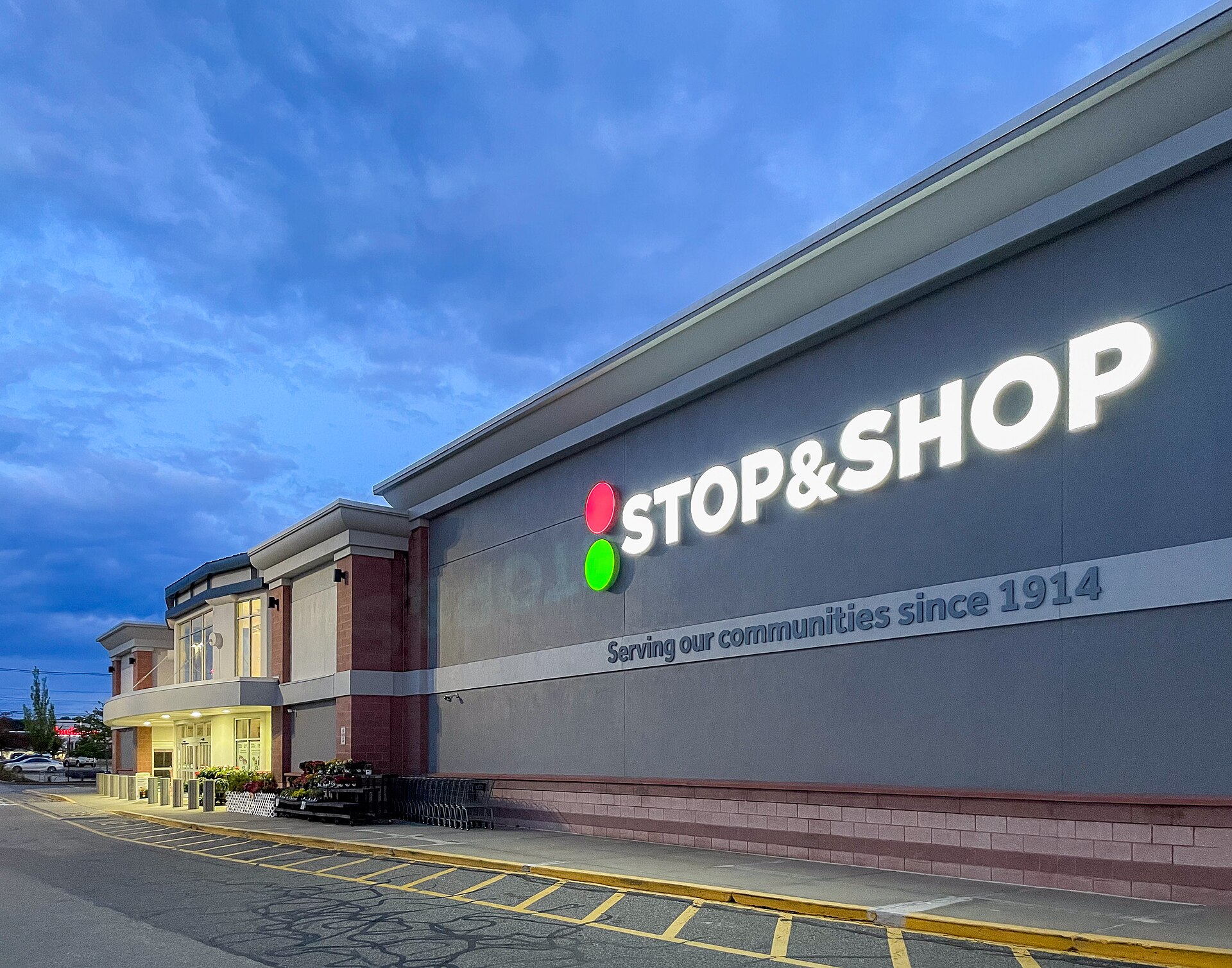
Featured image: Stop and Shop exterior at night by Kenneth C. Zirkel, via Wikimedia Commons (CC BY-SA 4.0).
Reporting is based on the publicly available sources listed above and has been independently written by Food Tech Insider.