LiVA Prebiotic Bio-Protection Sticker Heads to Commercial Strawberry Shelf-Life Pilot With Dyson Farming and a UK Retailer
Israeli agri-biotech startup LiVA Bio Protection Technologies is preparing to move its prebiotic bio-protection sticker for fresh produce packaging from trials into a commercial-scale strawberry pilot in Britain with Dyson Farming. According to a report published by Ynet on 14 November 2026, the pilot is due to begin in late December, in step with the British winter strawberry season, and is being developed with Dyson Farming and a major UK retailer that has not been named.
The project is one of the clearer tests so far of whether a low-capex active packaging insert can extend strawberry shelf life and cut retail food waste without changing the fruit, the growing system or the packing line.
How the LiVA sticker works
LiVA was founded in 2021 by chief executive Ifat Peled Dinstag and inventor Ifat Hammer. Its first product, the LiVA Sticker, sits inside the punnet or carton and stays there through transport, storage, retail display and the consumer’s fridge. Rather than applying a preservative to the fruit, the company says its patented prebiotic formulation stimulates beneficial microorganisms already present on the fruit surface, helping them outcompete spoilage organisms and limit humidity-driven decay.
When the pilot was first announced in June, LiVA described the format as a drop-in sticker that it eventually plans to turn into a printed solution applied at packing, with no capital expenditure and no major changes to existing packing processes.
What the Dyson Farming trials showed
The collaboration began with structured trials across Dyson Farming’s premium strawberry operation during winter 2025–26. All performance figures come from the company and have not been independently verified:
- After six days, 86% of treated strawberries were still considered saleable, compared with 60% of untreated fruit.
- The window in which strawberries could be sold at full price, without markdowns or waste, was extended by two days.
- LiVA estimates the improvement is worth about £593 (roughly $780) in additional revenue per tonne of strawberries, rising to £822 (about $1,080) by day three.
Across berry trials and customer testing more broadly, LiVA’s materials cite 20% to 40% more marketable fruit and two- to six-fold reductions in decay. Results are likely to vary by crop, growing conditions, storage and transport.
Dyson Farming has framed the technology as a complement to automation. Oskar Szymanski, senior technical manager at Dyson Farming, said in June that the grower’s focus is shifting toward robotic harvesting and advanced automation, but that minor surface bruising remains almost unavoidable and has historically meant slowing lines for manual re-inspection. He said adding LiVA alongside automated processes reduces the need for that intervention and helps prevent food waste.
From pilot to UK retail scale
LiVA says the Dyson Farming partnership has opened talks with three additional premium growers. If the commercial rollout succeeds, it hopes to expand across three British retail chains that together account for about 40% of UK strawberry consumption, although that depends on the pilot outcome and further commercial agreements. The company set up a UK subsidiary, LIVA BIO UK LIMITED, in June 2026.
Teams in South Africa and Morocco are also testing other fruit, including shipments to Britain that are assessed after transport, to see whether the sticker can protect imported produce over longer supply chains. In June, LiVA said it had active pilots in five markets across four continents, covering strawberries and bell peppers.
On the science side, LiVA has started a 12-month, £100,000 research collaboration with the Quadram Institute Bioscience in Norwich, running from October 2026 to September 2027 with a group led by Dr Mark Webber. The project will map the microbiome of British-grown strawberries, look at its role in post-harvest spoilage, and evaluate LiVA’s prebiotic approach.
Why it matters for produce supply chains
Strawberries are among the most perishable lines in fresh produce, and losses at retail are a direct hit to margins. WRAP estimates that UK households threw away about 6 million tonnes of food and drink in 2022, with fresh produce the largest share of edible waste by weight. Retailers are also under pressure from the UN target to halve retail and consumer food waste by 2030.
Shelf-life extension in fresh produce has mostly meant coatings, modified atmosphere packaging or changes to produce packaging formats and logistics. LiVA’s microbiome-based insert belongs to the same broader active packaging trend, but works on the fruit’s own microbial community instead of adding an antimicrobial. The December pilot will show whether trial results hold up at commercial volumes, across a full retail window and with a named retailer’s quality checks. Those are the data growers and category buyers will need before paying for a new input on every punnet.
Sources & Credits
- Ynet Global – Israeli startup tests fruit-preserving stickers with British growers to cut food waste (14 Nov 2026)
- Fruitnet – LiVA Biotechnology and Dyson Farming announce commercial-scale strawberry pilot (22 Jun 2026)
- LiVA Newsroom – How LiVA and Dyson Farming are keeping British strawberries premium
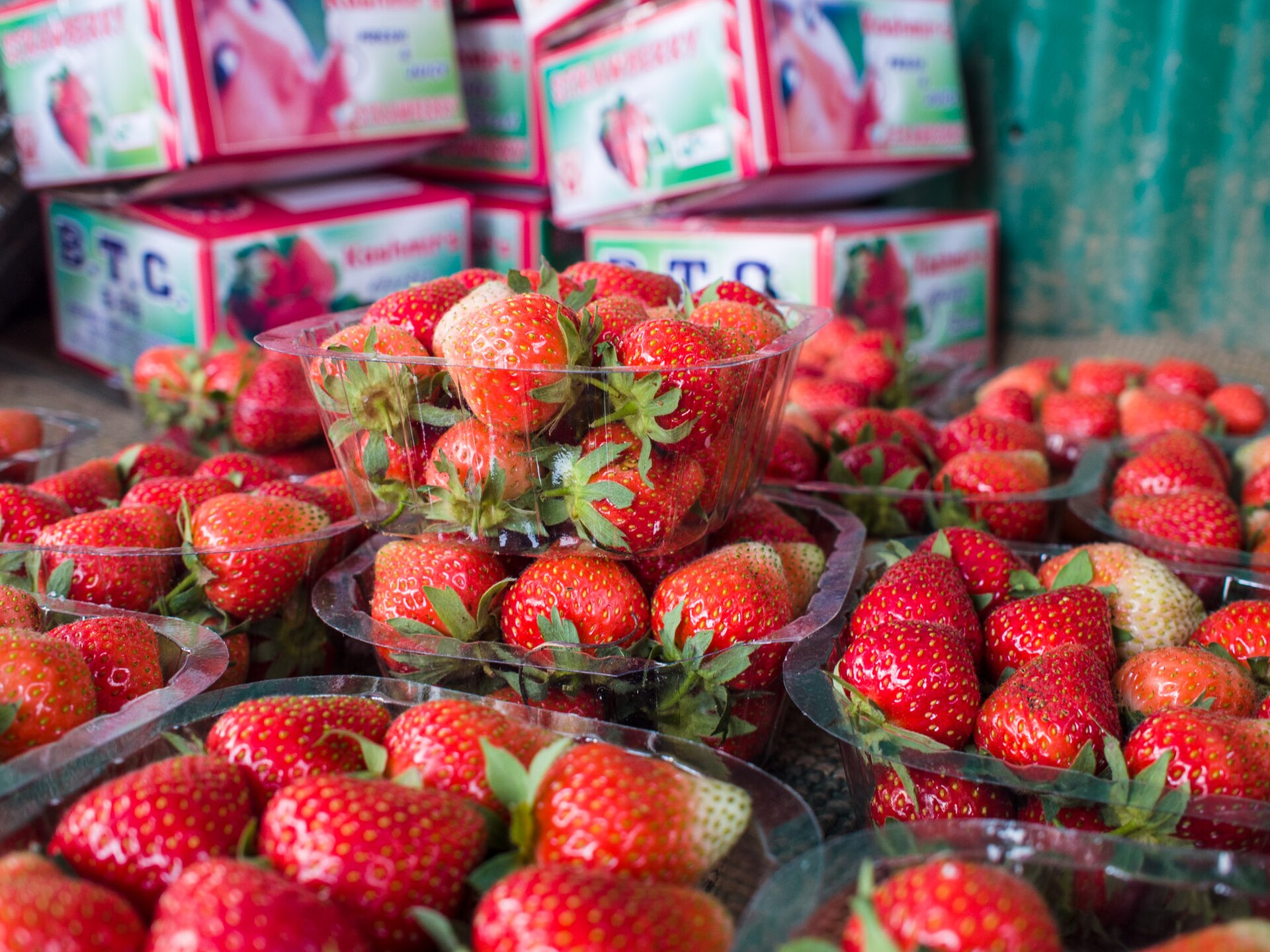
Featured image: Strawberries packed in punnets by Mike Prince from Bangalore, India, via Wikimedia Commons (CC BY 2.0).
Reporting is based on the publicly available sources listed above and has been independently written by Food Tech Insider.