Kroger’s Connected Store: Bakery RFID Cuts Waste 50% Across 1,500 Stores as Grocer Targets $500M Waste Savings by 2029
Kroger is building a “connected store” that links digital shelf labels, RFID, in-store robots and AI into one operating platform. The most detailed results so far come from fresh food. In about 1,500 store bakeries, item-level RFID has cut waste by 50% and made inventory counts nearly 70% faster, according to figures the grocer presented to investors.
Mark Ibbotson, executive vice president and chief store operations officer, set out the strategy at Kroger’s 2026 Investor Update in New York on 20 October. Trade coverage published this week has given more detail on how the parts fit together. Kroger is targeting about US$500 million in waste savings by 2029.
Bakery RFID: the first department to show results
Kroger is using its bakery departments to test the model. According to Kroger, RFID is now live in about 1,500 store bakeries and has delivered:
- about 98% read performance, meaning the share of tagged items the system correctly reads;
- nearly 70% faster inventory counts;
- 50% lower waste, helped by earlier markdown and expiration decisions;
- about 200 basis points of sales lift and nearly 50 basis points of category share gains, as more reliable inventory data reduces “phantom inventory”.
Kroger expects RFID to be in more than 2,300 stores by 2029. Ibbotson said the next step is to use “trusted item level data to improve replenishment, production markdowns and fresh decisions across more of our fresh” departments.
Digital shelf labels as an IoT network
Kroger has installed more than 36 million digital shelf-edge labels in 1,100 stores and plans to have them in more than 2,400 stores by 2029. Price and promotion changes that used to take days can now be made in minutes. The labels also work as an in-store IoT network. With Pick to Light, the shelf points associates and third-party shoppers to the right item, which Kroger says improves pick accuracy by about 10%. A planned Shop to Light feature could help customers find products and bring retail media to the shelf edge.
Walmart already offers a similar feature. On 30 October it added a “Flash price tag” option to its Sparky AI shopping agent that makes a digital shelf label light up so shoppers can find an item. The feature builds on the Shop to Light capability Walmart launched earlier this autumn.
Robots, computer vision and an AI in-stock agent
About 900 Kroger robots are currently in operation. They check for out-of-stocks, verify prices and promotional displays, detect top stock and confirm truck deliveries, and Kroger expects to have more than 2,100 by 2029. An AI in-stock agent connects about 20 data pipelines to find the root cause of an out-of-stock. It then sends the issue, whether a sell-through problem or a margin risk, to the merchant, field team or store that can fix it.
Kroger is also sharing computer vision data with suppliers. “That puts Kroger and our suppliers on the same signal, with the same objective: improve availability and sell more product,” Ibbotson said. The connected store also brings retail media into the aisle: when an opted-in customer shops with the Kroger app, brands can reach them on their phone in front of the relevant shelf. Ibbotson added that “Kroger does not and will not raise prices based on the person.”
Standardise first, then digitise
Ibbotson presented the technology as the second step, after standardisation. Kroger’s “one best way” programme sets daily routines that about 95% of stores can follow consistently, even on peak days. Once a routine is standardised, software removes steps, guides the next action, verifies completion and flags problems such as fresh quality issues or late pickups. “The technology will do the tedious, and we will design out failure,” he said.
Context: automation reset elsewhere
Kroger’s focus on in-store technology comes after it scaled back its automated e-commerce fulfilment partnership with Ocado. The grocer cancelled a planned automated centre in North Carolina, and a Tennessee facility was due to close this year. On the supply chain side, Kroger is building an automated site in Franklin, Kentucky, to serve its Nashville and Louisville divisions, with completion expected in 2028.
Why it matters for fresh food tech
Fresh departments account for a large share of grocery shrink, and item-level visibility has been hard to achieve there because products are made in store, have short shelf lives and are often marked down. Kroger’s bakery figures are one of the largest public data sets so far on RFID in fresh food. If the same results hold when RFID is rolled out to other perishable categories, they would strengthen the case for RFID tags, computer vision and AI replenishment tools across the grocery sector.
Sources & Credits
- The Shelby Report – Kroger’s ‘Connected’ Store Puts Robots, RFID And AI At The Center Of Operations (2 Nov 2026)
- Kroger – 2026 Investor Update presentation (20 Oct 2026)
- Supply Chain Dive – Kroger taps RFID, computer vision data to boost inventory management (27 Oct 2026)
- Progressive Grocer – Walmart Adds 6 New Features to AI Shopping Agent Sparky (2 Nov 2026)
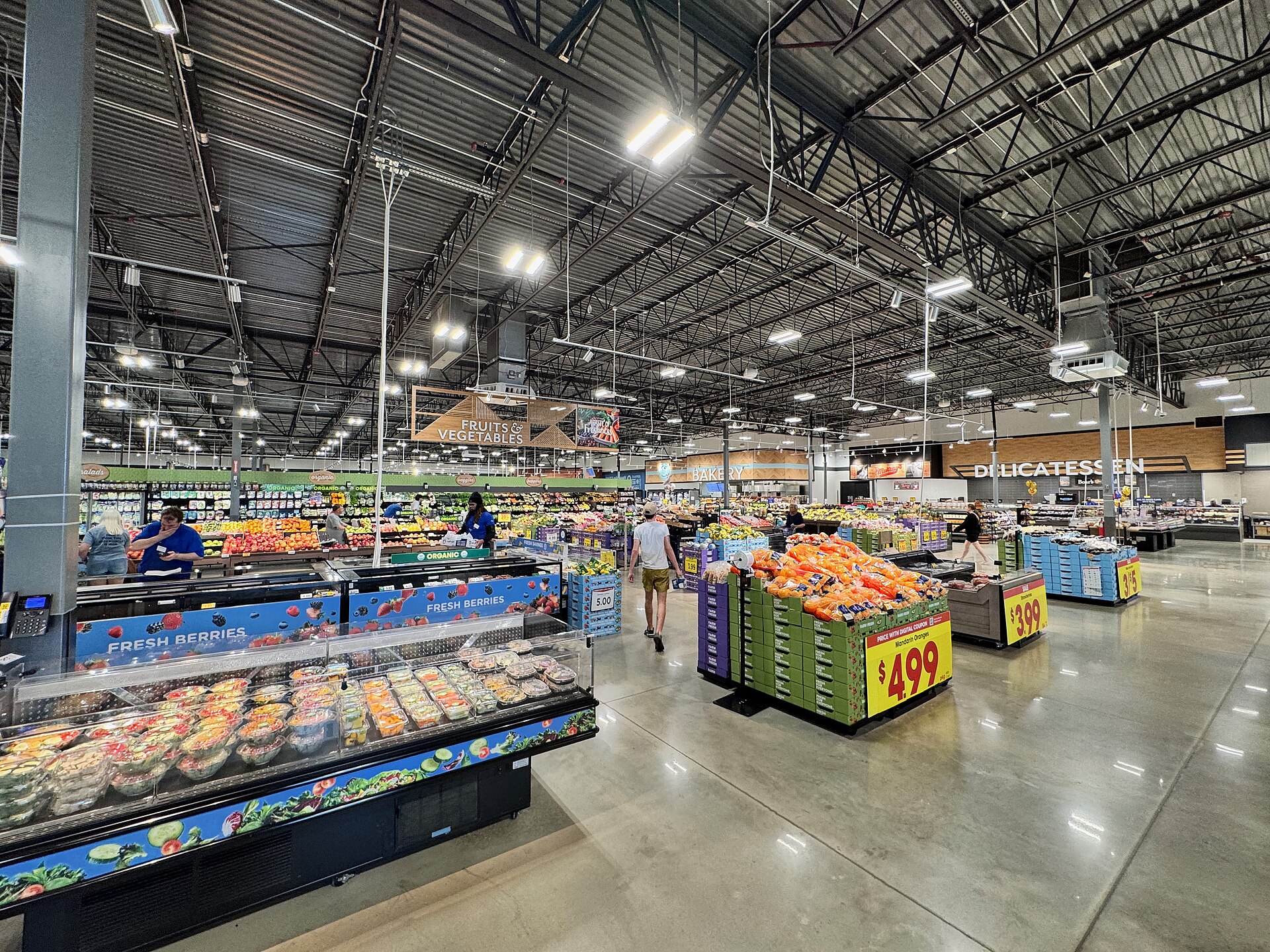
Featured image: Produce section of a Kroger Marketplace store, Athens, Georgia by Harrison Keely, via Wikimedia Commons (CC BY 4.0).
Reporting is based on the publicly available sources listed above and has been independently written by Food Tech Insider.