EPIC-SHIFT Maps 28 Alternative Protein Ingredients to Best-Fit Food Applications Using Techno-Functional Screening
Researchers in the EU-funded EPIC-SHIFT project have published a framework for matching alternative protein ingredients to the food applications where they work best, rather than forcing a new protein into a product designed around soy or dairy. The work characterised 28 protein ingredients and used the results, alongside industry and consumer research, to choose prototypes.
The method is set out in the project report NFAP Market Projections According to Techno-Functional Properties, co-authored by Spain’s National Centre for Food Technology and Safety (CNTA), Belgian bakery ingredients group Puratos and Shake-Up Factory. NFAP stands for novel foods based on alternative proteins.
A €4.5M Horizon Europe programme
EPIC-SHIFT is a Horizon Europe project with a total budget of about €4.5 million, coordinated by Lund University. It started in November 2024 and runs to October 2027, bringing together 20 partners in 14 countries. Its wider brief is to build an independent evidence base on the environmental, economic and social impact of alternative proteins from insects, fungi, bacteria, algae and agricultural and aquaculture by-products.
Ingredient first, product second
Conventional product development usually starts with a fixed concept and then looks for a protein to fit it, typically one the industry already handles at scale. EPIC-SHIFT reverses that order. “Instead of trying to replace one protein with another, we analysed a wide range of proteins to better understand the strengths and limitations,” report coordinator Irene González Pérez said in an interview published by the project.
The team profiled 28 ingredients across seven source categories, including fungi, bacteria, microalgae, macroalgae and agricultural and aquaculture by-products. The scope was later widened to include precision fermentation and molecular farming.
Supply was the first filter
Before any lab work, CNTA screened candidates for food regulatory approval, homogeneity and availability in larger volumes, then consulted companies and partners on their needs. Availability turned out to be a major constraint. “While some ingredients looked promising on paper, availability quickly became a major limitation, as many suppliers were still at the startup stage,” González said.
Ingredients that passed criteria set jointly by CNTA and Puratos moved on to characterisation of their techno-functional, nutritional and sensory properties. Industry interviews and surveys, consumer research in five European countries and S-curve market modelling ran in parallel. Where an ingredient suited several uses, the final pick went to the application where technical feasibility, industry relevance and consumer expectations lined up most closely.
Microalgae beat macroalgae
The algae results illustrate the approach. Of nine algae ingredients tested, the five microalgae showed higher protein content and better functional performance than the four macroalgae, whose strong marine flavour limited their use in mainstream foods. The project noted that macroalgae still offered useful fibre, mineral and water-binding properties. Microalgae were selected for prototype development because they can contribute to structure, texture and nutrition, not just colour or flavour.
“Conventional development relies on familiar ingredients such as soy, because they are well known and easy to use,” said food product development researcher Irene Arce Gutierrez. She said EPIC-SHIFT provides a wider set of options, stronger evidence and clearer criteria for when less common ingredients are worth exploring.
Why it matters for R&D teams
For formulators and ingredient buyers, the takeaway is a screening sequence that puts regulatory status and supply security ahead of functionality: an excellent protein is of little use if a startup supplier cannot deliver consistent tonnage. The project’s functional profiling of 28 ingredients is also a useful public reference point for companies weighing fungal, bacterial or algal proteins against incumbent soy and pea isolates.
Sources & Credits
- vegconomist – EPIC-SHIFT Researchers Map 28 Alternative Protein Ingredients to Their Best-Fit Food Applications (23 Oct 2026)
- EPIC-SHIFT – From Sea to Plate: What We Learned About Micro- and Macroalgae, Food Functionality and Consumers
- CORDIS, European Commission – EPIC-SHIFT project fact sheet (grant 101181470)
- EPIC-SHIFT – Project website
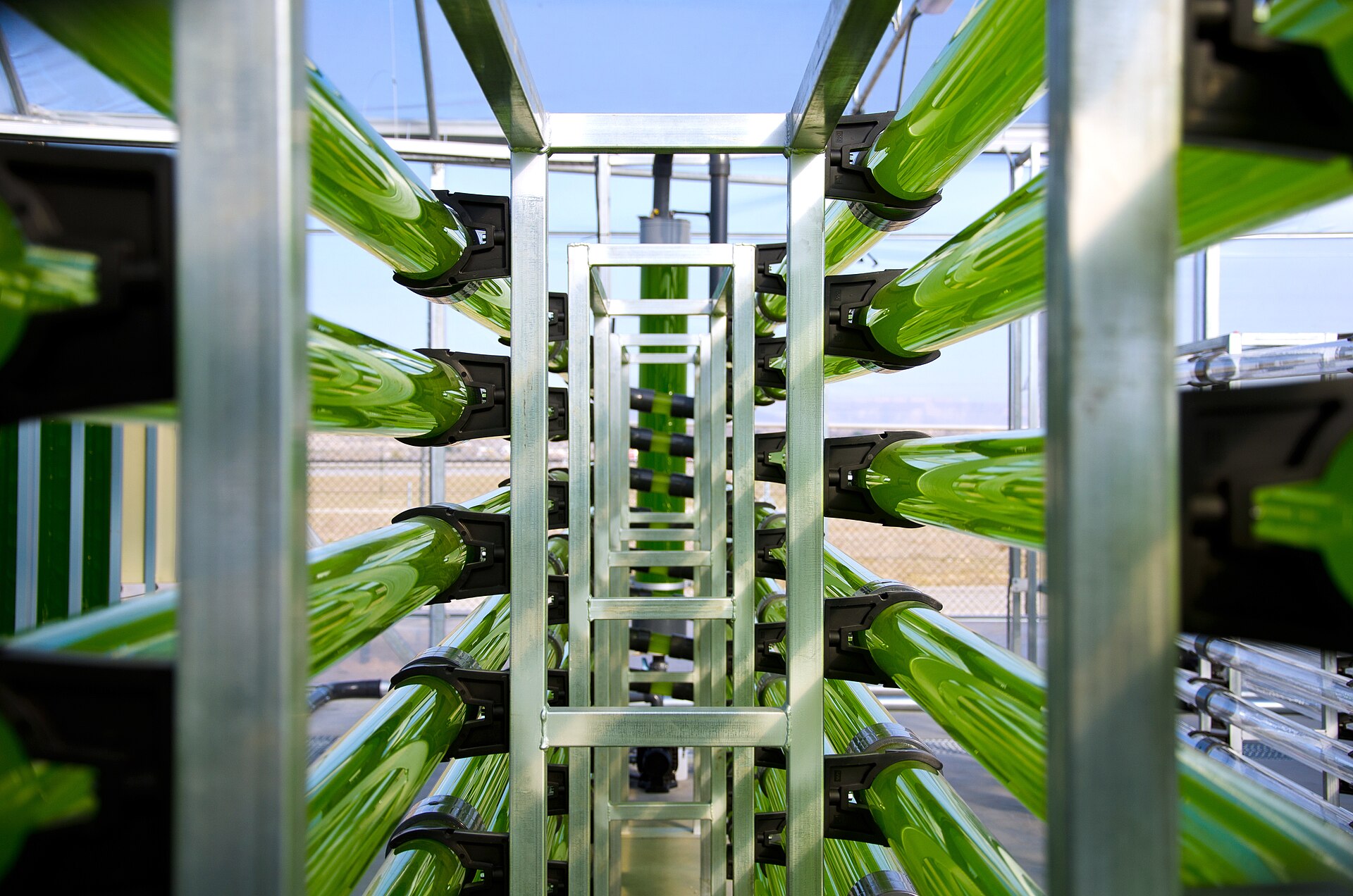
Featured image: Tubular Photobioreactors by AlgaEnergy, via Wikimedia Commons (CC BY-SA 4.0).
Reporting is based on the publicly available sources listed above and has been independently written by Food Tech Insider.