Fooditive Nears Licensing Deal for 5-KDF Rare Sugar After 75,000-Litre Fermentation Run, as FDA Reviews GRAS Notice
Dutch foodtech startup Fooditive says it is in advanced talks with a large ingredients supplier to commercialise its bulk sweetener 5-keto-D-fructose (5-KDF) in the United States. The company has run production for almost three months in a 75-cubic-metre (75,000-litre) fermentation system and is waiting for the US Food and Drug Administration (FDA) to respond to its GRAS notice.
Fooditive founder and CEO Moayad Abushokhedim described the planned arrangement to AgFunderNews as a licensing and joint development partnership. The partner would handle production and market entry, while Fooditive would supply the technology and continue developing it. The partner already sells sweeteners. For companies trying to cut sugar, the main interest is whether a new bulk sweetener can replace sugar’s volume, browning and texture as well as its sweetness, and do so at a workable price.
A licensing model instead of a factory
The Rotterdam-based company does not plan to build its own plant. It wants to sign several licensing deals for different applications rather than give one partner exclusive rights, and it could work with two or three manufacturing partners in the US. Abushokhedim says established sweetener suppliers already have the production expertise, customers and distribution that a new ingredient needs, and that Fooditive wants to work with them as collaborators rather than compete with them.
Fooditive has already taken strategic investment from bakery ingredients group Puratos. According to Abushokhedim, Puratos invested after testing the sweetener in baked goods.
What 5-KDF is and how it is made
5-KDF is a rare sugar that occurs naturally in trace amounts in wine, vinegar and honey. Fooditive makes it by enzymatic bioconversion of fructose, using a non-GMO strain of Gluconobacter oxydans bacteria originally isolated from beer. According to the company’s GRAS notice, the bacteria act only as processing aids and are purified out to non-detectable levels. The finished ingredient is either a crystalline powder or a syrup.
Fooditive gives these specifications:
- Calories: 1.4 kcal per gram, compared with 4 kcal/g for sucrose.
- Sweetness: about 70% as sweet as sugar, although perceived sweetness can be higher depending on concentration, temperature and recipe.
- Functionality: browns in baking like sugar and stays stable in acidic beverages. The company says it does not cause the digestive problems linked to polyols.
- Target applications: baked goods, frozen desserts, confectionery and non-alcoholic beverages, alone or blended with other sweeteners.
Scale-up on upcycled apple and pear pomace
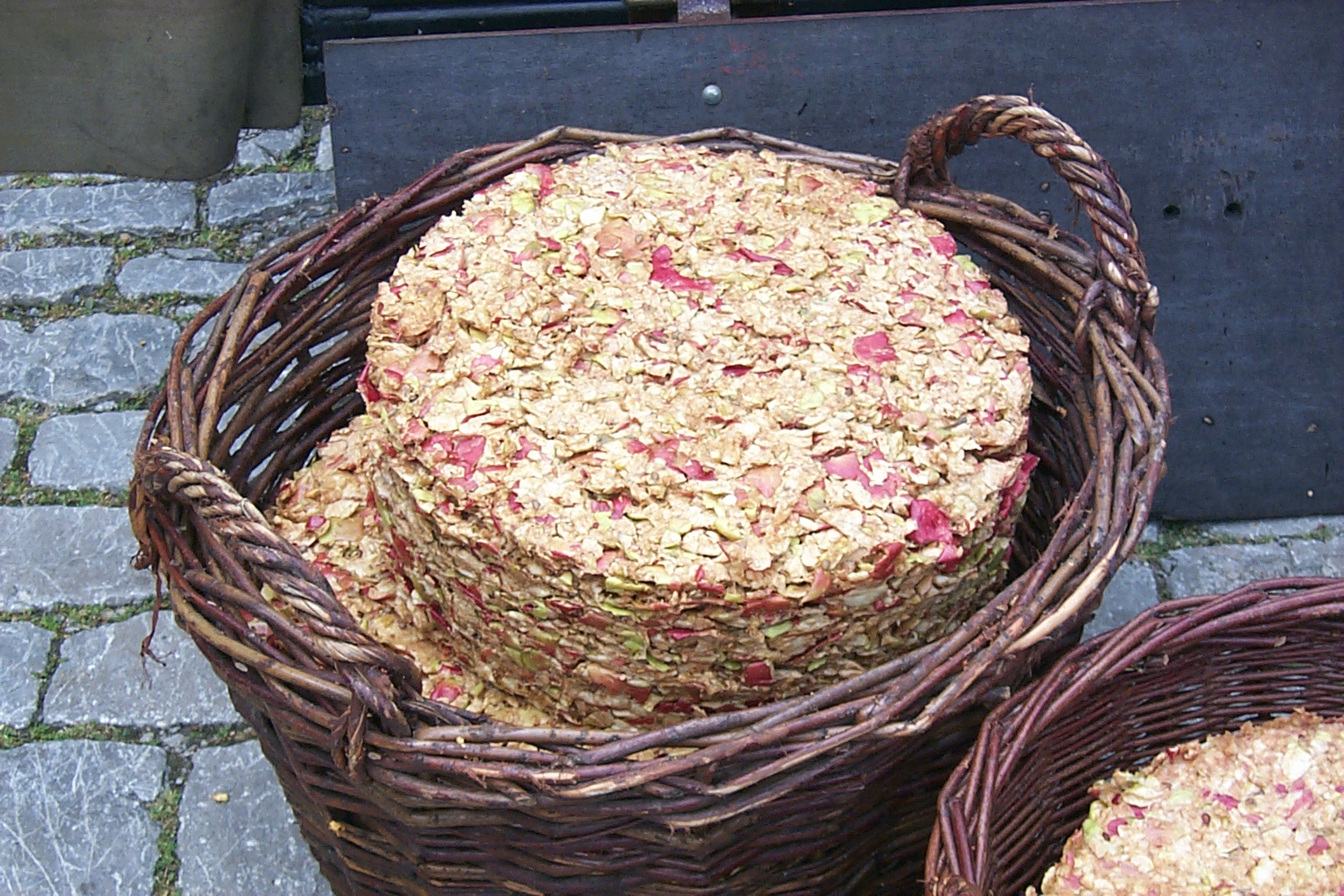
Fooditive first developed the process using fructose from apple and pear pomace, the solids left after juice pressing. The recent 75-cubic-metre run took place at a contract manufacturer in Italy and used apple and pear side streams as the substrate. Abushokhedim said the main aim was to show that Fooditive could maintain quality control even with variable side-stream inputs. He added that pomace from juicing has already been cleaned and sterilised, so it needs little preprocessing.
Based on those results, the company believes the process can scale to 200 cubic metres. It expects 5-KDF to be cost-competitive with other low-calorie bulk sweeteners once it is cleared and produced at scale. That is a company projection, and no pricing has been published.
Regulatory status: GRN 1326 pending, labelling unresolved
5-KDF received a self-affirmed GRAS determination from an independent expert panel in 2024. Fooditive filed GRAS notice GRN 1326 with the FDA on 29 January 2026, and in February it published a safety file of five OECD-aligned genotoxicity and cytotoxicity studies. The company says US commercial use will follow the FDA’s response.
The bigger commercial question may be labelling. The FDA has allowed allulose and, more recently, tagatose to be left out of the added-sugars declaration on the Nutrition Facts panel under specified conditions. Fooditive has not yet established whether 5-KDF will be treated the same way. Abushokhedim said this matters to manufacturers that want no-added-sugar claims, but that the company would not speculate on labelling before the FDA responds. Fooditive is also considering “Ketose” as a consumer-facing name, but has not made a final decision.
US expansion and the next 12 months
Fooditive is one of 20 finalists in the 2026 Grow-NY competition. It is looking at setting up a US business in the Rochester area of upstate New York, close to apple-processing side streams and to Cornell University. Abushokhedim hopes to see three or four commercial application trials in the market over the next year.
The company is also developing animal-free casein by precision fermentation in engineered E. coli. It aims to recreate the full casein micelle system, and says it has a multi-year offtake agreement with a global consumer goods company. The counterparty has not been named.
Why it matters for sugar reduction
New high-intensity sweeteners, such as sweet proteins, can replace sugar’s sweetness but not its bulk or functional role. Rare sugars like allulose and tagatose have become important to reformulators because they can do both. If 5-KDF clears FDA review, receives favourable labelling treatment and reaches competitive cost on upcycled fruit side streams, it would add another option for bakery, dairy dessert and beverage reformulation. Each of those three conditions is still unresolved.
Sources & Credits
- AgFunderNews – Fooditive in advanced talks to commercialize low-cal rare sugar 5-KDF (2 Nov 2026)
- Fooditive – Fooditive completes sweetener development milestone with public safety data (18 Feb 2026)
- US FDA – GRAS Notice Inventory, GRN 1326
Featured image: Apple pressings in Rothenburg, Germany by Craig Wyzik, via Wikimedia Commons (CC BY 2.0).
Reporting is based on the publicly available sources listed above and has been independently written by Food Tech Insider.