Danone’s $300M Grab, GLP-1 Food Wars, Cultivated Meat Crash
This week in food tech: trends, investments, and what actually mattered.
The Great Bifurcation: AI Capital Concentrates While Cultivated Meat Crumbles
FoodtechInsider Weekly Industry Analysis | June 22–26, 2026
Executive Summary
This week crystallised a divide that has been building for months in food technology. Capital, strategy, and consumer behaviour are bifurcating sharply: AI-enabled infrastructure, GLP-1-adjacent products, and post-farm-gate logistics are attracting concentrated institutional money, while deep-tech alternative protein faces a sustained winter with Vow’s CEO shakeup, Goterra’s administration filing, and Keel Labs’ Chapter 11.
The week’s biggest strategic move was Danone’s €300M+ acquisition of Australia’s Made Group, a deal that signals incumbents are buying growth in gut health and functional protein rather than building it. McCormick beat quarterly estimates in its first earnings since announcing its ~$45B Unilever food merger, validating the thesis that scale-plus-intelligence is the new winning formula. Meanwhile, the US Supreme Court’s Roundup ruling shields Bayer from a wave of glyphosate-cancer litigation, recalibrating risk across agricultural chemicals.
The trend everyone should be watching: the intersection of GLP-1 adoption (now 1 in 8 US adults) and confectionery reinvention. Hershey’s mint and gum sales are rising because consumers on GLP-1s want oral satisfaction without caloric load. This is not a death knell for snacks; it is a redesign mandate.
Bold prediction: Within 90 days, a major cultivated-meat survivor will announce a pivot to precision fermentation or ingredient licensing rather than whole-cut meat. The cell-cultured whole-product thesis is dead; the underlying bioprocessing capability has value, but only as a service.
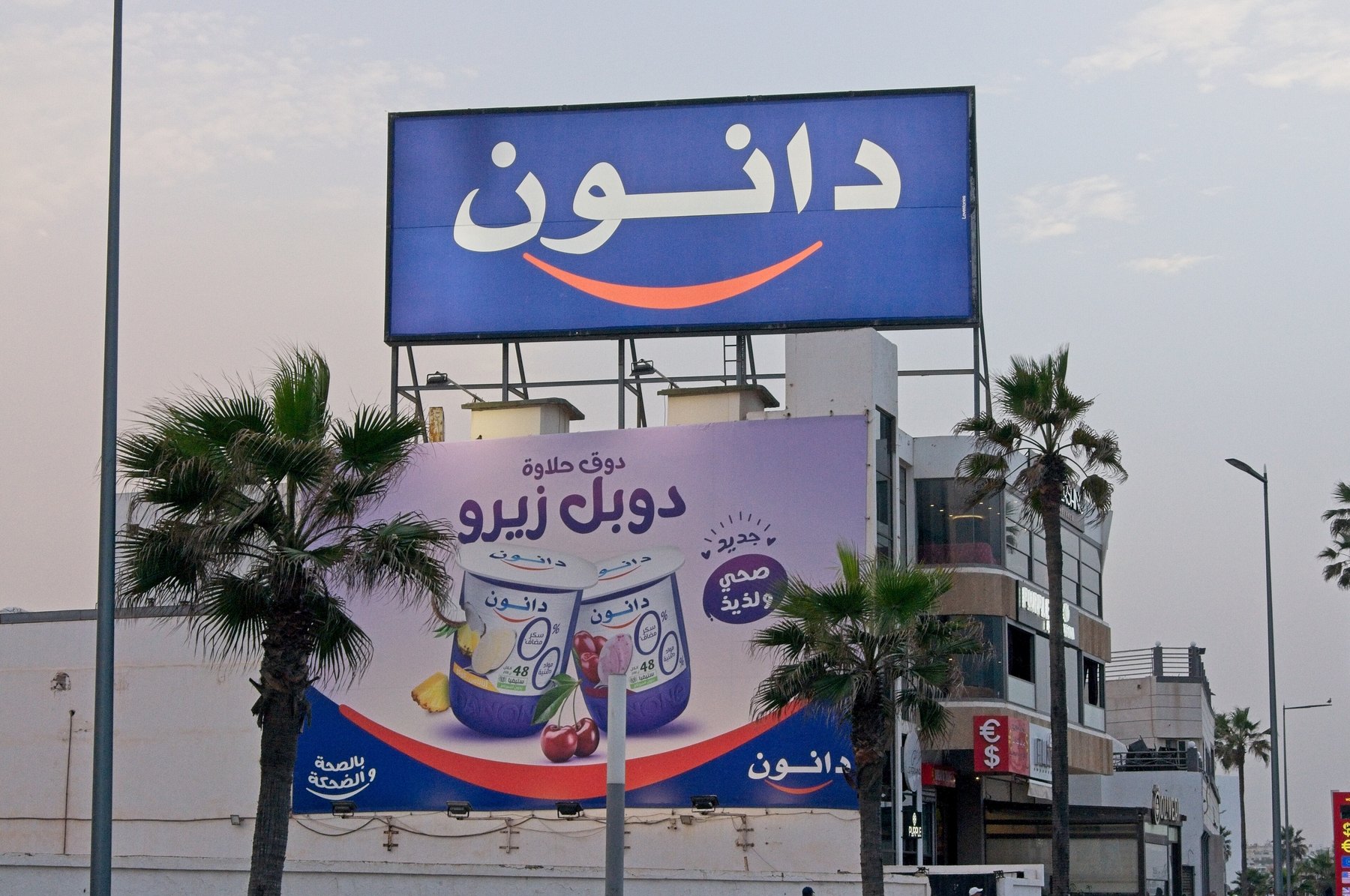
Danone acquires Australia’s Made Group (€300M+ revenue). Danone announced Monday it will acquire Australian functional dairy maker Made Group, home to Cocobella and Rokeby, alongside buying out the remaining 49% of its Saputo Dairy Australia joint venture. CEO Antoine de Saint-Affrique framed the move as a gut-health and protein expansion play. The deal follows Danone’s March acquisition of Huel and last year’s Kate Farms purchase, completing a three-pronged strategy to capture health-conscious consumers across age groups and dietary preferences. Watch for integration costs and whether Danone can replicate Huel’s direct-to-consumer success in APAC retail channels. ^1
Supreme Court blocks Roundup lawsuits against Bayer. A landmark ruling shields Bayer from a wave of glyphosate-cancer litigation, a significant win for agricultural-input majors and a setback for plaintiff strategies targeting agrichemical liability. The decision will ripple through biotech risk pricing and may encourage R&D investment in next-generation herbicides and biological alternatives. Industry counsel should watch for downstream state-level legislative responses. ^3
McCormick tops Q2 estimates. McCormick (MKC) beat consensus revenue and profit expectations on June 25, reaffirming full-year guidance despite tariff and commodity pressure. This is the company’s first quarterly report since announcing its approximately $45B merger with Unilever’s food business, and the beat signals that the deal’s strategic logic (combining McCormick’s flavour expertise with Unilever’s global distribution) remains intact with investors. ^4
Cultivated meat sector continues to contract. Vow (ASX: VOW) announced a major CEO shakeup amid restructuring, Goterra entered administration with its founder warning of “contagion” across insect agriculture, and Liberation Bioindustries paused construction on its US biomanufacturing site while seeking additional capital. This follows Believer Meats and Meatable’s December 2025 closures. The sector’s core economics, high capex, slow scale-up, regulatory drag, have proven insurmountable for all but the most patient capital. ^5
Tropic acquires Rahan Meristem. The UK/Israel gene-editing crop company acquired Israel’s leading tropical fruit propagation business, accelerating its commercial footprint in bananas and pineapples. This is a notable consolidation play in agricultural biotech, signalling that propagation IP, not just seed genetics, is becoming a strategic battleground. ^3
Investment & M&A Activity
Global AgriFoodTech investment has now exceeded $16B year-to-date, but the composition is heavily concentrated in premium niche categories: Costa Group (citrus), Fruitist (berries), Oishii (strawberries). Forbes’ Jennifer Kite-Powell warned this week that this “hyper-targeted investment behaviour” is a “symptom of commercial risk isolation” rather than a sign of sector health. Capital is flowing to assets with proven margins while systemic fragility in processing, packaging, and logistics remains unaddressed. ^6
Notable funding rounds this week:
- Omni (UK): £11M Series A for Ozempic-style dog supplements, an early bet on GLP-1 adjacency extending into pet wellness.
- Myota (UK): $4.5M for clinically backed fibre blends targeting metabolic health.
- Terraxy (Saudi Arabia): $3M for desert greening and soil regeneration.
- Coast 4C (Australia): $2.5M for smallholder seaweed farming in Southeast Asia, a regenerative aquaculture play.
- RoboCare (Tunisia): Six-figure funding from 216 Capital to expand AI-driven crop disease detection across Africa and the Middle East. The AI-in-agriculture market is projected to reach $20.8B by 2033 at a 23.6% CAGR. ^7
M&A highlights:
- Rise Baking (backed by Butterfly Equity and Platinum Equity) agreed to acquire Jimmy’s Gourmet Bakery, a New Jersey-based premium cookie and baked-goods maker. Financial terms were not disclosed.
- Schouten (Netherlands) acquired fellow Dutch plant-based meat player Bobeldijk Food Group to expand its European footprint.
- Miso Robotics (maker of Flippy) acquired Zume Pizza’s technology, consolidating restaurant automation intellectual property.
- Reservoir acquired Contain to accelerate rugged physical-AI agtech startups. ^3
Investor sentiment and patterns: Capital is fragmenting into many small rounds while concentrating thematically in AI tooling, GLP-1 adjacency, and post-farm-gate infrastructure. Broad scepticism toward deep-tech moonshots (cultivated meat, precision fermentation for whole cuts, cellular agriculture) is now institutional consensus. Financial sponsors (Butterfly, Platinum, Reservoir) are quietly building platforms in bakery, restaurant automation, and rugged agtech, respectively, while strategic acquirers (Danone, McCormick, Bayer) snap up capability plays at scale.
Burcon NutraScience (TSX: BU) reported fiscal 2026 results: $2.3M in revenue, up 494% year-over-year, as it transitioned to commercial production at its Galesburg facility. The market responded positively, though the company posted a $14.3M net loss. Burcon is now one of the few publicly traded pure-plays in plant-based protein with revenue traction. ^10
Emerging Trends & Signals
GLP-1 drugs are reshaping the food system. Roughly 1 in 8 US adults now use GLP-1 medications, and JPMorgan projects this cohort could erase $30–$55B in annual US food and beverage sales by 2030. The data is granular: cottage cheese, yogurt, and meat-stick sales are surging as consumers prioritise protein; chips, cookies, and toaster pastries are declining. Confectionery, however, is being reinvented rather than killed. Hershey reports rising mint and gum sales because consumers on GLP-1s want oral satisfaction without caloric load. Low-sugar Snickers, 70% cocoa KitKat, and portion-controlled Cadbury bars are emerging as the new product archetypes. ^11
Microdosing GLP-1s is going viral on social media, though no FDA consensus on definition exists. Separately, WADA added GLP-1s to its monitoring list for elite sport, raising questions about Olympic and World Cup participation. The regulatory and ethical lines are being drawn in real time. ^13
AI in food moves from pilots to infrastructure. Forbes published a cover thesis this week titled “Big Food’s New Reality: From Scale to Intelligence,” arguing that investors are rewarding Nestlé, Unilever, and McCormick for AI- and data-led portfolio moves while punishing traditional consolidation plays. AI is no longer a pilot programme; it is the operating system. In a lighter moment, OpenAI and Broadcom’s first custom AI chip was named “Jalapeño,” underscoring how food branding permeates tech culture. ^15
Indonesia’s BRIN (Badan Riset dan Inovasi Nasional) is championing AI and digital technology for low-emission rice and livestock production, a sign that emerging-market public institutions are adopting AI-agriculture strategies at the policy level. ^17
Regenerative agriculture gets federal tailwind. President Trump signed an executive order on June 25 advancing regenerative agriculture, and Secretary Rollins announced the “Regenerative Feedstock Rule” to unlock biofuel and carbon-market access for farmers. The administration also requested $11B in additional farm aid from Congress, on top of $12B already disbursed, for fuel and fertiliser cost relief. The policy environment is bifurcating: federal support for regenerative practices is expanding while ad-hoc disaster relief continues. ^18
Sustainability breakthroughs: Ambrosia Collective launched “Planta Powered by Solein,” an air-based protein powder using Solar Foods’ CO₂-derived ingredient (20g protein per serving), one of the first commercial consumer products to hit shelves with air protein as the primary ingredient. Israel-based Brevel received a $1M Israel Innovation Authority grant to apply its illuminated fermentation platform to coffee cell-culture production with Coffeesai. These are niche launches, but they validate the precision-fermentation-for-ingredients thesis even as whole-product cultivated meat struggles. ^20
Retail and grocery tech: Chain Store Age’s mid-year review notes that agentic AI is now “omnipresent in the retail enterprise,” with ultra-fast delivery emerging as the major competitive battleground. Walmart and Amazon have both taken significant steps since January to compress delivery windows and automate fulfilment. ^22
Deep Dive: Danone’s Made Group Acquisition — The Incumbent Playbook for Functional Protein
Danone’s €300M+ acquisition of Australia’s Made Group, announced Monday alongside the buyout of Saputo Dairy Australia’s remaining 49%, is more than a regional consolidation play. It is a template for how incumbents will capture growth in functional health for the next decade.
Historical context. Danone has been pivoting from a traditional dairy conglomerate toward a “health-focused, science-backed” portfolio since Antoine de Saint-Affrique took the CEO role in 2021. The Huel acquisition (March 2026) gave Danone direct-to-consumer and meal-replacement capabilities; the Kate Farms purchase (2025) brought medical-nutrition expertise; and Made Group adds functional dairy (Cocobella) and premium protein (Rokeby) with strong APAC distribution. Together, these three deals represent roughly €2B in cumulative spend over 18 months, a deliberate capability stack rather than opportunistic M&A.
Why Made Group specifically? Made Group generated €300M+ in revenue through June 2026, with double-digit growth in gut-health and high-protein SKUs. Cocobella (coconut yoghurt and probiotic dairy alternatives) has 40% market share in Australian yoghurt alternatives, and Rokeby has carved out a niche in premium sports-nutrition dairy. More importantly, Made Group’s product portfolio is “GLP-1-resilient”: high-protein, low-sugar, gut-health-positioned, exactly the attributes driving category growth as 1-in-8 US adults and a growing global cohort reshape consumption patterns.
Competitive implications. This deal puts pressure on Yili, Mengniu, and other Asian dairy majors to accelerate functional-protein M&A. It also signals to private-label and challenger brands (Huel’s competitors, Indeed Labs, Yo Mood) that exit valuations for functional-protein players will remain robust if growth metrics hold. The risk for Danone is integration: Made Group’s brand portfolio requires distinct go-to-market strategies, and Danone’s track record with multi-brand management outside Europe is mixed.
Expert perspective. As one London-based food M&A advisor put it: “Danone is not buying Made Group for the revenue. They’re buying the proof point that functional protein can scale at retail with margin. If Cocobella and Rokeby can hit 20% EBITDA margins in APAC, Danone can replicate that playbook in Latin America and the US.”
The broader signal: incumbents are done building these capabilities organically. The time-to-market advantage of acquisition outweighs the integration risk, especially when the alternative is watching challengers erode share in the fastest-growing subcategories.
What to watch next: Integration milestones in Q3 and Q4 2026 earnings calls; whether Danone leverages Made Group’s Australian supply chain for Southeast Asian expansion; and whether competing bids emerge for adjacent assets (Australia’s Bega Cheese, New Zealand’s a2 Milk).
The Week Ahead
Confirmed events and earnings:
- June 30: World Food Prize Foundation’s DialogueNEXT in Nairobi, gathering global food-systems stakeholders. Expect announcements on food-security innovation and African agricultural development.
- June 30: Liberation Industries’ USDA announcement on regenerative feedstock programmes, a follow-on to Secretary Rollins’ regulatory push.
- Late June / Early July: Modern Agriculture Foundation’s Tel Aviv summit concludes, with announcements from Israeli FoodTech ecosystem players.
- July 1–15: Vermont Capital Equipment Assistance Program and Pay-for-Performance applications close.
Predictions for next week’s headlines:
Cultivated-meat shakeout continues. Expect at least one more restructuring or closure announcement following Vow and Goterra. AgFunder will likely publish a follow-up to its “who’s still standing?” deep dive, possibly naming specific companies in advanced wind-down discussions.
GLP-1 employer-coverage fallout. More large employers will announce 2027 coverage cuts for weight-loss drugs as costs balloon. CNBC is already tracking the trend, and the next wave of announcements will come from Fortune 500 HR departments balancing benefits budgets against utilisation spikes.
EUDR divergence plays. The UK announced its own anti-deforestation rules this week, modelled on the EU Deforestation Regulation (EUDR). Watch for industry pushback on traceability compliance costs and for US/UK divergence to create supply-chain bifurcation opportunities for compliant exporters.
Ag input and fertiliser pricing. Goldman Sachs warned this week of a Southeast Asia food-supply shock driven by El Niño conditions and rising oil and fertiliser costs. Expect commodity read-throughs, more US farm-aid requests, and potential emergency tariff relief for phosphate and urea imports.
SpaceX post-IPO volatility continues. The June 12 SpaceX IPO ($87B+ raised, $2.1T peak valuation) is now in correction territory. OpenAI is reportedly considering delaying its own IPO from late 2026 to 2027 following the volatile debut, which chills near-term food-tech IPO pipelines. Watch for Oatly, Eat Just, and other unprofitable alt-protein hopefuls to reassess timing. ^23
Questions the market will be asking:
- Will Danone’s Made Group deal trigger a bidding war for remaining functional-dairy independents?
- Can McCormick sustain momentum through its Unilever integration, or will synergy execution disappoint?
- How quickly will GLP-1 microdosing reach FDA regulatory clarity, and what does that mean for compounding pharmacies?
- Will the Supreme Court’s Roundup ruling embolden other agrichemical defendants, or trigger legislative countermeasures?
Final Thoughts
This week told a clear story about where food technology is headed: away from moonshots and toward infrastructure.
Cultivated meat’s collapse is not a failure of science; it is a failure of capital markets to underwrite the long path from lab to retail at the valuations implied by 2021–2022 hype. The science is real, but the unit economics are not. Meanwhile, AI tooling, GLP-1-adjacent products, and post-farm-gate logistics are attracting concentrated institutional capital because they have near-term paths to margin.
The regulatory environment is bifurcating. Federal support for regenerative agriculture is expanding while plaintiff litigation against agrichemicals faces new limits. State-level food-transparency and traceability rules are proliferating in the US, even as federal pre-emption efforts gain traction. Companies that can navigate both layers, federal tailwinds and state-level compliance, will have structural advantages.
The consumer is not abandoning food; they are redesigning their relationship with it. GLP-1s are not killing snacks; they are forcing a redesign toward protein-dense, low-sugar, portion-controlled formats. The winners will be companies that treat this as product innovation, not category retreat.
For founders and operators, the playbook is clear: build for margin, not just growth; focus on infrastructure and tooling rather than consumer-facing moonshots; align with incumbent acquirers’ capability gaps; and prepare for a regulatory environment that rewards traceability and regenerative practices.
The great bifurcation is here. Capital is concentrating. Science is consolidating. The next 90 days will separate the companies that can execute from those that were built on narrative alone.
Next steps for readers: Subscribe to our weekly analysis, follow our coverage of the GLP-1 supplier winners, and watch for our mid-year cultivated-meat survivor report coming in July. If you’re building in AI-agriculture, functional protein, or post-farm-gate logistics, we’d love to hear from you.
Weekly analysis compiled from industry sources. Links and credits embedded throughout.