Ultra-Processed Food Labeling Could Cost US Food Industry $14.2B a Year and Hit 72% of Packaged Foods, UChicago Study Finds
A mandatory federal label for ultra-processed foods (UPFs) would sweep in nearly three-quarters of US packaged products and cost the food system at least $14.2 billion a year, according to a new economic analysis from researchers at the University of Chicago. The study lands while the FDA’s proposed UPF definition sits with the White House Office of Management and Budget (OMB).
The paper, from the university’s Initiative on Enabling Choice and Competition in Health Care Markets, models what would happen if a UPF definition were used to anchor a front-of-pack label. HHS Secretary Robert F. Kennedy Jr. has said such labeling would follow once a definition is published.
72% of packaged products, 51% of grocery spend
Because the FDA’s own definition has not been released, the researchers used the one published in May 2026 by Healthy Eating Research. Under it, a product is ultra-processed if its ingredient list includes at least one marker ingredient. Markers include “cosmetic” additives across 13 functional classes, such as flavours, flavour enhancers, colours, non-sugar sweeteners, emulsifiers and thickeners, as well as non-culinary ingredients such as industrial carbohydrates, modified fats and industrial proteins.
Applied to nearly 450,000 products in the USDA Global Branded Food Products Database, the definition classed 72.3% as ultra-processed. Confectionery, baked sweets, soda, pasta dinners and frozen appetisers were almost entirely captured, while rice and frozen and canned vegetables were the least likely to qualify. By the researchers’ estimate, UPFs account for 51% of spending on food eaten at home.
Where the $14.2 billion comes from
The researchers break the annual cost into three buckets:
- $9.5 billion to reformulate products so they avoid triggering the label;
- $4.5 billion in higher costs for the substitute ingredients used in those reformulations;
- $0.2 billion for classification, relabeling and federal administration.
That total is 142 times the $100 million threshold OMB uses to define an “economically significant” action. The FDA, by contrast, has characterised its white paper on the definition as not economically significant, although the two figures measure different things: one covers the definition itself, the other a labeling policy built on it.
The authors call their figures lower bounds. Separately, they estimate a UPF label would cost US agriculture about $1 billion a year in lost revenue while raising food imports by $7.7 billion to $9.7 billion a year. Of the $14.2 billion, they expect $8.1 billion, about $60 per household, to reach shoppers through higher prices, rising to $9.8 billion if companies let product quality slip rather than pay for substitute ingredients.
Industry pushback and litigation risk
The Consumer Brands Association (CBA) told FoodNavigator the analysis also leaves out litigation costs. Possible exposures include false-advertising claims where products marketed as “healthy” or “natural” fall under a federal UPF definition, and failure-to-warn suits. These remain hypothetical scenarios rather than established outcomes. The CBA argues that regulators should focus on nutrient-based tools such as Facts Up Front and SmartLabel rather than processing-based classifications.
The researchers make a similar point in their own conclusions, arguing there is no clear relationship between processing and nutritiousness and that a UPF label could raise the cost of eating well.
What it means for manufacturers
For food and beverage makers, the practical signal is that a marker-based definition puts emulsifiers, non-sugar sweeteners, flavours and texturisers at the centre of any reformulation programme. Companies already running clean-label or “non-UPF” projects may find themselves ahead, while ingredient suppliers of marker categories face demand risk. Until the FDA definition is published and its use in labeling is settled, the study gives procurement and R&D teams a first estimate of how large the reformulation bill could be.
Sources & Credits
- University of Chicago, Initiative on Enabling Choice and Competition in Health Care – An Analysis of the Economic Effects of a Federal Ultra-Processed Food Label (Oct 2026)
- FoodNavigator – UPF labeling could cost $14.2bn annually, study estimates (23 Oct 2026)
- Agro News Today – Mandatory ultra-processed food labels could cost the US $14.2bn a year, study estimates (Oct 2026)
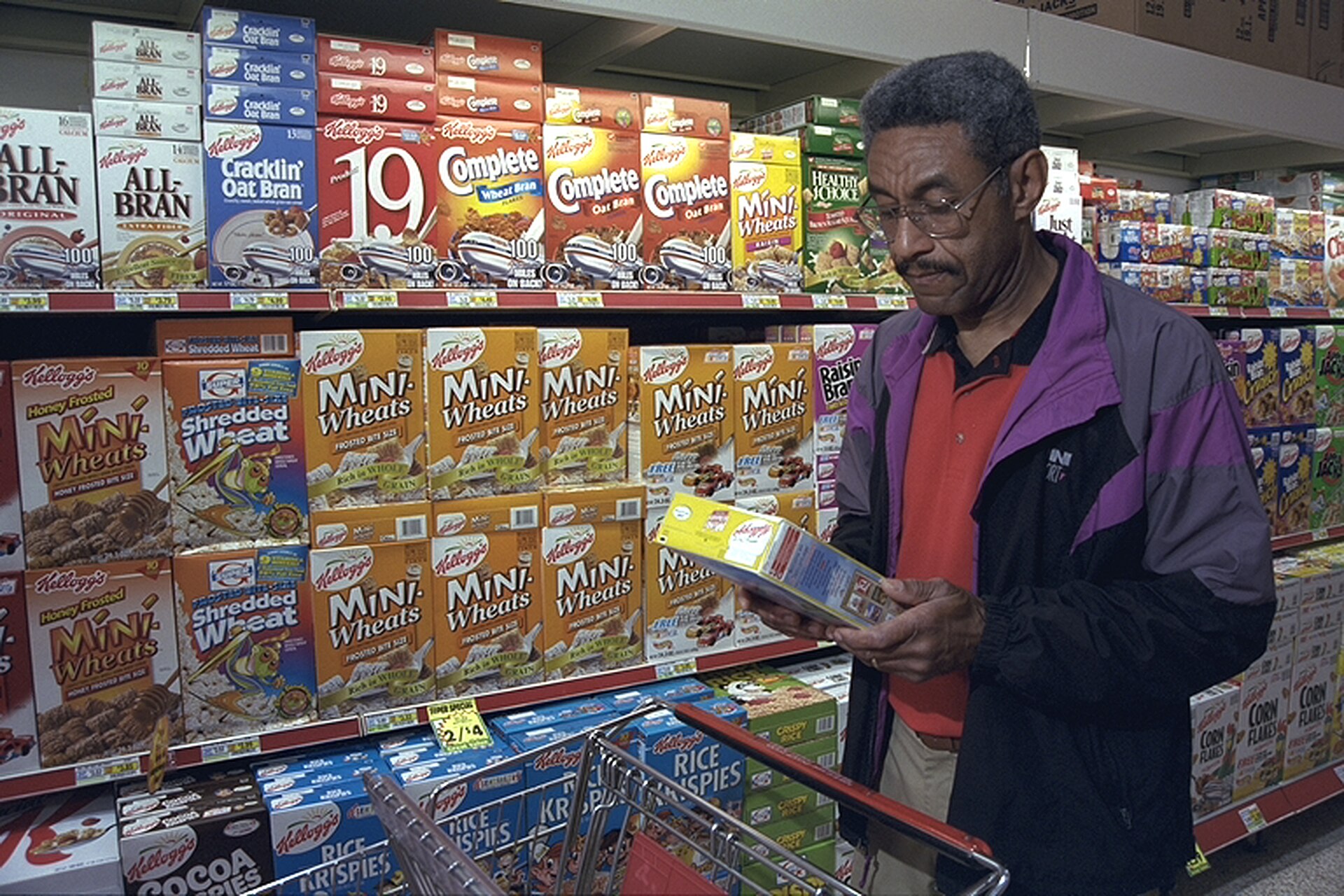
Featured image: Shopper Checks Ingredients On Boxed Cereals – DPLA – f645fb4699494db49a593d1a8679b502 by U.S. Department of Agriculture, Office of Governmental and Public Affairs, via Wikimedia Commons (Public domain).
Reporting is based on the publicly available sources listed above and has been independently written by Food Tech Insider.