WISEcode Opens Beta of WISEcode Intelligence, an AI Ingredient-Scoring Platform for Food Brands’ Reformulation and UPF Benchmarking
WISEcode, the New York food data company behind the WISEcode consumer app, has opened a beta of WISEcode Intelligence, its first AI product built for food and beverage manufacturers. The platform lets participating brands score their own products and their competitors’ ingredient by ingredient, check the regulatory status of what is on their labels, and model which reformulations would improve those scores.
The launch, announced on 28 October, adds another data-driven tool to a US packaged food market where ultra-processed food (UPF) scoring, clean-label claims and ingredient scrutiny now shape both shopper behaviour and policy debate.
What the platform does
WISEcode Intelligence is built on what the company calls the Food Genome Project, an ingredient-level map of the US packaged food supply. According to WISEcode, the project traced the 267,130 ingredient terms used on US food labels back to 8,631 underlying ingredients, including compounds that manufacturers are not required to name. Each one has been evaluated against current health and safety research, and the dataset is updated daily.
Beta users work through WISEcode AI, an agentic assistant that answers questions in plain language. According to the company, participants can:
- analyse a full portfolio on ingredient quality, nutrient profile, processing level and the health research behind each ingredient;
- check ingredients’ regulatory status, including FDA GRAS notices and listings, alongside clean-label analysis and dozens of other attributes;
- benchmark each product against competitors and identify white space in a category;
- see what drives each score and which reformulations would move it; and
- publish products to the WISEcode consumer app and apply for Non-UPF Verification.
Feedback from beta participants will shape the full release, which WISEcode expects in early 2027.
Seeing the score before shoppers do
The pitch to brands is that consumers already judge products on ingredient lists, often with a scanning app open in the aisle. “WISEcode Intelligence lets brands see that judgment before their customers do, against the competitors in their category,” said Craig Anderson, SVP of Industry and Government Solutions at WISEcode. “It also shows them what to do about it: which ingredient swaps move the score, and where the open space is.”
That gap is real for many manufacturers. Sales and syndicated data tell companies what sells, but not how each SKU’s formulation compares with the shelf on processing level or additive load. Building that view in-house means normalising ingredient declarations across thousands of competitor products, which is the job WISEcode says its ingredient map has already done.
Why it matters for R&D and regulatory teams
The launch comes as UPF definitions move closer to regulation and labelling. A recent University of Chicago analysis estimated that UPF labelling could affect about 72% of US packaged foods, and voluntary certifications such as the Non-UPF Verified label are being used in national brand campaigns. Third-party scores are also spreading in Europe. On 29 October, Dutch app FLTRD said it had raised more than €500,000 to take its PureScore processing rating to Belgium and license it to producers and retailers.
For R&D teams, an AI layer that links an ingredient swap to a change in an external score could shorten the reformulation workflow. Today that work often spans spreadsheets, supplier specifications and manual label reviews. For regulatory teams, having GRAS status and clean-label flags in the same view as competitor benchmarks is potentially useful as federal UPF and “healthy” labelling policy develops.
There are open questions. WISEcode has not published pricing, the number of brands in the beta, or the method behind its scores in detail. Brands will also have to decide how much weight to give a third-party score that is also shown to consumers in WISEcode’s own app. The full commercial release in early 2027 will show whether manufacturers treat ingredient-level scoring as a core part of their product development tools.
Sources & Credits
- PR Newswire – WISEcode Opens Beta of WISEcode Intelligence, Its First AI Product for Food and Beverage Companies (28 Oct 2026)
- Food Infotech – WISEcode Opens Beta of AI Platform for Food and Beverage Brands (29 Oct 2026)
- WISEcode – WISEcode Intelligence
- Tech.eu – As Brussels scrutinises ultra-processed food, FLTRD raises €500K+ to scale across Europe (29 Oct 2026)
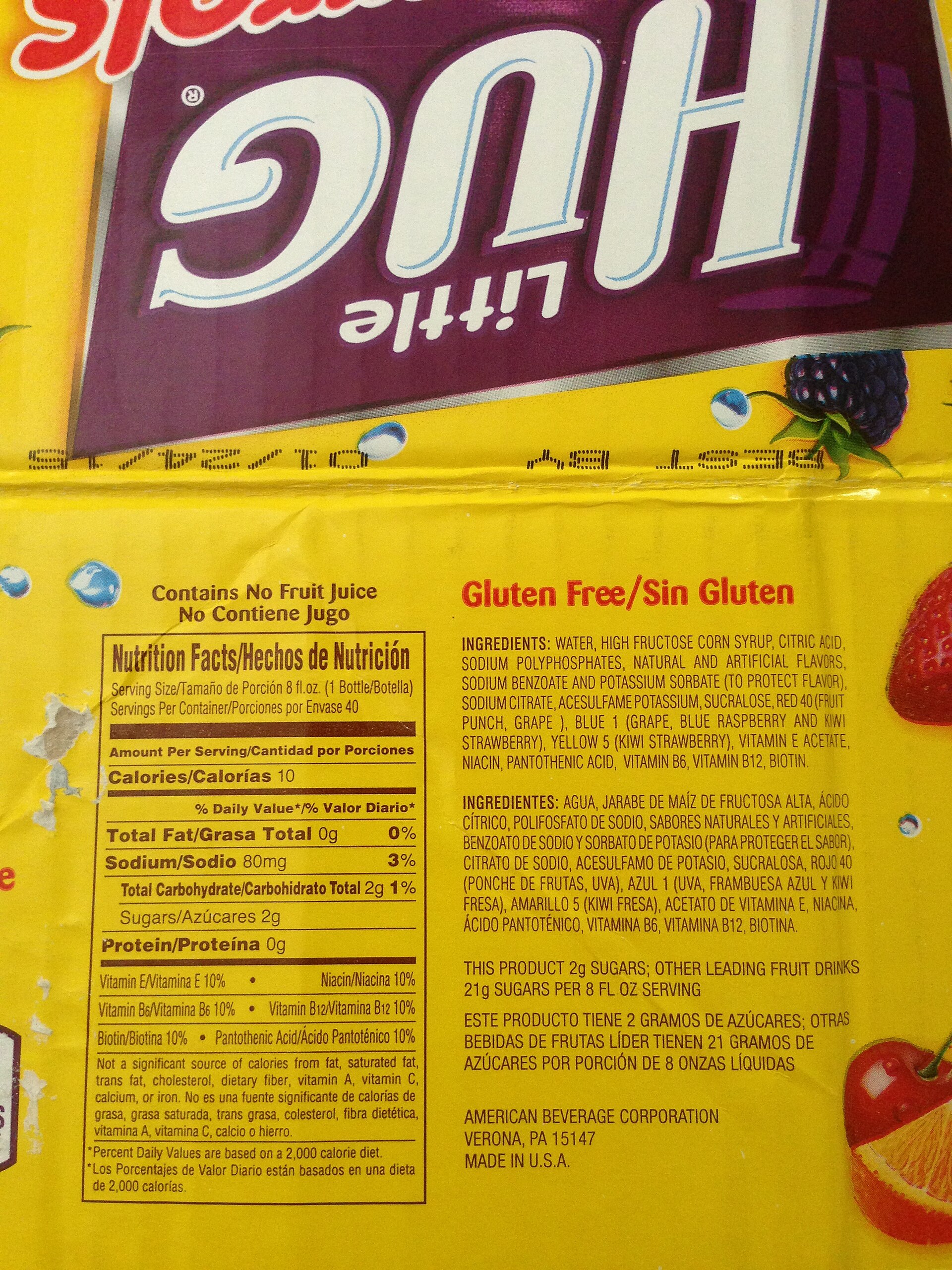
Featured image: Nutrition facts and ingredients label by Tcoe33, via Wikimedia Commons (CC BY-SA 3.0).
Reporting is based on the publicly available sources listed above and has been independently written by Food Tech Insider.