Brim Acquires Bankrupt Land-Based Arctic Char Farmer Matorka, Targets Over 1,000 Tonnes From Iceland Site in 2027
Icelandic seafood group Brim hf. has agreed to buy the assets of bankrupt land-based Arctic char producer Matorka, giving one of Iceland’s largest fishing and processing companies a foothold in onshore fish farming. The deal was announced on 6 November, only days after Matorka was declared bankrupt.
Brim said it has acquired all assets of the Matorka bankruptcy estate on behalf of a newly established subsidiary. It plans to keep the farm running near Grindavík on the Reykjanes Peninsula and expects production of a little over 1,000 tonnes of whole Arctic char next year. The purchase price was not disclosed.
Deal terms and conditions
According to Brim’s statement, the purchase is subject to standard conditions, including approval from Iceland’s Competition Authority and the necessary operating permits for the activity. Friðbjörn Garðarsson, the AX law attorney appointed as administrator for Matorka, told LandbasedAQ that the estate had agreed to sell Matorka’s assets and operations to a Brim subsidiary that is being established, and that work to satisfy the conditions would proceed over the coming days and weeks.
Brim said it intends to build on Matorka’s existing operations and expertise, with a focus on cost-efficient operations, product quality and sustainable growth. The group sees an opportunity to apply its experience in food processing and international marketing and sales to farmed char.
A land-based farm hit by geology
Matorka runs a hybrid recirculation and flow-through facility. Its main natural advantage has been borehole water drawn from volcanic rock and warmed to almost 10°C, close to ideal for Arctic char. That location became a liability when earthquakes linked to volcanic activity struck the area in November 2023 and forced the evacuation of Grindavík.
Salmon Business reports that the earthquakes damaged large production tanks, disrupted water supplies and caused the loss of about 80 tonnes of fish. LandbasedAQ reports that three or four of the company’s 12 large grow-out tanks were damaged. Managing director Christo du Plessis has said that the quakes also changed water quality, which led to repeated infections in the stock. Earlier this year, management and veterinarians decided to harvest the fish, then empty and disinfect all tanks. The step worked, but it severely hit cash flow.
Matorka obtained creditor protection in September 2024 while it tried to restructure. Those efforts failed, and the company was declared bankrupt on 2 November 2026.
Why a wild-catch processor is buying a fish farm
Brim employs about 650 full-time staff at sea and ashore and sells products made from fish caught in Icelandic waters worldwide, with Europe, Asia, North America and Africa its largest markets. Farmed char gives the group a product that is not governed by fishing quotas and can be supplied year-round to the same buyers it already serves.
For Brim, buying out of bankruptcy also means taking over existing tanks, water supply and an operating team, typically faster and at lower cost than developing a new land-based site. The group’s processing and sales network addresses a common weakness of standalone land-based farms, which often have to build distribution and brand recognition from scratch while still proving their biology.
What it signals for land-based aquaculture investors
Land-based aquaculture has attracted significant capital on the promise of controlled, biosecure production close to markets. Matorka’s collapse shows how exposed such projects can be to site-specific risks, from geohazards to water chemistry, and how quickly a single biological setback can drain working capital.
The Brim transaction points to a pattern investors are likely to see more often: distressed onshore farms being picked up by established seafood companies that have the balance sheet, processing capacity and customer base to run them. Whether the 1,000-tonne target for 2027 is met will depend on regulatory approval, the stability of water supply at the site and how quickly the restocked tanks reach harvest weight.
Sources & Credits
- Brim – Brim kaupir eignir Matorku (Icelandic, 6 Nov 2026)
- Salmon Business – Brim buys bankrupt Matorka’s assets, targets 1,000 tonnes in 2027 (9 Nov 2026)
- LandbasedAQ – Bankrupt char farmer Matorka rescued by fishing giant Brim (6 Nov 2026)
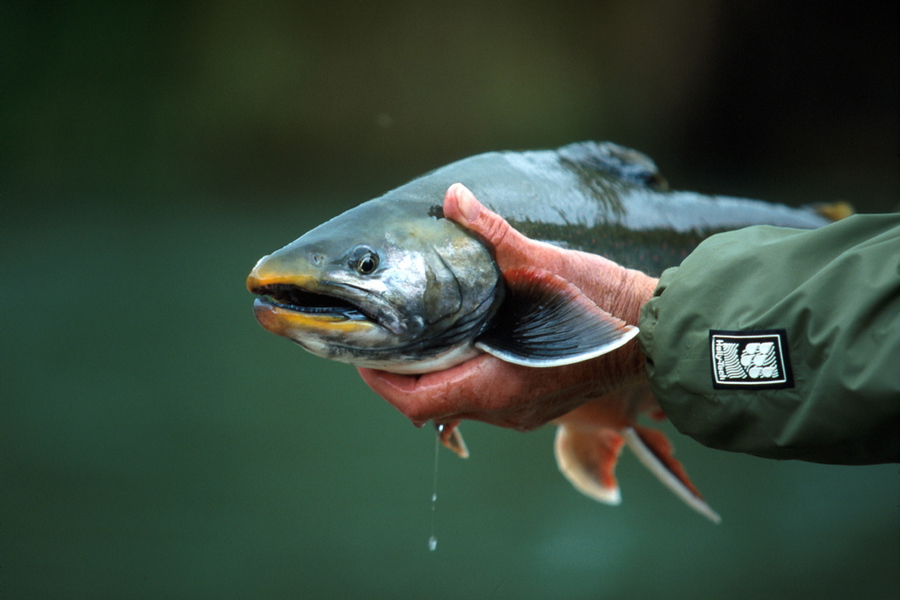
Featured image: Man holding arctic char by Klaus Jost, via Wikimedia Commons (CC BY-SA 3.0).
Reporting is based on the publicly available sources listed above and has been independently written by Food Tech Insider.