JLS Automation Adds AI Vision to Robotic Cells to Handle Overlapping and Stacked Food Products
Packaging automation specialist JLS Automation has launched an AI-based vision system that allows selected robotic handling cells to identify and pick food products that arrive touching, overlapping or stacked, a long-standing obstacle to automation in food packing.
JLS Vision AI is scheduled to make its public debut at next month’s PACK EXPO International in Chicago, but is already being offered as an application-engineered capability on selected JLS systems, according to IN Food.
The problem with disorder
Conventional machine vision performs well when products are separated and presented at predictable intervals. Food rarely behaves that way. Frozen items, protein portions, bakery goods and flexible packs often touch, overlap, rotate or shift as they travel along a conveyor.
Manufacturers have typically handled this variability mechanically, adding guides, lanes, conveyors and separation devices upstream of the robot. These systems create order, but they also consume floor space and add cleaning, maintenance and potential points of failure.
How Vision AI works
JLS Vision AI evaluates the top layer of a changing product pile, determines which items a robot can physically reach, classifies them, establishes their orientation and continues tracking the pile as it changes shape. The robot then picks and repositions individual items into the controlled presentation required by the next operation.
Key technical features include:
- Image processing at up to 15 frames per second.
- Combined 2D and 3D imaging where height data is needed.
- AI-optimised edge computing hardware housed in the machine cabinet, with no separate server.
- Detection of product type and orientation, including upside-down items.
Importantly, the system is integrated with JLS’s own robots, tooling and controls rather than sold as a standalone vision product for third-party robots. The company argues that recognition is only one part of a successful pick; the robot also needs physical access, suitable end-of-arm tooling and sufficient cycle time.
Hygiene and validation
The PACK EXPO demonstration will use a Level 4 washdown design with IP69K-rated components, reflecting the sanitation requirements of high-care food environments.
JLS validates each proposed application using actual customer product before supply, recognising that moisture, frost, oil, crumbs, flexible film, temperature and dimensional variation can all affect both recognition and gripping. Retrofitting installed systems is possible, but requires engineering review of controls, vision hardware, robot capability and line layout.
The business case
JLS cites one proposed application in which eliminating upstream separation equipment reduced estimated line footprint by 45% and projected capital requirements by around $1.5 million. The company stresses that results vary by application and that the figures are an example rather than a general claim.
Footprint savings can be especially valuable in existing plants, where columns, drainage, hygiene zoning and established production routes often limit space for new automation. Removing mechanical equipment also reduces cleaning and maintenance, although it places more responsibility on the vision and robotic system.
Industry perspective
The launch reflects a broader shift in robotic food handling. Vision systems were once used mainly to locate products that were already reasonably well presented. Newer systems increasingly interpret disorder and decide which item within a changing group should be handled next.
For food manufacturers facing persistent labour shortages in end-of-line packing, that capability could extend automation to products and lines previously considered too variable. The real measures of success will be throughput, bypass rates and maintenance demands under production conditions, rather than the sophistication of the AI model itself.
Sources & Credits
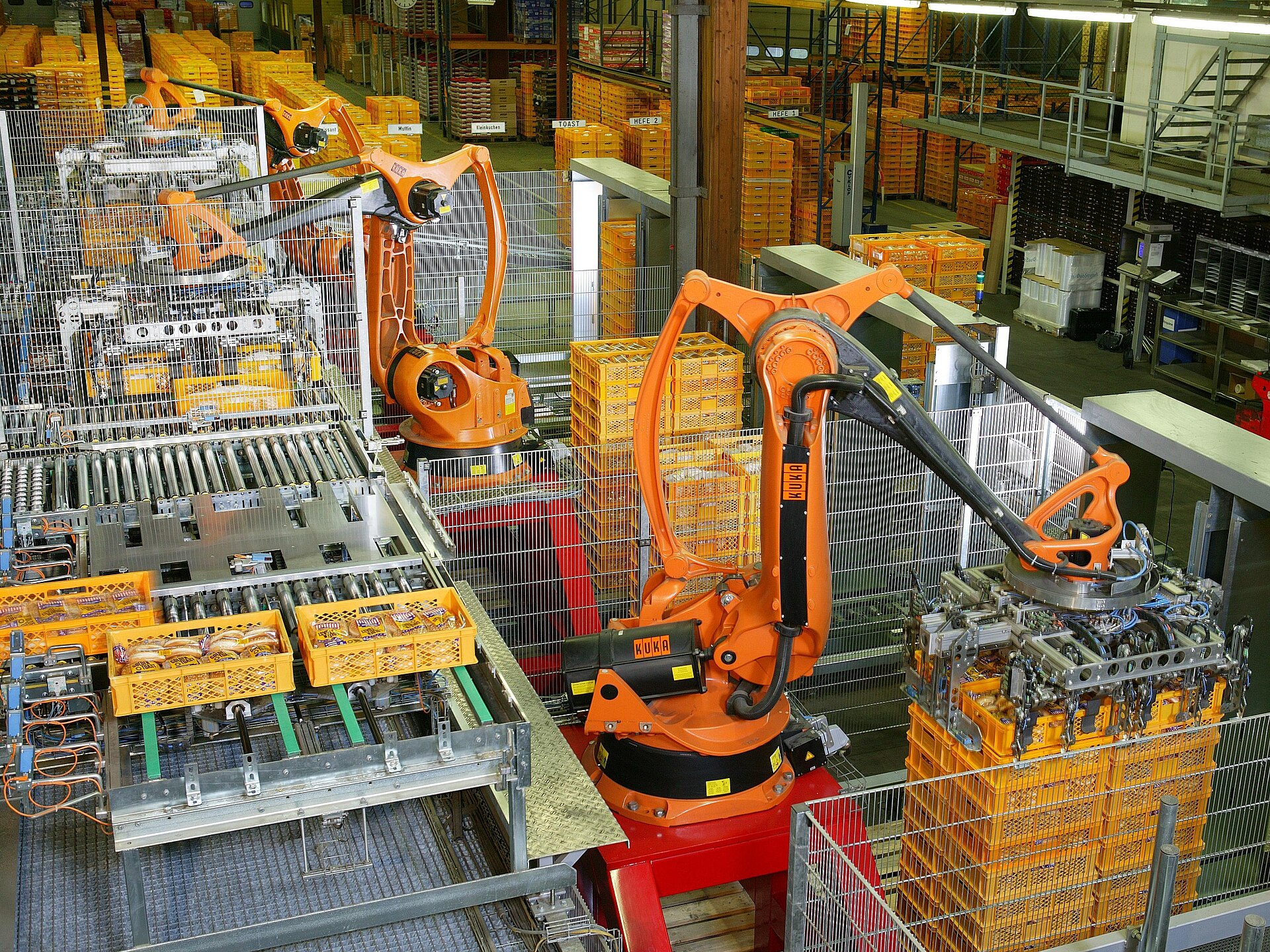
Featured image: Factory Automation Robotics Palettizing Bread by KUKA Roboter GmbH, Bachmann, via Wikimedia Commons (Public domain).
Reporting is based on the publicly available sources listed above and has been independently written by Food Tech Insider.