Silgan and AIP to Acquire Trivium Packaging, Creating a $7.3 Billion Metal Food Can and Closures Group
Silgan Holdings has agreed to partner with private equity firm American Industrial Partners (AIP) to acquire Trivium Packaging, the Netherlands-based metal packaging supplier, in a deal that would create a stand-alone metal packaging group with an estimated $7.3 billion in annual net sales. The new business, to be called Silgan Metal Containers and Closures (Silgan MCC), would make human and pet food cans, aluminium and steel aerosol cans, aluminium beverage bottles and food and beverage flat-cap closures across more than 100 plants worldwide.
The companies announced the proposed transaction on 19 October. It is expected to close in mid-2027, subject to regulatory approvals, works council consultations and other customary conditions.
How the deal is structured
Silgan will contribute its Metal Containers segment and its food and beverage flat-cap closures businesses to Silgan MCC, which will then buy Trivium for cash. The transaction values Trivium at an enterprise value of about $3.4 billion, or 7.1 times its adjusted EBITDA for the 12 months to 30 June 2026. Including expected synergies, the multiple falls to 4.8 times. Silgan’s contributed businesses are valued at $3.8 billion, or 8.1 times adjusted EBITDA.
Silgan will receive about $2.3 billion in cash, which it says will go towards retiring existing debt, and will keep a 60% controlling stake in Silgan MCC. AIP will hold the remaining 40% and contribute about $1.0 billion of cash equity to fund the acquisition and future growth. The rest of the capital comes from fully committed bank debt. Bloomberg Government reports that new Silgan MCC debt will account for $4.9 billion of the funding, provided by Wells Fargo, Goldman Sachs, RBC Capital Markets, Deutsche Bank Securities and BofA Securities.
Trivium is majority-owned by Ontario Teachers’ Pension Plan, with Ardagh Group holding a stake of roughly 42%, according to Packaging Dive. Ardagh expects to net about $90 million in cash. Trivium was formed in 2019 by combining Exal with Ardagh’s food and specialty metal packaging business. It has 57 locations, about 7,200 employees, more than 800 customers and net sales of roughly $3 billion in 2025.
Synergy and earnings targets
Silgan expects $225 million in annual synergies by the end of year three, building from about $75 million in year one and $150 million in year two. The savings are to come from procurement, operations and SG&A. The company says the deal should lift its adjusted earnings per share and free cash flow by at least 15% once synergies are fully realised.
Silgan MCC’s board will have three Silgan nominees, Anthony J. Allott, Adam J. Greenlee and Shawn C. Fabry, and two directors nominated by AIP. Silgan also described a possible future path to a tax-free distribution that would set up Silgan MCC as an independent public company.
What stays with Silgan
Silgan’s dispensing and custom containers businesses will be combined into a wholly owned segment called Silgan Dispensing Solutions, which the company describes as a premium specialty packaging platform. Silgan reported net sales of about $6.5 billion in 2025 from 120 manufacturing facilities in North and South America, Europe and Asia.
For Silgan, bringing in AIP keeps the deal leverage-neutral. “We’re not deploying a meaningful amount of shareholder capital,” said Alex Hutter, senior vice president of strategy and investor relations, according to Packaging Dive. AIP, which manages about $18 billion in assets, acquired International Paper’s global cellulose fibers business earlier this year.
Why it matters for food and beverage packaging buyers
Silgan is already a principal supplier of metal containers for pet and human food in North America and Europe, and Trivium’s footprint is complementary, mainly in the same two regions. The partners argue that the combined scale will give customers greater security of supply and help reduce costs across the supply chain, while making a stronger case for metal packaging and its sustainability features.
CEO Adam Greenlee pointed to Trivium’s aerosol and aluminium beverage bottle lines as especially attractive growth platforms. He also described a shift in the U.S. market after recent tariffs, noting an influx of imported filled goods into North America and that about 80% of the tinplate consumed in the United States is produced abroad.
For food processors, canners and beverage brands, the deal means further consolidation among their metal packaging suppliers. Procurement teams will be watching how the promised procurement and operating savings play out in pricing and service, and how competition authorities view the combination during a review period that runs into 2027.
Sources & Credits
- Silgan Holdings – Silgan Announces Strategic Portfolio Acceleration; Establishes Partnership to Acquire Trivium (19 Oct 2026)
- Business Wire – Silgan Announces Strategic Portfolio Acceleration; Establishes Partnership to Acquire Trivium (19 Oct 2026)
- Packaging Dive – Silgan, private equity acquiring Trivium to create $7.3B packaging giant (19 Oct 2026)
- Bloomberg Government – Silgan Says $4.9b of Trivium Deal Funding to Be New MCC Debt (19 Oct 2026)
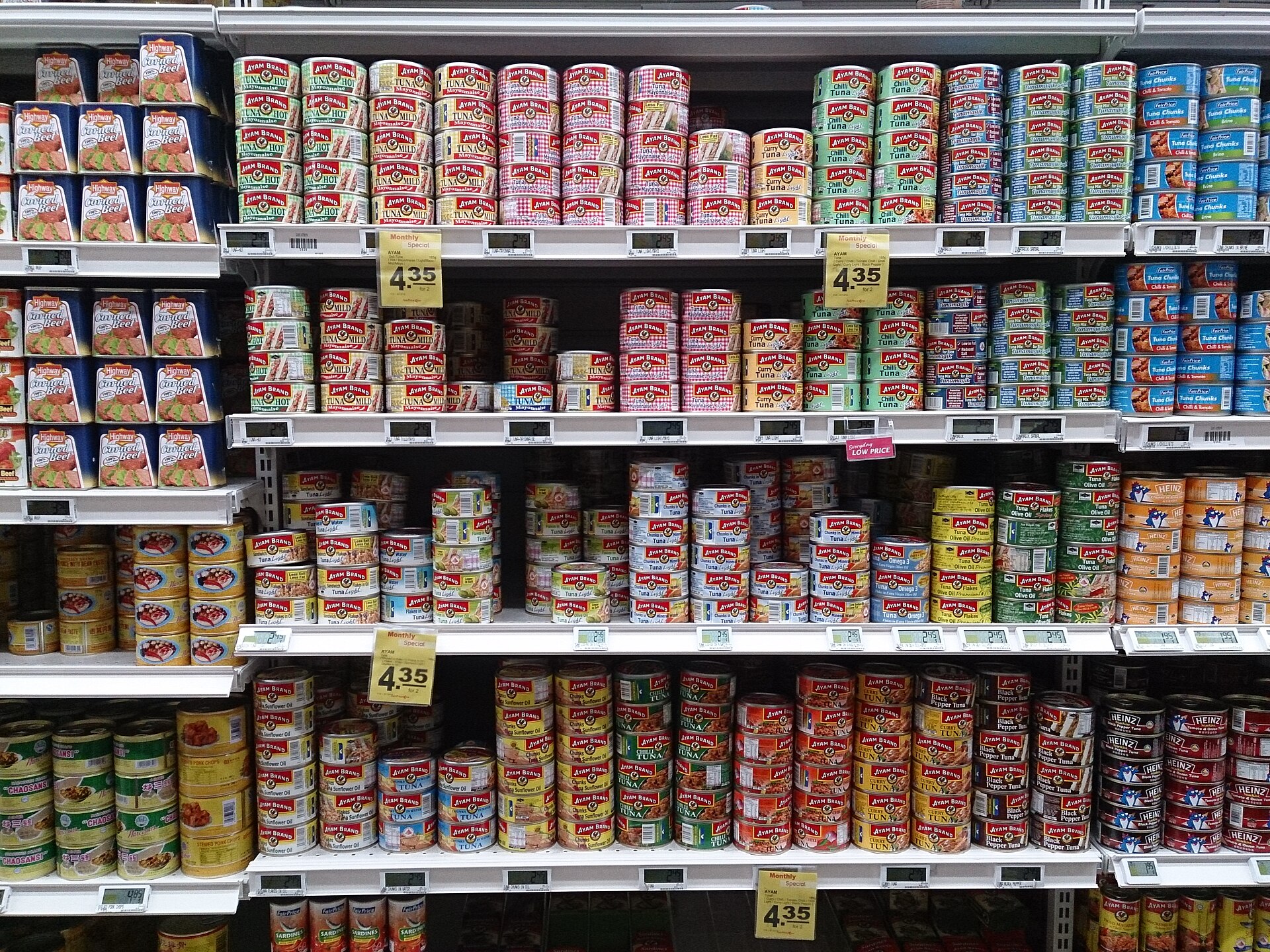
Featured image: Canned food by ProjectManhattan, via Wikimedia Commons (CC BY-SA 3.0).
Reporting is based on the publicly available sources listed above and has been independently written by Food Tech Insider.