University of Deusto Builds AI Near-Infrared Sensor Prototype for Non-Destructive Plant Allergen Screening in Food Factories
Researchers at Spain’s University of Deusto have built a working prototype that combines near-infrared spectroscopy (NIRS) with artificial intelligence to screen food for plant allergens without destroying the sample or sending it to a laboratory. The partners are positioning the AI allergen sensor for quality control in food factories, distribution centres and institutional kitchens, not for consumers.
The device was developed under the smartJAN project by Deusto’s eVIDA research group with technology company Kernet and Fundación Miranda, with funding from the Basque government’s Hazitek programme. The underlying research has been published in the journal Food Analytical Methods.
Targeting lipid transfer protein (LTP) allergens
The project focused on lipid transfer proteins (LTPs), a family of plant proteins found in many fruits, nuts and vegetables. Some LTPs can trigger severe allergic reactions, and LTP allergy is particularly relevant in the Mediterranean region. The team studied two specific allergens from the family: Pru p 3, found mainly in peach skin, and Ara h 9, found in peanuts.
For allergen management teams, LTPs are a difficult group. They occur across many plant ingredients, so recipe changes, ingredient substitutions or supplier switches can introduce new risks into products and production lines. A rapid screening step on site could help flag samples for confirmatory testing before products move further down the supply chain.
How the NIR spectroscopy and AI system works
The prototype shines near-infrared light onto a food sample and measures how much light is reflected at different wavelengths. The resulting pattern acts as a spectral fingerprint for the sample. Signal-processing algorithms and an AI model then interpret that fingerprint almost instantly to decide whether the target allergenic proteins are likely to be present.
Because the scan is non-destructive and can be carried out on site, the developers see it as a way to speed up screening alongside conventional analytical methods such as laboratory immunoassays, rather than replacing them. That positioning matters for food safety managers. NIR spectroscopy is already a familiar tool in food plants for checking composition, moisture and authenticity, so the novelty here is pointing the technique at specific protein allergens with machine learning doing the interpretation.
Next steps: validation and an industry partner
Deusto says the initial development phase is complete and a validated prototype exists, but protocols for checking the tool’s reliability still need to be finalised. The university has not published performance figures for the sensor under factory conditions. Detection limits, false-negative rates across different food matrices, and how often a result would need lab follow-up are the questions quality teams will want answered before such a device enters a HACCP or allergen control plan.
Commercialisation will depend on industry interest in turning the prototype into a testing device. Begoña García-Zapirain, head of the eVIDA group, points to earlier tests that detected gluten and bacteria in meat as evidence the approach could be applied more widely. The university names early detection of foodborne pathogens such as Salmonella as an area for future work.
Fundación Miranda’s role adds a care-sector angle. The foundation focuses on people over 65, a group for whom preventing food-related risks and meeting specific dietary needs are particularly important. That makes hospitals, care homes and school catering obvious early use cases alongside manufacturing.
Why it matters for food safety technology
Undeclared allergens are a leading cause of food recalls, and manufacturers are under pressure to verify allergen status faster as formulations change more often. Large food companies are also putting more AI and smart sensors on production lines. Nestlé, for example, recently opened a Deep Tech Center in Orbe focused on AI, sensors and robotics. Portable, AI-interpreted spectroscopy is one route to bringing allergen screening out of the lab and onto the factory floor, provided its reliability can be shown across real-world foods.
Sources & Credits
- Food Ingredients First – AI-powered near-infrared sensor targets plant allergen screening in food factories (27 Nov 2026)
- Phys.org – Researchers explore the use of AI and smart sensors to improve food safety quickly, affordably (27 Nov 2026)
- University of Deusto – Deusto is researching the use of artificial intelligence and smart sensors to improve food security
- Food Analytical Methods – Novel Artificial Intelligence Approach For nsLTP Early Detection Using NIRs Data
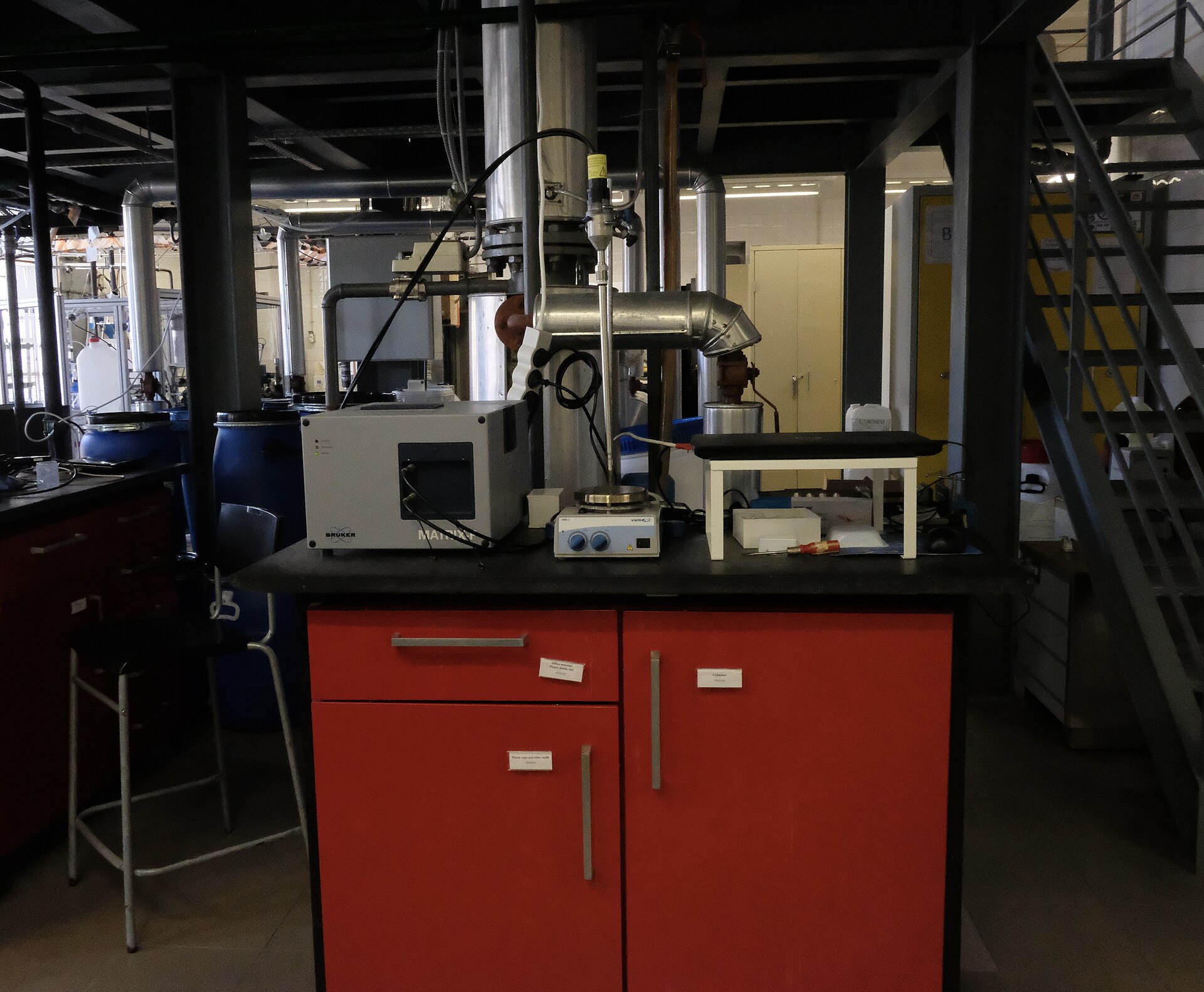
Featured image: Near-infrared spectroscopy equipment on a lab bench by Jba.batista, via Wikimedia Commons (CC BY-SA 4.0).
Reporting is based on the publicly available sources listed above and has been independently written by Food Tech Insider.