Nature Communications Study: GLP-1 Uptake Could Cut Global Food Demand, Free 32–46 Million Hectares of Farmland and Lower Food Prices by 2050
Wider use of GLP-1 weight-loss drugs could take a measurable share of calories out of global food demand by 2050, lowering food prices and releasing tens of millions of hectares of farmland, according to a new modelling study from the University of Aberdeen published in Nature Communications. It is described as the first study to put numbers on how GLP-1-driven changes in eating could ripple through food demand, prices, trade and land use worldwide.
The researchers simulated GLP-1 uptake among adults living with obesity to 2050. In a scenario where users simply eat less but keep the same diet, the model projects up to 6.6 million avoided deaths globally in 2050 and 32 million hectares (Mha) more natural land than in the reference case, as cropland, pasture and managed forest shrink. Where GLP-1 use is combined with a shift towards the EAT–Lancet planetary health diet, those figures rise to 7.7 million avoided deaths and 46 Mha of additional natural land.
How the GLP-1 food demand model works
The team used the LandSyMM global food system modelling framework to project national food prices, diets, international trade and land use under a reference scenario and six GLP-1 scenarios. Uptake was modelled in three geographic settings: high-income countries only, high- and upper-middle-income countries, and all countries. Each setting was run both with and without an accompanying move to the EAT–Lancet diet.
The starting assumption is that GLP-1 medicines suppress appetite and can cut calorie consumption by 20–30%. Applied at population scale, that reduction becomes a demand shock that the model propagates through supply, prices and trade. The authors stress that the resulting environmental and production effects, such as lower fertiliser and irrigation use, emerge from the model rather than being imposed on it.
The paper notes that uptake is already significant in some markets. It cites roughly 12% of US adults reporting GLP-1 use as of November 2025 and about 2.9% of UK adults using obesity medication in 2025. Access could widen quickly: the core semaglutide patent is set to expire in several countries in 2026, and the authors expect off-patent versions to arrive rapidly in India, Canada, China, Brazil and Turkey, which together account for about 40% of the world’s population.
Trade effects reach countries with low GLP-1 uptake
One of the more relevant findings for agrifood exporters is that land-use change does not stay where the drugs are taken. In a scenario limited to high-income countries, the model’s total increase in natural land is about 8 Mha. North America contributes around 0.7 Mha of that, while Latin America accounts for about 3.5 Mha. The authors attribute declines in agricultural area in regions such as Latin America and East Asia and the Pacific to lower exports, despite limited GLP-1 use in those regions.
Health gains are uneven too. Countries with high obesity and diets heavy in red and processed meat but low in fruit, vegetables and pulses see the largest drops in projected mortality. The study compares Russia and the UK, which have similar projected obesity rates in 2050 (45% and 41%). Russia sees roughly 2,000 avoided deaths per million people against almost 940 per million in the UK, a gap the authors link mainly to diet composition.
Rebound effects: cheaper food, more consumption elsewhere
The modelling also identifies offsets. Lower demand in GLP-1-adopting countries pushes down global food prices, which improves affordability elsewhere. Lower-income regions see small rises in consumption, including of less healthy foods, without any change in dietary preferences. The authors add that other rebound effects, including higher consumption of animal products, more waste, and savings spent on other goods and services, could raise greenhouse gas emissions and partly cancel out the environmental gains. They also flag the emissions footprint of manufacturing GLP-1 drugs at scale as a topic for future lifecycle research.
What it means for food manufacturers and agrifood supply chains
The study adds a long-range, system-level view to the near-term retail data that food companies are already tracking. In the UK, for example, Worldpanel data recently linked GLP-1 use to a £1 billion cut in grocery spend. The Aberdeen modelling suggests the effects could extend beyond category mix and portion sizes to commodity prices, export volumes and land use, all of which matter for ingredient sourcing and long-term capacity planning.
The authors are clear that GLP-1s should not be treated as a fix for the food system. The largest health and land benefits in the model come when lower calorie intake is paired with dietary change towards more plant-based foods and less red and processed meat. For manufacturers, that points to a dual planning challenge: smaller, more nutrient-dense portions for GLP-1 users, and supply chains that may face softer volume demand for some commodities over the coming decades.
Sources & Credits
- Nature Communications – Impacts of medications for obesity on global health and the environment
- FoodNavigator – GLP-1s could reshape the global food system (27 Nov 2026)
- University of Aberdeen – Could weight loss drugs reshape global food systems?
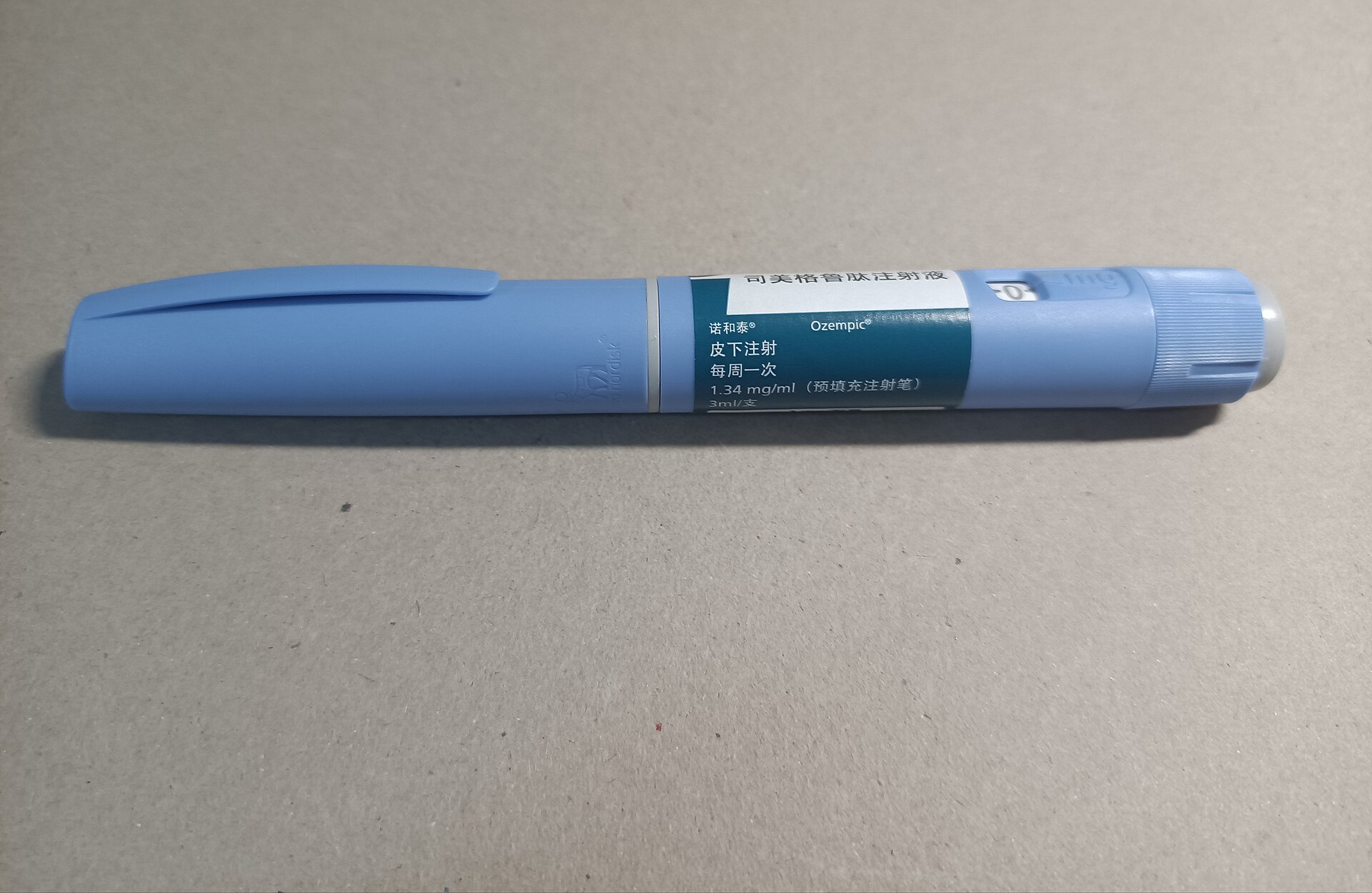
Featured image: Ozempic semaglutide pre-filled injection pen by HualinXMN, via Wikimedia Commons (CC BY-SA 4.0).
Reporting is based on the publicly available sources listed above and has been independently written by Food Tech Insider.