Nestlé’s Clean-Label Bombshell: 7 Food Tech Shifts Reshaping 2026
This week in food tech: trends, investments, and what actually mattered.
The Week Clean-Label Stopped Being a Marketing Claim
The week of 29 June – 3 July 2026 will be remembered as the moment the food industry stopped treating reformulation as a brand-marketing exercise and started treating it as a hard operational deadline. Nestlé’s pledge to strip artificial colours from its entire global portfolio by year-end, combined with a wave of ingredient-technology deals, GLP-1 reformulation news, and a $1.65B US grocery acquisition, reset the competitive baseline for CPG. If you wanted a single week to understand where food tech capital, regulation, and consumer pressure are converging, this was it.
Executive Summary
Nestlé’s global artificial-colour removal commitment, made by CTO Stefan Palzer, is the most consequential single announcement in CPG this quarter. It moves clean-label from a US niche to a worldwide deadline, and every tier-one and tier-two food company now has a public clock to beat. ^1
Capital is still flowing into food tech, but it has become more disciplined. Anterra Capital’s $100M first close on a targeted $200M fund explicitly favours founders applying established technologies over moonshots. The Protein Brewery raised €18M and secured EU approval for its Fermotein mycoprotein on the same day, even as the FDA asked it to withdraw its US GRAS notice — a textbook case of the bifurcation between European progress and US regulatory friction. ^3^5
GLP-1 drugs continue to reshape CPG mix. OC&C Strategy Consultants now projects GLP-1 penetration rising from ~12% to 15–18% by 2031, with food companies reformulating baked goods, snacks, and indulgent formats for protein density, fibre, and smaller packs. ^25
The single boldest prediction for the next quarter: a second tier-one CPG will announce a 2027 clean-label deadline before the end of July, and at least one cocoa-free chocolate SKU from a major brand will hit shelves in Q3.
The Headlines That Mattered
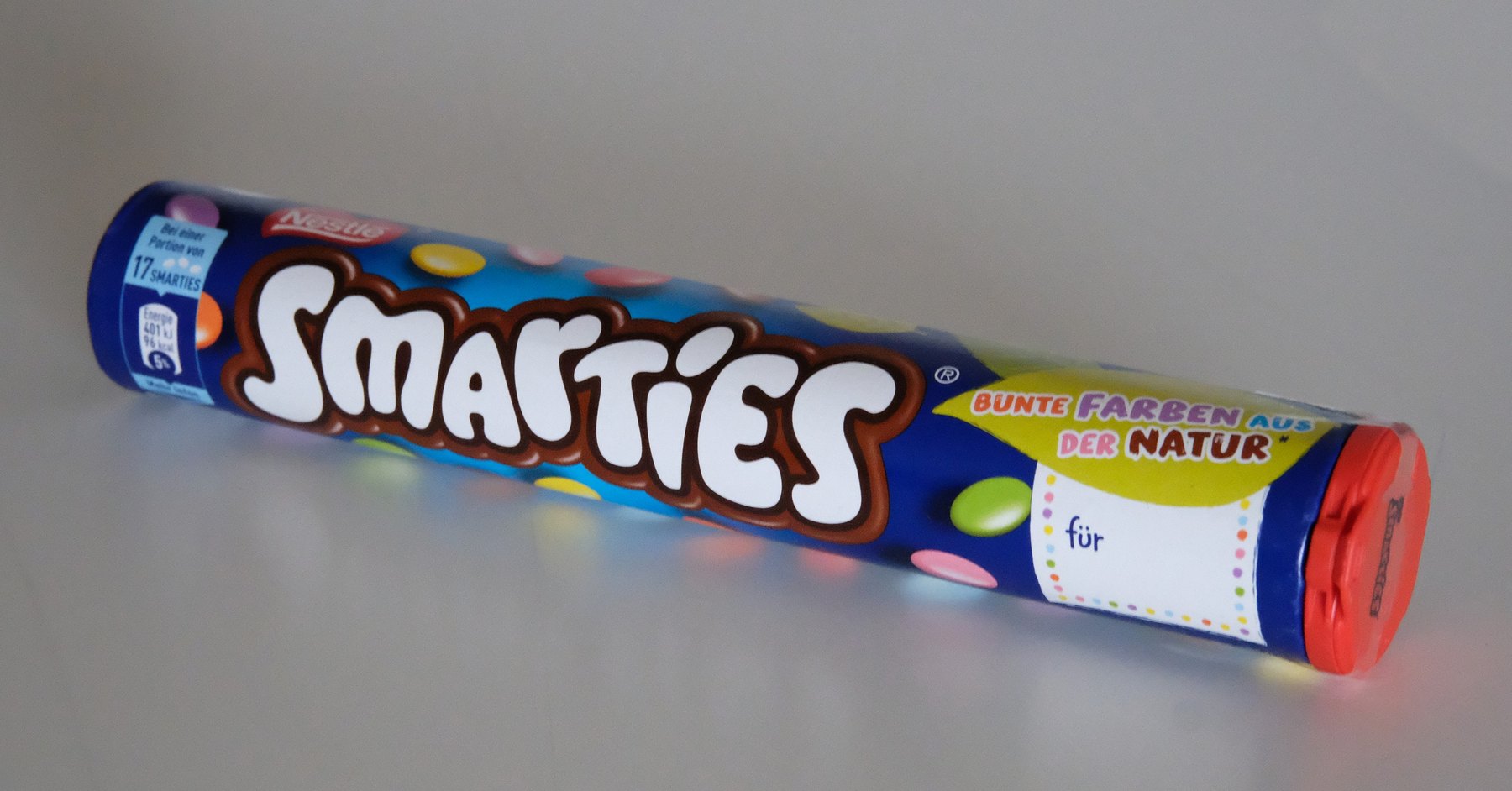
Nestlé commits to global artificial-colour removal by year-end. CTO Stefan Palzer confirmed to Reuters that the entire global Nestlé portfolio will be artificial-colour-free by the end of 2026, after the US portfolio completed its transition. The move is industry-first in scope and turns clean-label reformulation into a competitive race every major CPG now has to run in public. Watch for tier-one followers — Unilever, Mondelēz, Kraft Heinz, and General Mills all have reformulation programmes underway. ^1
Kroger to acquire Giant Eagle for $1.65B. Kroger’s first major M&A since the blocked Albertsons deal: $1.25B cash plus approximately $400M in assumed liabilities, adding 197 supermarkets and 11 standalone pharmacies across Ohio, Pennsylvania, West Virginia, Maryland, and Indiana. CEO Greg Foran is framing it as a regional bolt-on rather than a head-to-head national play, with closing expected in 2027. The deal signals confidence in regional density over national consolidation, and observers will be watching whether it previews a more cautious M&A stance from grocers writ large. ^2
The Protein Brewery closes €18M Series B extension and EU approval for Fermotein. Dutch mycelium-fermentation player secured EU clearance for its whole-food mycoprotein (50% protein, 30% fibre) on the same day it announced the round. The FDA simultaneously asked it to withdraw its US GRAS notice over application deficiencies, which CEO Thijs Bosch called “temporary” and said would not derail US plans. The dual signal — capital in, EU approved, US paused — captures the geography of fermentation regulation right now. ^3
General Mills beats Q4 and unveils a $3B cost-savings plan. Shares jumped roughly 6% intraday to about $36.74. The four-year savings programme starts with $750M in FY27, with FY27 EPS guided to $3.00–$3.20 on $18.15B–$18.52B revenue. The combination of a beat plus aggressive cost targets is a clear signal that legacy CPGs are operating on the assumption of a structurally tighter margin environment. ^9
Bayou Best Foods acquires BettaF!sh (Wunderfish). A US plant-based shrimp distributor buying a Berlin plant-based salmon/tuna brand creates a global plant-based seafood platform — and almost certainly the first of multiple roll-ups as the category consolidates. ^12
Investment & M&A Activity
The week’s capital flows tell a clear story: food tech is not closed, but the bar has moved. Deal sizes are smaller, milestones are more concrete, and geography matters more than narrative.
Equity rounds. The Protein Brewery’s €18M Series B extension (taking the round to roughly €20.5M total) is the headline figure, and notably a fermentation company closing a meaningful extension in this market. ProFuse Technology raised $1.5M to pivot its cultivated-meat muscle-formation IP into a muscle-health discovery platform aimed squarely at GLP-1-induced sarcopenia — a clever repositioning of cellular-agriculture IP into the GLP-1 nutrition vertical, which is rapidly becoming its own category. ^3
Fund formation. Anterra Capital hit a $100M first close on a new fund targeting $200M, explicitly backing founders applying “established technologies” rather than moonshots. Partner Martin Goossens publicly criticised “outlandish” agtech claims — a useful indicator of where the smart money is positioning. Watch Anterra’s portfolio announcements in the back half of 2026. ^5
Debt and credit. Estonia’s InSoil landed a €120M credit facility from Pollen Street Capital to expand regenerative-agriculture lending to more than 3,500 SMEs. This is the most under-reported deal of the week: regen ag is now being financed through private credit, not just equity, which changes the unit economics of farmer transition. ^8
Infrastructure and equipment. GEA is investing €4M into a new Sarstedt Application & Technology Centre for precision fermentation and cell-cultivation pilots. When a major process-equipment OEM commits capex to fermentation in Germany, it tells you where contract manufacturing capacity is being positioned. ^6
M&A flow. Notable transactions include Cooke’s C$225M (~$158M) purchase of Mowi’s eastern Canada salmon farms; Solina’s acquisition of US butter business Epicurean; Livekindly Collective’s purchase of Germany’s Greenforce Future Food; Acon Investments and Fini taking a controlling PE stake in YumEarth from Riverside; Italy’s La Doria acquiring tomato-processor Solana; Spain’s Palacios Alimentación buying Ñaming; Spain’s Alimentos Sanygran acquiring Iberian plant-based assets from Nutrition & Santé; Biosphere picking up NovoNutrients’ gas-fermentation assets; and Lactalis committing roughly €50M ($57M) to add quark production at Neuburg, Germany. ^10–^20
Investor sentiment and patterns. Three patterns stand out. First, discipline is back: round sizes are rational, milestones are concrete, and “outlandish” claims are being publicly called out. Second, Europe is leading on fermentation regulation: the EU is approving, the US is asking for resubmissions, and capital is following. Third, GLP-1 has created a fresh nutrition vertical with real strategic logic — protein density, muscle preservation, smaller packs — and ProFuse is the first publicly visible pivot. Companies to watch: The Protein Brewery, GEA-adjacent fermentation CDMOs, ProFuse and the emerging GLP-1 nutrition cohort, and InSoil on the regen-ag credit side.
Emerging Trends & Signals
Clean-label becomes a hard deadline. Nestlé’s global commitment landed the same week that ROHA expanded its micronised natural colours and Amano Enzyme launched ProBoost Neutra, a new enzyme technology aimed at plant-based functionality challenges. Reformulation is the industry’s central operational battleground, and the supporting ingredient ecosystem is consolidating around it. ^1^22
AI in agriculture is being re-priced upward. SNS Insider now projects the AI-in-agriculture market from $2.78B in 2025 to $24.55B by 2035, a 24.34% CAGR. The US is expected to reach $6.63B and Europe $6.08B. Whether the actual revenue mix justifies these projections is debatable, but the analyst consensus is clearly moving up. ^23
Cocoa alternatives are now a portfolio strategy, not an experiment. Mars, Nestlé (KitKat and the cocoa-cell bioreactor), Lindt (cultivated and cocoa-free), Barry Callebaut, and Mondelēz are all pursuing parallel paths. FoodNavigator has called it the industry’s “Plan B” — and Nestlé is leading on commercialisation. Expect the first major branded cocoa-free product SKU in Q3. ^24
GLP-1 reshapes CPG mix, not just volume. OC&C projects GLP-1 penetration rising from ~12% to 15–18% by 2031, with food companies prioritising protein, fibre, and smaller-pack indulgent formats. ADM and Corbion are both actively reformulating baked goods and snacks. The strategic question for CPGs is no longer “do we participate” but “how do we reformulate without cannibalising our hero SKUs.” ^25
Regulatory signals are mixed. On the upside, the UK FSA/FSS released a “Top Emerging UK Food Innovations” report flagging edible insects, cultivated foods, molecular farming, and gas fermentation as the 5–10 year horizon — a clear forward signal from a major regulator. ^27 On the friction side, the US Trump administration delayed new food-industry regulations (front-of-pack nutrient labels, ingredient oversight) from an earlier timeline to a December final rule — a meaningful delay for anyone betting on FOP labels reshaping consumer behaviour in 2026. ^30 California is in the spotlight: new food date-label laws covered by reFED, and the California Department of Pesticide Regulation opened a public consultation on Biotalys’ EVOCA biofungicide. ^28
Supply chain and sustainability. Brazil unveiled a 2026/27 Safra Plan of up to $117.9B in agricultural financing, including $525.1B reais for medium and large farmers — a meaningful global commodity-flow signal. ^31 Biosphere’s acquisition of NovoNutrients’ gas-fermentation assets is the clearest example yet of the gas-fermentation shakeout: survivors are absorbing the IP of fallen players.
Deep Dive: Nestlé’s Global Clean-Label Deadline
Nestlé’s pledge to remove artificial colours from its entire global portfolio by the end of 2026 is the most strategically significant CPG announcement of the year. To understand why, you have to understand what it is not. It is not a marketing campaign. It is not a regional commitment. It is a global, time-bound operational deadline issued by a company with the supply chain to hit it.
Historical context. Clean-label reformulation in CPG has historically been a defensive play: a brand removes an ingredient, prints “no artificial colours” on pack, and pockets a short-term pricing premium. The problem is that these pledges have been regional, slow, and easy to walk back. The US portfolio of any major CPG can be reformulated in 18–36 months; the global portfolio, across hundreds of SKUs and dozens of regulatory jurisdictions, is a fundamentally harder problem. That Nestlé is committing to the global portfolio on a 2026 timeline tells you two things. First, the company has already done the hardest work on the US portfolio and has built the supply chain for the global one. Second, it is confident enough in its reformulation pipeline to make a public commitment that, if missed, becomes a competitive liability.
Competitive implications. The move raises the cost of inaction for every major CPG. Unilever, Mondelēz, Kraft Heinz, and General Mills all have reformulation programmes underway, but none has yet committed to a global deadline. The first mover to follow Nestlé publicly will frame itself as the responsible challenger; the laggards will face a consumer and retailer pressure campaign that did not exist at scale before this week. Expect a wave of mid-tier CPG announcements copying the 2026 commitment. Mid-tier players do not have Nestlé’s R&D budget, which means reformulation pressure is also a margin event for them.
Expert perspective. “This is the moment clean-label stops being a brand story and becomes an industry deadline,” said one CPG strategy consultant who advises three of the top ten global food companies. “If you are a tier-two CPG and you are not already reformulating, you are now publicly behind.” The retailer angle matters too: Walmart, Kroger, Ahold Delhaize, and Tesco have all been quietly building clean-label procurement criteria. Nestlé’s announcement gives those procurement teams the political cover to move faster.
What happens next. Watch for three things over the next sixty days. First, a second tier-one CPG announces a 2027 clean-label deadline. Second, at least one major retailer updates its procurement standards to require clean-label compliance on private-label SKUs by 2028. Third, the natural-colour ingredient ecosystem — ROHA, GNT, Sensient, Döhler, ADM — sees accelerated capacity announcements as demand spikes ahead of the 2026 deadline.
The Week Ahead
Next week opens the Q2 earnings season and the calendar is heavy.
Earnings. Q2 reporting season kicks off with PepsiCo (PEP) expected mid-week, plus Delta for the consumer-spending read. PepsiCo’s commentary on GLP-1 impact, snack portfolio mix, and international pricing will set the tone for the rest of the CPG reporting cycle. Q2 GDP-style signals matter more than usual given the ongoing Fed-rate debate. ^32
FDA calendar. The Q3 FDA decision docket already includes at least seven notable items (Vera Therapeutics, Moderna’s mRNA-1010, and others). At least one will move before mid-July; for food tech, watch for any movement on GRAS re-submissions or novel-food approvals. ^33
Funding signals to watch. Anterra Capital’s final close on its $200M target is likely to draw fresh attention to disciplined agtech investing. TechCrunch Startup Battlefield Australia’s 19 August deadline is looming, and early food and agribotech applicants may surface in the run-up.
Predictions for next week’s headlines:
- More GLP-1–adjacent CPG launches focused on protein density, smaller packs, and fibre fortification. Watch for another major CPG following Nestlé’s lead.
- Plant-based seafood M&A continues — the Bayou Best / BettaF!sh tie-up is almost certainly the first of more roll-ups, and “too many small brands” is the live industry line.
- Clean-label announcements intensify, with a second tier-one CPG expected to copy Nestlé’s 2026 commitment before the end of July.
- Cocoa-free product SKUs ramping in Q3. Mars and Lindt are likely to follow Nestlé’s lead with branded launches.
- A possible US GRAS re-submission from The Protein Brewery in the second half of 2026.
Questions the market will be asking. Will PepsiCo update its GLP-1 commentary? Will any retailer follow Kroger into M&A? Will a second tier-one CPG announce a clean-label deadline before August? And will The Protein Brewery’s US GRAS re-submission land before year-end?
Final Thoughts
The week of 29 June – 3 July 2026 will be remembered for three things: a global CPG setting a real clean-label deadline, a $1.65B US grocery acquisition that signals regional bolt-ons over national consolidation, and a wave of fermentation, GLP-1, and regen-ag deals that show where the smart money is positioning. The throughline is operational maturity. Capital is flowing, but it is selective. Regulation is moving, but the US is falling behind Europe on fermentation. Consumers are signalling, but they are signalling about mix (protein, fibre, smaller packs) as much as about volume.
What this week tells us about the future is that food tech has stopped being a story about the next big thing and started being a story about the next hard thing. The winners of the next twenty-four months will be the companies that can reformulate at scale, navigate fragmented regulation, and serve a consumer whose purchasing behaviour is being reshaped by GLP-1 drugs and clean-label expectations simultaneously. The losers will be the ones still pitching moonshots to investors who have already learned to discount them.
For readers, the action this week is simple: track the second tier-one CPG clean-label announcement, watch PepsiCo’s Q2 commentary on GLP-1, and keep an eye on the fermentation approvals pipeline. The next major story is closer than it looks.
Weekly analysis compiled from industry sources. Links and credits embedded throughout.