GFI India 2026 State of the Industry Report: Smart Protein Sector Shifts to Ingredient Manufacturing as 7,700 kL of Fermentation Capacity Sits Idle
India’s alternative protein sector has moved past its launch-and-hype phase and is now being built from the ingredient layer up, according to the Good Food Institute India’s second State of the Industry Report, published in November 2026. The report tracks plant-based, fermentation-derived and cultivated proteins – grouped in India under the term “smart protein” – from April 2023 to December 2025.
Its central finding for industry: commercial activity is shifting from consumer brands and retail shelf space towards business-to-business ingredient supply, co-manufacturing, foodservice and domestic biomanufacturing capacity. Capital, meanwhile, has become more selective.
Fewer companies, more upstream focus
GFI India counted 93 alternative protein companies operating in the country in 2025, down 18% from 113 in 2023. Plant-based businesses make up 81% of that total, and nearly half of all firms work in non-dairy products, followed by meat-alternative makers and ingredient manufacturers. Soy is the most common protein source (19% of products), ahead of yellow pea (15%) and oats and almonds (14% each).
The report describes a market correction in plant-based meat between 2023 and 2025, most visible in premium frozen meat alternatives sold through retail and e-commerce. Non-dairy products held up better. The number of smart protein SKUs on the Indian market still rose 35% over the period, led by non-dairy ice cream, where SKU count climbed 44% to 92.
Ingredient manufacturing and idle fermentation capacity
For B2B readers, the most significant section covers manufacturing. GFI India says 15 to 20 Indian companies now produce plant protein ingredients with established facilities, commercial portfolios and quality certifications, and the ingredient base is widening from isolates and concentrates into texturants, flavours, colours, fats and oils.
The report puts India’s total fermentation capacity at close to 775,000 kL, of which more than 32,000 kL is directly relevant to smart protein production. More than 7,700 kL of that relevant capacity is idle. GFI India estimates that bringing 12% of idle precision fermentation capacity and 26% of idle biomass fermentation capacity into use could supply enough lactoferrin and yeast protein, respectively, to meet those ingredients’ global market sizes.
That framing matches recent deal flow in the country, including Brevel and The Wave Group’s illuminated fermentation plant and Dhampur Bio Organics’ mycoprotein licence with Planetary, both of which turn sugar-industry side streams into fermentation feedstock.
The gaps remain structural. The report flags heavy import reliance for plant protein isolates and specialised equipment, a shortage of pilot-scale facilities, and continuing taste and price gaps with animal protein. It argues that domestic production of functional ingredients and processing equipment is central to reaching price parity.
Capital is selective; patient finance needed
Private investors are now favouring companies with revenue and a clear route to scale, while public funding and grants have become a larger part of the funding mix. GFI India says capital-intensive manufacturing will need patient capital, blended finance and alternative financing structures. It also points to India’s broader high-protein food segment, which attracted more than 10 deals worth over ₹305 crore (about $35 million) in 2025, as a commercial opening for smart protein ingredient suppliers.
Foodservice and price
Foodservice has become a primary channel rather than a secondary one, according to the report, with hotels, restaurants, institutional caterers and wedding menus adopting plant-based dishes. Green Queen’s coverage of the report notes examples including Starbucks’ yeast-protein cold foam with SuperYou and Haldiram’s adding GoodDot’s soya chaap.
On affordability, GFI India highlights India’s Goods and Services Tax reform, which cut the rate on plant-based meat, non-dairy products and microbial proteins from 12–18% to 5%, in line with several animal-protein categories.
Regulation: first cultivated meat dossier under review
Policy support has strengthened under the national BioE3 strategy, which names smart proteins among its focus areas, and through state-level policies. The Food Safety and Standards Authority of India (FSSAI) has already approved several fermentation-derived proteins, including BMC Ingredients’ Rhiza mycoprotein. According to the report, the regulator is now reviewing India’s first regulatory dossier for cultivated meat, with other startups considering filings.
What it means for the industry
For ingredient suppliers, equipment makers and contract manufacturers, the report positions India less as a consumer market for meat analogues and more as a potential low-cost production base for plant protein, fermentation-derived ingredients and co-manufactured products, including for export. Whether that materialises depends on the financing and pilot infrastructure the report itself identifies as missing.
Sources & Credits
- GFI India – State of the Industry Report 2026 (November 2026)
- Green Queen – 8 Things You Need to Know About India’s Fast-Evolving Smart Protein Sector (16 Nov 2026)
- GFI India – State of the Industry Report: Smart Protein in India (2023 edition)
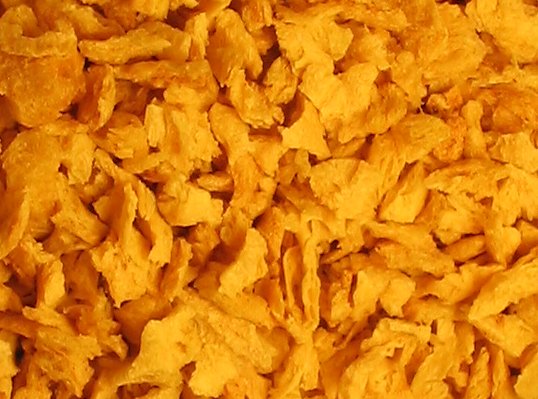
Featured image: Textured vegetable protein (soy) chunks by NTK, via Wikimedia Commons (Public domain).
Reporting is based on the publicly available sources listed above and has been independently written by Food Tech Insider.