Brevel and The Wave Group to Build 300,000-Litre Illuminated Fermentation Plant in India, Turning Sugar Mill Byproducts Into Microalgae Ingredients
Israeli biotech company Brevel has formed a 50:50 joint venture with Indian conglomerate The Wave Group to build an illuminated fermentation plant in Uttar Pradesh, northern India. The site is planned for a total capacity of 300,000 litres and will run on byproducts from The Wave Group’s sugar mills.
The companies put the total investment in the joint venture facility at US$10–15 million. Construction is due to start later this year, with full-scale production expected within 18 months. According to vegconomist, the agreement was signed at a ceremony in New Delhi attended by representatives of the Israeli embassy and officials from Invest India.
A phased build with the partner covering the building
The Wave Group is funding the facility. Brevel co-founder and CEO Yonatan Golan told AgFunderNews that the infrastructure will be designed for 300,000 litres, but the first phase, costing about US$15 million, will have 100,000 litres of capacity. He said the building and basic utilities fall outside the joint venture investment and will be paid for by The Wave Group.
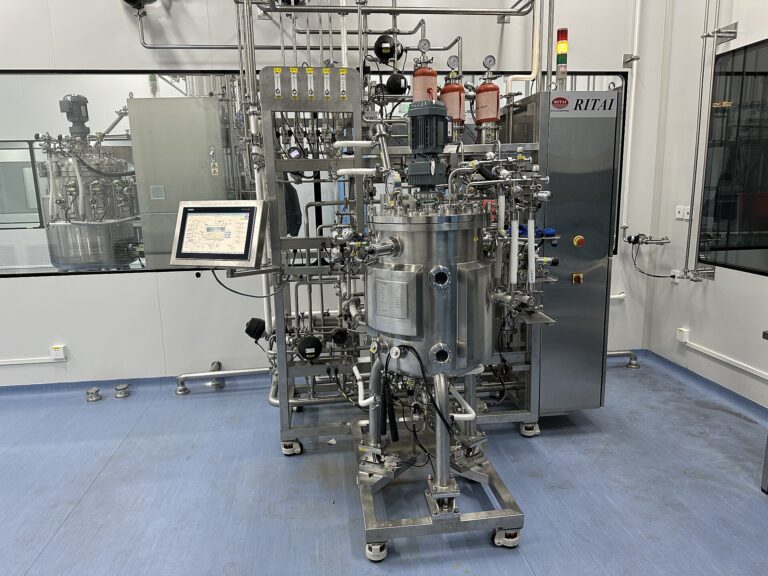
Golan said capital costs are low for this scale because Brevel designs and builds its own illuminated fermenters instead of buying them from equipment or engineering suppliers. Brevel currently produces at a 5,000-litre bioreactor in southern Israel, and Golan said the company plans to scale that site to 30,000 litres soon.
How illuminated fermentation works
Brevel grows photosynthetic microorganisms in closed bioreactors fed with both sugar and light. Sugar provides energy for fast, high-density fermentation. Light allows organisms such as chlorella to make compounds that depend on photosynthesis, including chlorophyll, carotenoids and functional proteins. Conventional dark fermentation of microalgae gives high yields but misses those light-dependent components. LED photobioreactors capture them but, Brevel argues, cannot produce protein cheaply enough.
Golan told AgFunderNews that the combined process gives biomass yields 100 times higher than light-only cultivation. vegconomist reports that the technology is protected by four patents.
Sugar mill sidestreams as feedstock
Siting the plant next to The Wave Group’s mills is meant to cut feedstock and transport costs. Golan said the team has been testing molasses, raw sugar and sucrose-rich process intermediates. “This is still work in progress, but current results demonstrate a meaningful cost reduction,” he told AgFunderNews. Teams from both companies are now optimising the process after initial trials with mill byproducts in Brevel’s bioreactors.
The Wave Group’s businesses span sugar manufacturing, real estate, beverages and infrastructure. “Brevel’s Illuminated fermentation, combined with our deep expertise in sugar manufacturing, defines a new era in biomanufacturing,” said chairman Manpreet Singh Chadha. He added that the alliance positions the group as “an important production hub serving the global food and supplement markets.”
Purallis first, then capacity for plant cell culture firms
The plant will first produce Purallis, Brevel’s whole-cell Chlorella vulgaris ingredient. Golan describes it as a source of protein, fibre, vitamin B12, fatty acids and the antioxidants lutein and zeaxanthin, and says no further regulatory approval is needed to sell it. Brevel has a ten-year supply agreement, signed in 2025, with Israel’s CBC Group, which Golan said plans to launch a product line using Brevel ingredients in mid-2027. Production for that line will start in Israel and move to India once the joint venture begins operating in 2028.
The larger commercial pull, Golan said, is for the platform itself. This year Brevel has moved into plant cell culture. In June it won a US$1.25 million BIRD Foundation grant with US firm Ayana Bio to test whether light can improve plant cell growth and bioactive yields. Green Queen reports that Brevel also works with Israel’s Coffeesai, which grows coffee cells in bioreactors. Golan said some partners already want capacity in the Indian plant. Brevel, he added, is “about to land first long-term offtake agreements for future capacity”.
Why it matters
Lack of large-scale, affordable capacity is one of the main constraints on fermentation and cell-culture ingredients. Brevel is pairing a capital-light partner model with cheap local sugar feedstock and in-house reactor design to bring that cost down. If the first 100,000-litre phase is built on schedule, it would give microalgae and plant cell culture developers a large contract manufacturing option in India. The milestones to watch are the start of construction, the first signed offtake agreements, and whether the sugar sidestream economics hold at commercial scale.
Sources & Credits
- AgFunderNews – Brevel teams up with The Wave Group to scale ‘illuminated fermentation’ in India (21 Oct 2026)
- vegconomist – Brevel and India’s Wave Group to Build 300,000-Liter Illuminated Fermentation Plant Fed by Sugar Mill Byproducts (21 Oct 2026)
- Green Queen – Brevel, The Wave Group to Build Illuminated Fermentation Factory for Microalgae Ingredients in India (22 Oct 2026)
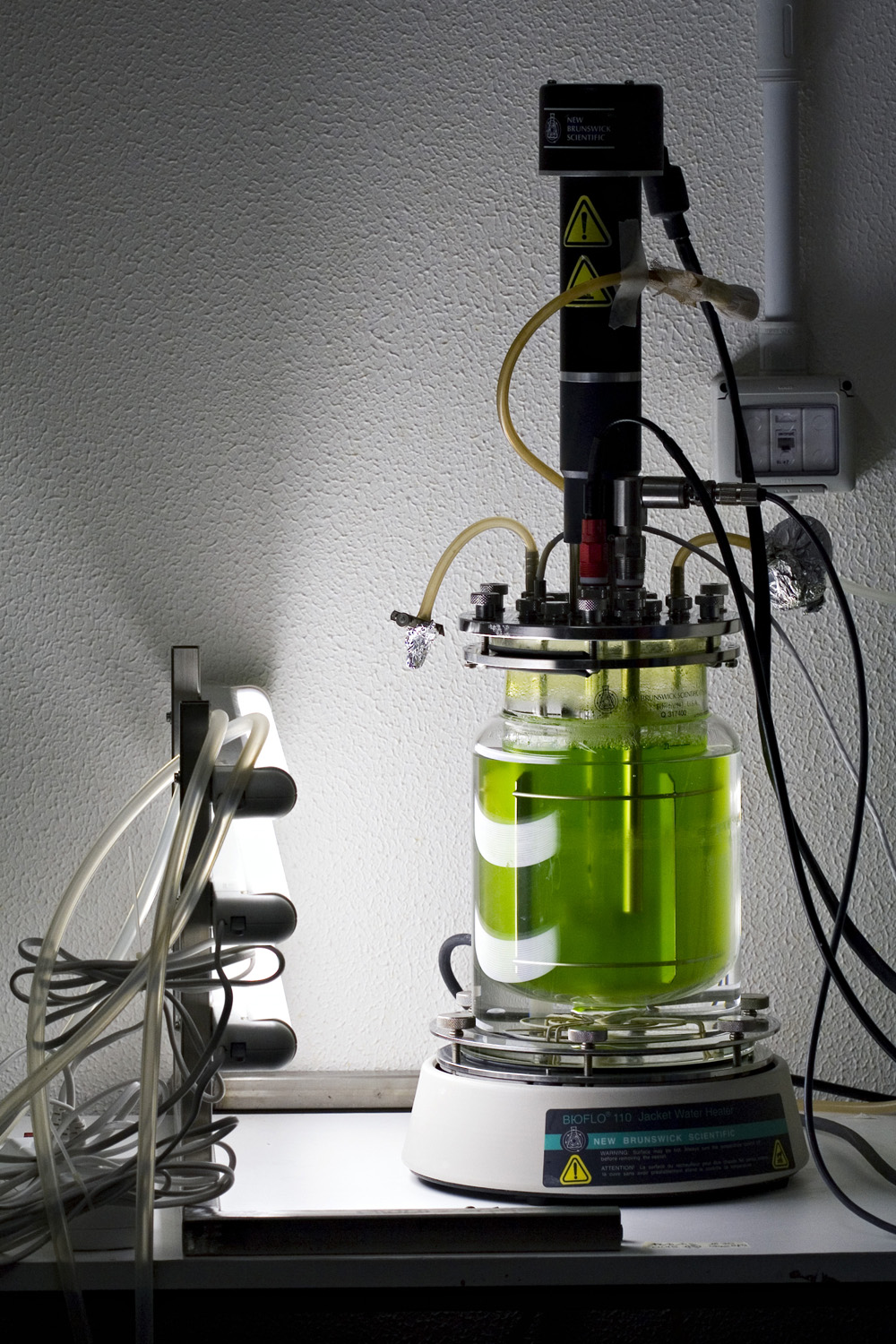
Featured image: Green algae in a bioreactor by Umberto Salvagnin from Italy, via Wikimedia Commons (CC BY 2.0).
Reporting is based on the publicly available sources listed above and has been independently written by Food Tech Insider.