UK FSA and Food Standards Scotland Publish Cultivated Meat Export Roadmap for Cell-Cultivated Products to Non-EU Markets
The UK’s Food Standards Agency (FSA) and Food Standards Scotland (FSS) have published a government roadmap for exporting cultivated meat from Great Britain. The guidance, released on 12 November 2026, sets out how a company producing cell-cultivated products of animal origin could ship them to markets outside the EU, from checking whether a destination country will accept the product at all to keeping the consignment within temperature limits at the border.
It arrives while no cultivated meat has yet been authorised for human consumption in the UK, and a week before a UK–EU summit on 20 November at which negotiations on a sanitary and phytosanitary (SPS) agreement are due to conclude.
One process map instead of five agencies
The document was developed through the FSA and FSS Cell-Cultivated Products Sandbox Programme. It pulls together requirements from HM Revenue and Customs (HMRC), the Animal and Plant Health Agency (APHA), the Department for Business, Innovation, Science and Trade and the Department for Environment, Food and Rural Affairs (Defra) into a single process map. According to Green Queen, it is the ninth guidance document to come out of the sandbox, which runs until February 2027.
“Businesses have told us that understanding the cross-government export process was a priority, so we have worked across government to explain the path to export cell-cultivated products from GB to non-EU markets,” said Dr Thomas Vincent, deputy director of the Sandbox and Innovation at the FSA. “The market for cell-cultivated food is growing internationally, so this guidance will help companies understand what they need to do to access new markets and grow their businesses.”
How the guidance classifies cultivated meat
For regulatory purposes the FSA and FSS treat cell-cultivated products made from animal cells as products of animal origin, in line with the EU’s current approach, although the guidance notes that this classification is not explicitly set out in legislation. Once harvested, the cell biomass is processed into finished foods, so the regulators say products may be handled as processed products of animal origin or composite products rather than as fresh meat.
The bigger practical problem is that cultivated meat has no internationally recognised SPS classification and no established export certification arrangements. There are no standard export certificate templates written for these products, and the FSA expects export applications to be assessed case by case. That may require talks with the competent authority in each destination country.
The export steps, from market access to the border
The roadmap walks companies through a sequence of checks and paperwork:
- Market access: confirm with the importer that the destination country permits import and sale of cell-cultivated products, how it classifies them and whether official import conditions exist. Compliance with UK law does not create a right to export.
- Establishment and product requirements: meet GB food business establishment rules as well as the destination country’s import, marketing, SPS and certification requirements, which may include a novel food authorisation or other pre-market approval.
- Certification and customs: check whether an export health certificate is needed and submit a customs declaration to HMRC.
- Cold chain, labelling and documents: maintain temperature control in transit, meet local labelling and packaging rules, and prepare a full documentation pack covering traceability records, hazard analysis, health certificates, commercial invoice and packing list.
- At the border: send documentation ahead, keep cold chain conditions and expect possible inspections on arrival.
The regulators are clear about the limits. Export pathways are still being developed and tested, some steps may change, and following the process does not guarantee that certification will be available or that a destination country will approve the import.
Why export guidance matters before UK approval
The UK has so far cleared cultivated meat only for pet food, which the FSA does not regulate. At least six applications for human food are under review, from Ivy Farm Technologies, Aleph Farms, Mosa Meat, BeneMeat, and Parima’s Gourmey and Vital Meat, Green Queen reports. Earlier sandbox outputs covered hygiene, hazard analysis, allergenicity, nutrition, growth media safety and how to prepare stronger authorisation filings.
For UK-based producers, a documented export route could help with plans to sell in markets that approve cultivated products before a domestic launch, although destination-country approvals remain the gating factor.
The UK–EU SPS deal backdrop
The timing links the guidance to the SPS negotiations. A deal would ease trade between the UK and EU but has raised concern that novel food companies could face the EU’s slower authorisation process to sell in Britain. As we reported earlier this month, the agreement is expected to spare novel foods, and experts cited by Green Queen say it should include temporary exemptions for categories such as novel foods and gene-edited plants. The summit on 20 November should bring more clarity on timelines for the pending UK cultivated meat applications.
For cultivated meat start-ups, contract manufacturers and cold chain logistics providers, the FSA’s roadmap is less a green light than a checklist: it shows what an export file will need to contain once a destination market says yes.
Sources & Credits
- GOV.UK / Food Standards Agency – FSA and FSS publish export roadmap for cell-cultivated food businesses (12 Nov 2026)
- GOV.UK – Process for exporting cell-cultivated products of animal origin from Great Britain to non-EU countries (guidance)
- Green Queen – UK Publishes Roadmap to Export Cultivated Meat to Non-EU Countries (13 Nov 2026)
- Food Manufacture – FSA publishes export guidance for lab-grown meat manufacturers (13 Nov 2026)
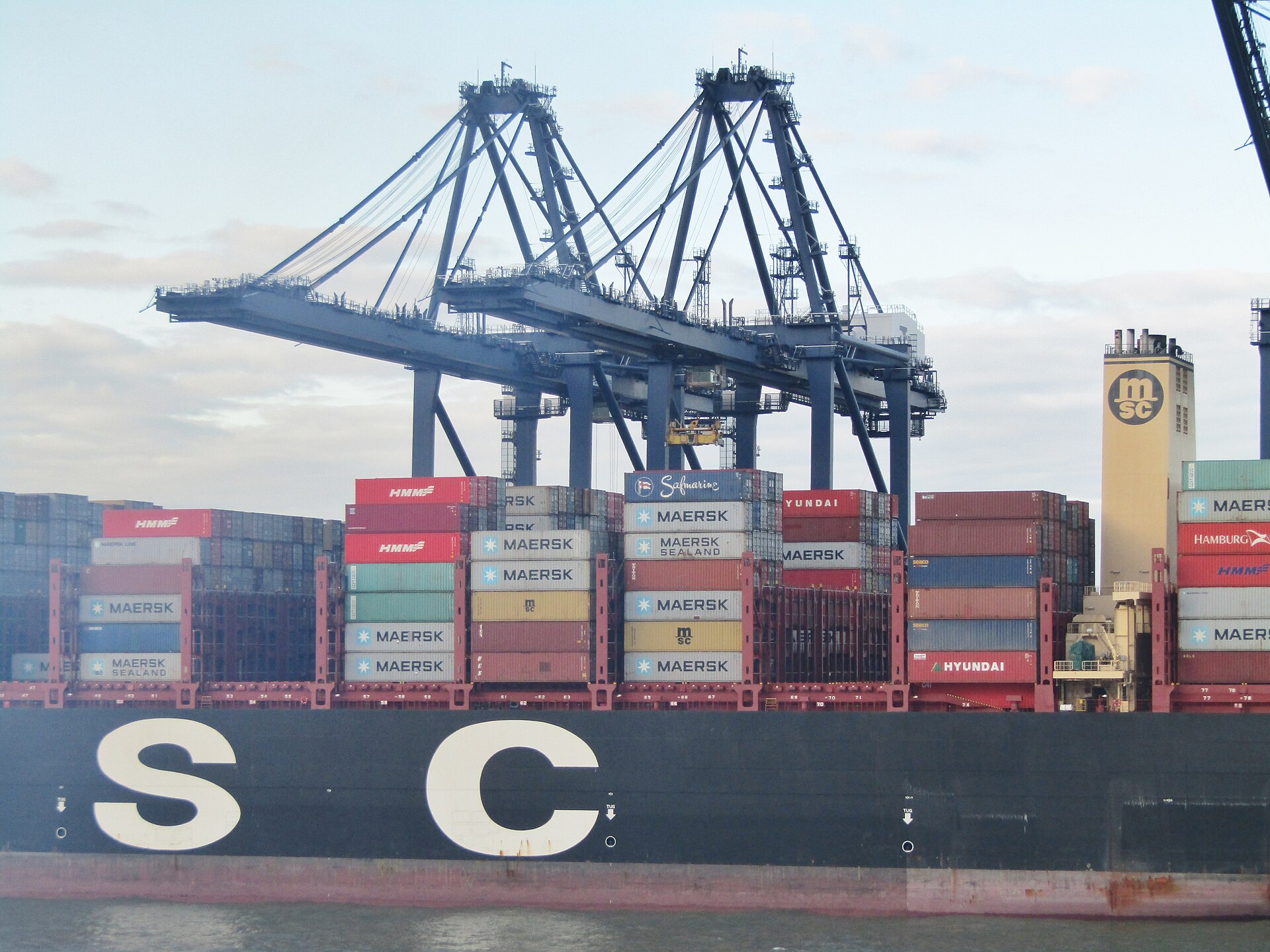
Featured image: Felixstowe Container Port by Colin Smith, via Wikimedia Commons (CC BY-SA 2.0).
Reporting is based on the publicly available sources listed above and has been independently written by Food Tech Insider.