Whole Foods Market Scales IFCO Reusable Produce Crates Across US Supply Chain, Avoiding Nearly 4 Million Pounds of Cardboard
Whole Foods Market is extending its use of IFCO reusable packaging containers (RPCs) across its fresh produce supply chain in the United States. According to IFCO, the programme has avoided nearly 4 million pounds of cardboard waste since it started in 2022, and use of IFCO crates within the retailer’s supply chain has grown by more than 1,000% over that period.
IFCO, a global supplier of reusable packaging for fresh food, announced the expanded partnership from Tampa, Florida, and trade title Packaging Insights reported on the programme this week.
From root-vegetable pilot to supply-chain rollout
The two companies began working together in 2022 to see how reusable crates could support the grocer’s waste-reduction goals within its distribution model. The first pilot replaced single-use cardboard boxes with reusable crates for potatoes, onions, carrots and other root vegetables.
After the pilot, Whole Foods Market signed an agreement with IFCO to extend the programme across its supply chain and move more fresh produce lines into RPCs. IFCO says the teams worked through the operational requirements of stores, distribution centres and suppliers. The aim was to protect produce quality, cut packaging waste and improve efficiency without disrupting daily operations.
How the reuse loop works
Unlike corrugated boxes, which are typically used for one trip, IFCO crates go through a closed pooling cycle:
- Crates carry produce from growers and packers through distribution centres to stores.
- Empty crates are collected, washed and sanitised, then returned to the supply chain.
- At end of life, crates are recycled into new reusable containers.
IFCO also says the containers are designed to protect fresh fruit and vegetables during transport and handling, helping to maintain quality as produce moves to the shelf.
“When we stop treating waste as an inevitable byproduct and start seeing it as a signal of inefficiency or untapped value, we unlock a different set of outcomes,” said Kaity Robbins, senior programme manager for diversion at Whole Foods Market. Jon Brooks, senior vice president of sales at IFCO North America, said the programme’s growth shows what retailers, suppliers and packaging partners can achieve when they work toward a shared goal.
Part of a wider shift in fresh produce logistics
The Whole Foods expansion follows other IFCO retail deployments. Packaging Insights notes that Baltic retailer Rimi uses IFCO RPCs for 95% of its fresh fruit and vegetable flows, replacing one-way cardboard boxes, with the remaining 5% replacing rigid crates. In the UK, IFCO has also expanded its support for food redistribution charities FareShare and The Felix Project.
For grocers, reusable transport packaging tackles a waste stream that is easy to measure and sits directly within the retailer’s control: back-of-store cardboard. It can also reduce the handling damage that turns into produce shrink. The trade-offs are the reverse logistics, washing capacity and supplier coordination needed to keep a pool of crates moving, which is why programmes tend to start with sturdy, high-volume lines such as root vegetables before widening.
What to watch
IFCO and Whole Foods Market have not disclosed how many stores, suppliers or produce lines are now covered, or what the programme costs relative to corrugated. The cardboard figure is a cumulative one reported by IFCO rather than an independent audit. Even so, the scale-up gives other US grocers a reference case as packaging extended producer responsibility rules spread and retailers look for Scope 3 reductions they can measure.
For produce suppliers, the move means more retail customers may ask for crate-ready packing lines and pooling agreements. For the wider food supply chain, it is another sign that reuse in transport packaging is shifting from pilots to standard practice in fresh categories.
Sources & Credits
- IFCO – IFCO scales reusable packaging program for fresh produce at Whole Foods Market (3 Nov 2026)
- Packaging Insights – IFCO and Whole Foods Market expand reusable packaging to cut cardboard waste (9 Nov 2026)
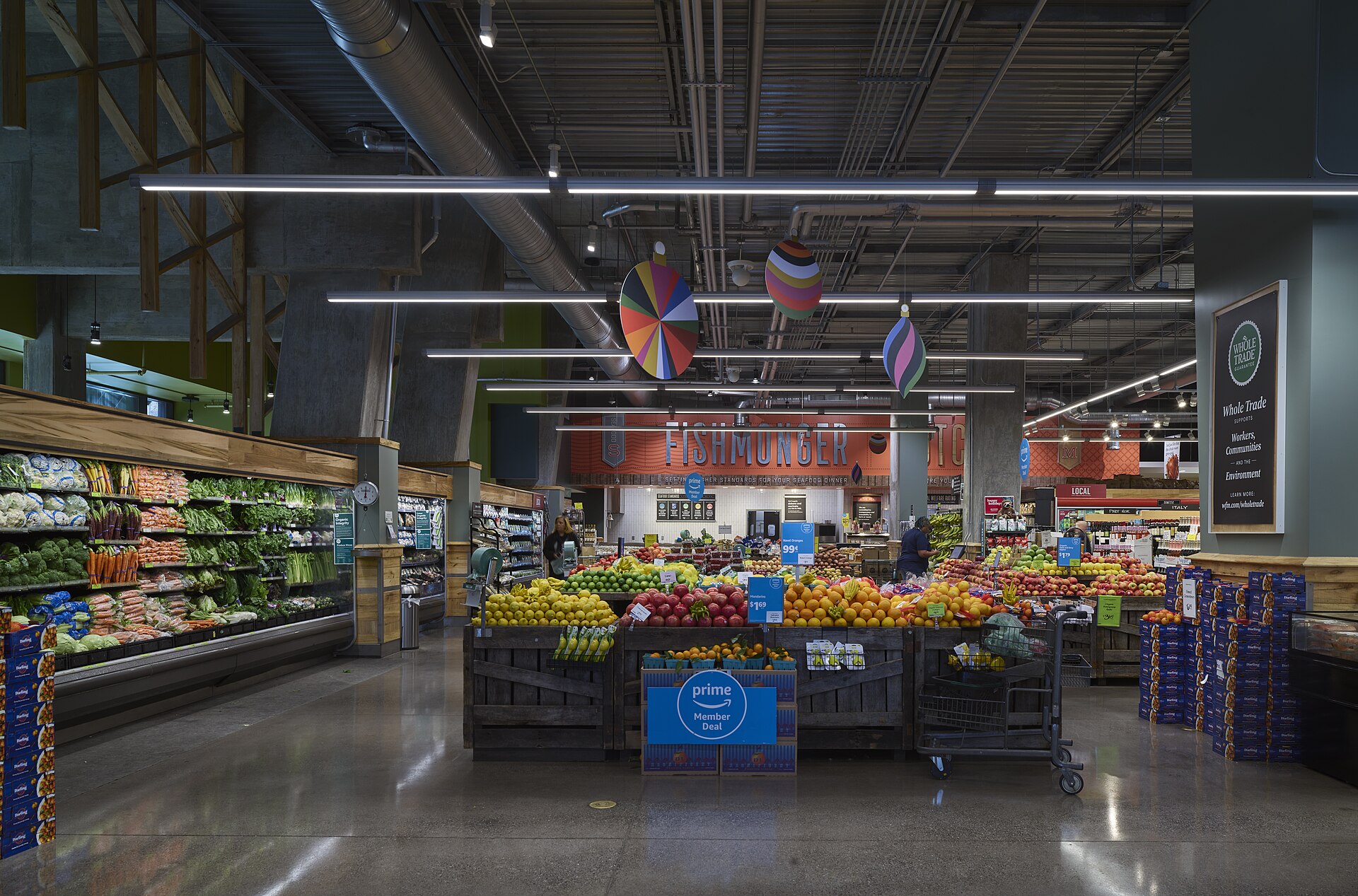
Featured image: Produce section of a Whole Foods Market in Crystal City, Virginia, in 2019 by Carol M. Highsmith, via Wikimedia Commons (Public domain).
Reporting is based on the publicly available sources listed above and has been independently written by Food Tech Insider.