Pythag Tech Raises $4.25M Seed Led by Azolla Ventures to License AI-Designed Cultivated Meat Production Processes
Pythag Tech, a New York-based data and technology company working on cultivated meat, has closed a US$4.25 million seed round. Climate-focused early-stage investor Azolla Ventures led the round, with participation from Endurance28 and other institutional investors, according to the company’s announcement on 22 October.
The startup does not make meat. It uses machine learning to design cultivated meat production processes, covering the cells, the media that feeds them and the bioreactor conditions they grow in, and then licenses those processes to food companies that want to produce at commercial scale.
AI aimed at three cost drivers
Pythag’s models direct laboratory experiments on what it identifies as the three main cost drivers in cultivated meat: growth media, cell line development and bioprocessing. Each experiment adds to a proprietary dataset, and the models use the expanded data to choose the next round of parameters to test.
Co-founder and CEO Sami Nabulsi described the workflow to Green Queen. It starts in a “dry lab”, where computational tools run on public data to generate hypotheses, for example which molecules might activate a growth pathway or which nutrients a cell may not need. The team then runs as many low-cost wet lab experiments as it can. Pythag built its own software to capture results in a uniform format “from flasks right up to bioreactors”, so that every experiment lands in one database that a model can learn from.
“The ML sits on top of that data,” Nabulsi told Green Queen. “It looks across all of it at once, picks out the relationships between cells, nutrients and process conditions, and tells us which experiments to run next.”
What the money will fund
Nabulsi said the company is buying automation equipment, opening a second lab in Thailand alongside its existing lab in Melbourne, and growing both its wet lab team and its AI team. The aim is to move more hypothesis generation into computational work before experiments reach the bench, and to build larger datasets across cells, media and bioprocess.
Pythag first appeared in the sector in 2024 with the Clean Meat Terminal, a market intelligence platform for cellular agriculture. In August 2025, Australian cultivated lamb producer Magic Valley partnered with Pythag to integrate its platform into production, vegconomist reports, with lower per-kilogram costs and shorter R&D timelines given as the expected outcomes.
No headline cost figures yet
The company has not published cost or density figures. Nabulsi told Green Queen that Pythag has generated results with “very high cell densities and very low media costs”, but called single headline numbers “a bit of a gimmick in this industry”. Protein Production Technology International noted that the announcement did not disclose the dataset’s size, measured cost reductions, prospective licensees or licensing terms.
As a technology provider, Pythag does not itself need regulatory approval. Nabulsi said it plans to work through approvals jointly with customers, arguing that approval is “far easier with a food company behind it than as a small startup on its own.”
Why it matters for cultivated meat economics
The round lands in a tight funding market. Green Queen, citing industry data, reports that cultivated meat startups raised just US$74 million in 2025, down 49% year on year and far below the roughly US$1.5 billion raised at the sector’s peak four years earlier. Pythag’s model, licensing optimised processes rather than building plants, is a capital-light bet that the sector’s bottleneck is process cost rather than demand.
Pythag also frames its pitch around strain on conventional beef supply, pointing to a US cattle herd at its lowest level since the 1950s, screwworm-related import limits and record ground beef prices. “Cultivated meat can provide a solution, but only if it provides functional equivalence at lower cost,” said Matthew Nordan, co-founder and general partner of Azolla Ventures.
The milestones to watch are the first named licensing partners, published process economics, and whether AI-designed media and bioprocess conditions hold up at production bioreactor scale.
Sources & Credits
- GlobeNewswire – AI for Cultivated Meat: Pythag Tech Closes $4.25 Million in Seed Funding (22 Oct 2026)
- Green Queen – Pythag Tech Gets $4.25M to Make Cultivated Meat Production Faster & Cheaper with AI (22 Oct 2026)
- vegconomist – Pythag Tech Secures $4.25M Seed Round to License AI-Designed Cultivated Meat Processes (22 Oct 2026)
- Protein Production Technology International – Pythag Tech raises US$4.25 million to tackle cultivated meat’s production costs (Oct 2026)
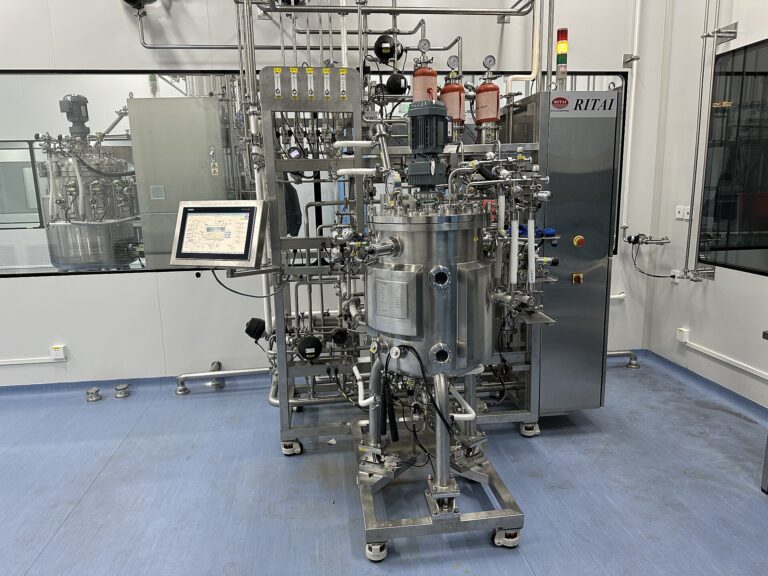
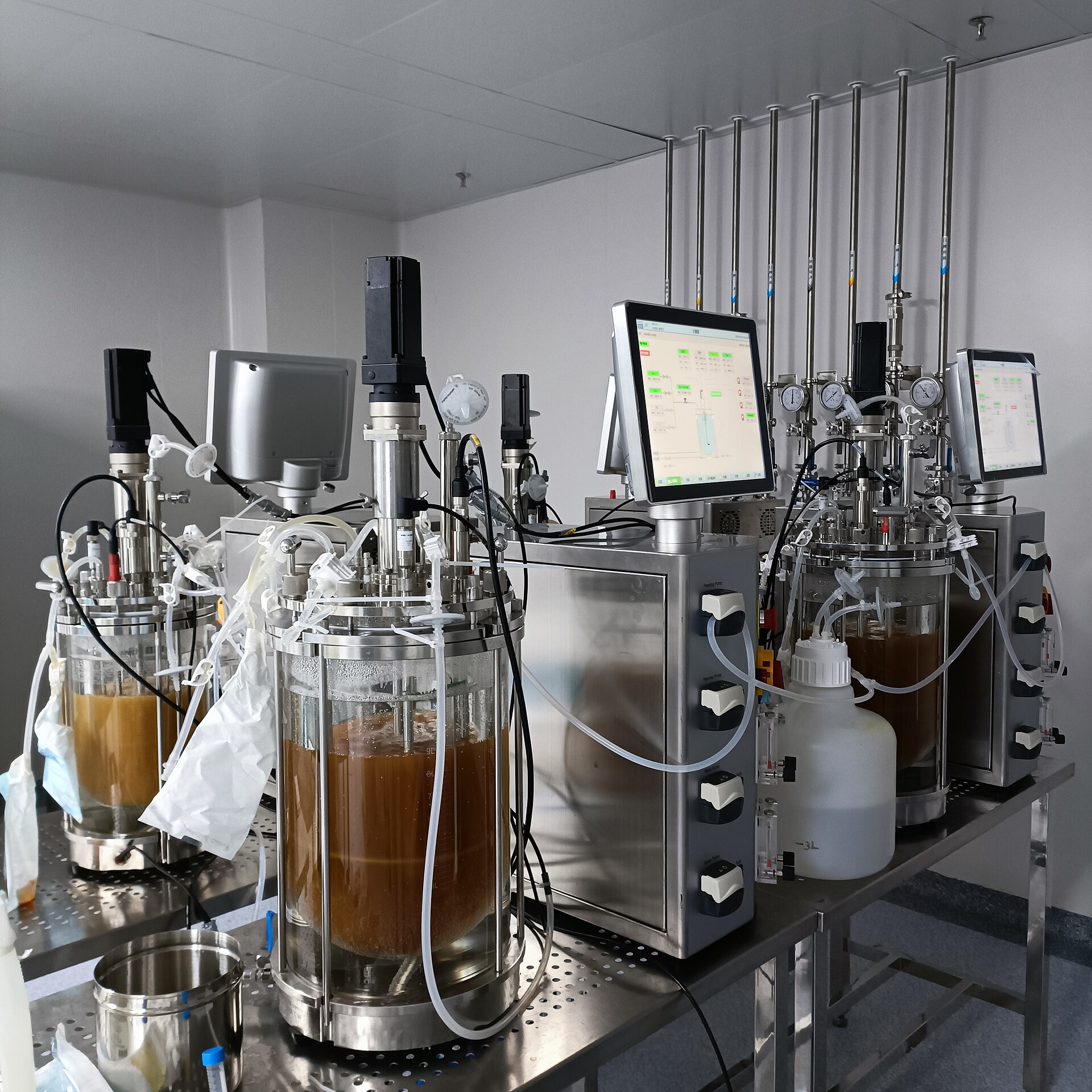
Featured image: Bioreactor for cell culture in the laboratory by Habin Zhang, via Wikimedia Commons (CC BY-SA 4.0).
Reporting is based on the publicly available sources listed above and has been independently written by Food Tech Insider.