Amy’s Kitchen Puts Non-UPF Verified Label at the Center of National Campaign Targeting Ultra-Processed Food Confusion
Amy’s Kitchen, the privately owned maker of frozen and canned prepared foods, has launched a national marketing campaign built around third-party Non-UPF Verified certification. It is one of the first large-scale tests of whether an ultra-processed food (UPF) claim can move shoppers in the frozen aisle.
The campaign promotes the Non-UPF Verified certification from the Non-GMO Project, which Amy’s now holds for nearly 90% of its product catalog, according to Food Dive and Marketing Dive. On its campaign page, the company says more than 125 products are certified and none of its verified meals contain any of the 289 ingredients the standard bans.
How the campaign runs
The five-week push runs until 15 November and targets health-conscious consumers aged 24 to 44. It started in early October on Santa Monica’s Third Street Promenade with a 40-foot installation and the line “End the Era of Ultra-Processed Food” projected onto the Clock Tower Building. Amy’s is running the creative under the tagline “Cooking. Not Chemistry.”
The media plan combines Meta and programmatic display ads with retail activation. A Whole Foods Market program that began on 15 October includes in-store digital ads in selected markets and targeted ads through Amazon DSP. Retargeting from MikMak links consumers to retailers through an add-to-cart function. In stores, Amy’s has produced freezer and floor clings, shelf talkers and print and digital materials to explain the certification at the point of purchase.
Research aimed at the price objection
Amy’s is backing the campaign with two commissioned studies. A Talker Research survey of 2,000 Americans found that nine in 10 respondents eat ultra-processed food without knowing it and half are not confident they can tell processed from ultra-processed food. Nearly half said they believe frozen foods are as unhealthy as, or worse than, chips and cookies. That finding cuts directly against Amy’s core frozen range.
A separate analysis by Lindsay Allen, a health economist at Northwestern University’s Feinberg School of Medicine, associated a diet high in ultra-processed foods with $359,836 in additional lifetime economic burden. The brand is using that figure to challenge the idea that ultra-processed food is the cheaper choice, positioning minimally processed convenience food as better value over time. Food Dive notes that grocery prices remain a major concern, with annual grocery inflation possibly reaching 2.7% as fuel costs rise.
What it signals for CPG
The campaign builds on the Non-UPF Verified scheme that recently passed 300 certified products. It also shows how the certification is moving from on-pack claim to a full marketing platform. For brands, the lesson is less about one company’s ad spend and more about where UPF anxiety is going. Consumers are concerned but unsure what the term means, which leaves room for third-party verification to work as a shortcut at the shelf.
There are risks too. Frozen and canned products are often lumped in with ultra-processed foods by default, so a brand-led education push puts formulation and processing methods under closer scrutiny. Competitors without certification may face pressure to explain their own recipes. Retailers, meanwhile, are being asked to give UPF messaging space in-store and in retail media.
Amy’s CEO Paul Schiefer is due to talk about ending “the era of ultra-processed food” at the Eudēmonia summit in West Palm Beach in November, according to the company. The campaign’s results through mid-November, and any retail sales data Amy’s or its partners release, will be an early test of whether non-UPF positioning shifts purchases or only awareness.
Sources & Credits
- Food Dive – Amy’s Kitchen tackles ultra-processed food myths in national campaign (20 Oct 2026)
- Marketing Dive – Amy’s Kitchen tackles ultra-processed food myths in national campaign
- Amy’s Kitchen – Cooking. Not Chemistry. (Non-UPF campaign page)
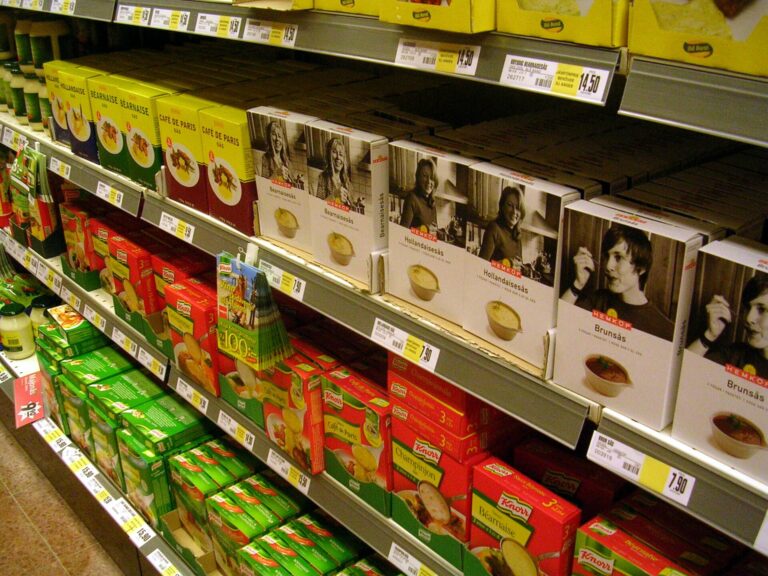
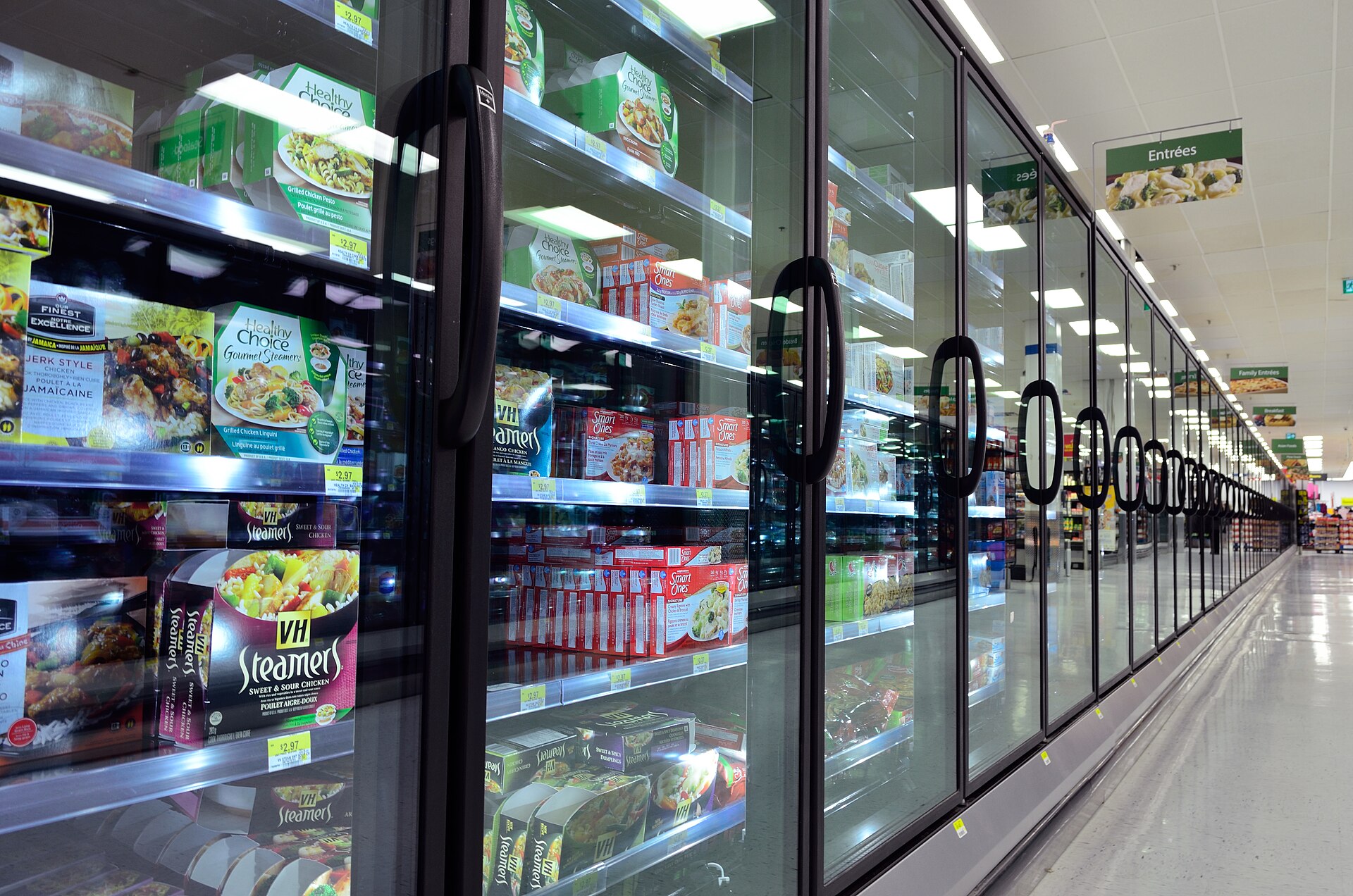
Featured image: FrozenFoodSupermarket by Raysonho @ Open Grid Scheduler / Grid Engine, via Wikimedia Commons (CC0).
Reporting is based on the publicly available sources listed above and has been independently written by Food Tech Insider.