FermBase by CREMER and Differential Bio Form Strategic Partnership for AI-Driven Fermentation Media Development
FermBase, the fermentation media brand of Hamburg-based raw materials group CREMER, has turned its working relationship with Munich biotech startup Differential Bio into a formal strategic partnership. The deal, announced on 15 October, joins CREMER’s sourcing, processing and logistics capabilities with Differential Bio’s robotic laboratory automation and machine-learning tools. The aim is to support fermentation companies from the first lab experiment through to industrial production.
For CREMER, the move adds process development services to what has mainly been a materials supply business. Financial terms and the next joint products have not been disclosed.
Y-Base Blend as the proof point
The partnership grows out of a project the two companies have already completed. Y-Base Blend, a standardised trace element blend for yeast fermentation that FermBase launched in September, was developed jointly. According to the companies, the team began with more than 50,000 possible combinations of 10 trace elements. Machine learning narrowed that space to 3,300 experiments across different yeast strains, which were run on Differential Bio’s automated, miniaturised fermentation platform.
Protein Production Technology International (PPTI) reports that the microlitre-scale work produced nine high-performing formulations, which were then validated in customers’ own bioreactor processes. Gerlis von Haugwitz, Product Manager Fermentation at FermBase, told the publication that one blend performed best across all of the customer trials, whether the process targeted biomass, precision fermentation or a secondary metabolite. CREMER says the final blend matched performance in all trials and beat the customer’s in-house formulation in more than half of the cases.
The practical selling point is handling time and consistency. “Most companies need up to a day to prepare the trace-element solution, and our blend takes 10 minutes to dissolve,” von Haugwitz told PPTI. The product is sold from 1 kg lab packs and 25 kg pilot units up to multi-tonne industrial volumes with the same specification, which matters when a process moves from lab-grade inputs to industrial raw materials whose impurity profiles can shift yields.
The partners are not claiming that a standard blend replaces media optimisation. “You cannot standardize the entire medium of your fermentation process,” von Haugwitz said. “The Y-Base Blend is only the trace elements.”
What each side brings
CREMER, founded in 1946 and family-owned in its third generation, trades, processes and ships agricultural and raw materials. It launched FermBase earlier this year to supply carbon and nitrogen sources, mineral salts, trace elements, custom formulations and, now, standardised blends, from pilot scale to production. FermBase will act as the customer-facing point of contact under the partnership.
Differential Bio is a spin-off from the Technical University of Munich (TUM) environment. It came out of stealth in March 2025 with €2 million in pre-seed funding led by Ananda Impact Ventures and ReGen Ventures, vegconomist reports. Its platform runs high-throughput automated fermentation experiments to generate training data for predictive models that optimise media and bioprocesses before scale-up.
“With Differential Bio, we have found a partner that is taking entirely new approaches to raw material development with the help of artificial intelligence and robotics,” said Dr Christian Flach, CEO of CREMER. Christian Spier, CEO of Differential Bio, said the startup’s “robotic laboratory automation generates targeted data for AI applications, while our software and AI solutions enable data-driven process development.”
Why it matters for fermentation scale-up
Media cost and consistency are among the levers precision fermentation and biomass producers can pull without changing their strains. The CREMER deal applies automation to that lever from the supply side, pairing a raw material catalogue with the experimental data needed to show which inputs work at scale.
Nils Rupp, Head of Business Unit at CREMER Sustainable Nutrition, has told PPTI that fermentation companies can separate their “core IP” from enabling functions such as sourcing, media development and supply chain management. If that model takes hold, early-stage developers could outsource more of their media work to suppliers with automated screening capacity, and spend their own R&D budgets on strains and downstream processing.
For buyers of fermentation inputs, the immediate questions are how far the companies extend the approach beyond yeast trace elements to carbon and nitrogen sources, and whether CREMER prices the AI-led development work as a separate service or folds it into supply contracts.
Sources & Credits
- Differential Bio – Differential Bio and FermBase by CREMER enter into strategic partnership for AI-driven solutions in the fermentation industry (15 Oct 2026)
- CREMER – FermBase by CREMER and Differential Bio enter into strategic partnership for AI-driven solutions in the fermentation industry
- vegconomist – CREMER Moves Into AI-Driven Fermentation Services With Differential Bio Partnership (16 Oct 2026)
- Protein Production Technology International – FermBase by CREMER and Differential Bio deepen AI partnership after successful fermentation trials
- Protein Report – FermBase and Differential Bio form strategic partnership on AI-driven microbial fermentation
- Differential Bio – Joint whitepaper on the development of Y-Base Blend (1 Oct 2026)
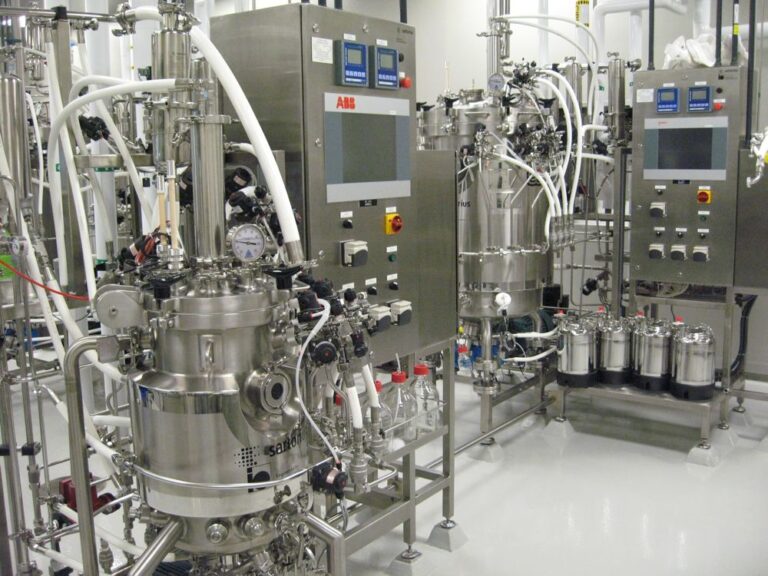
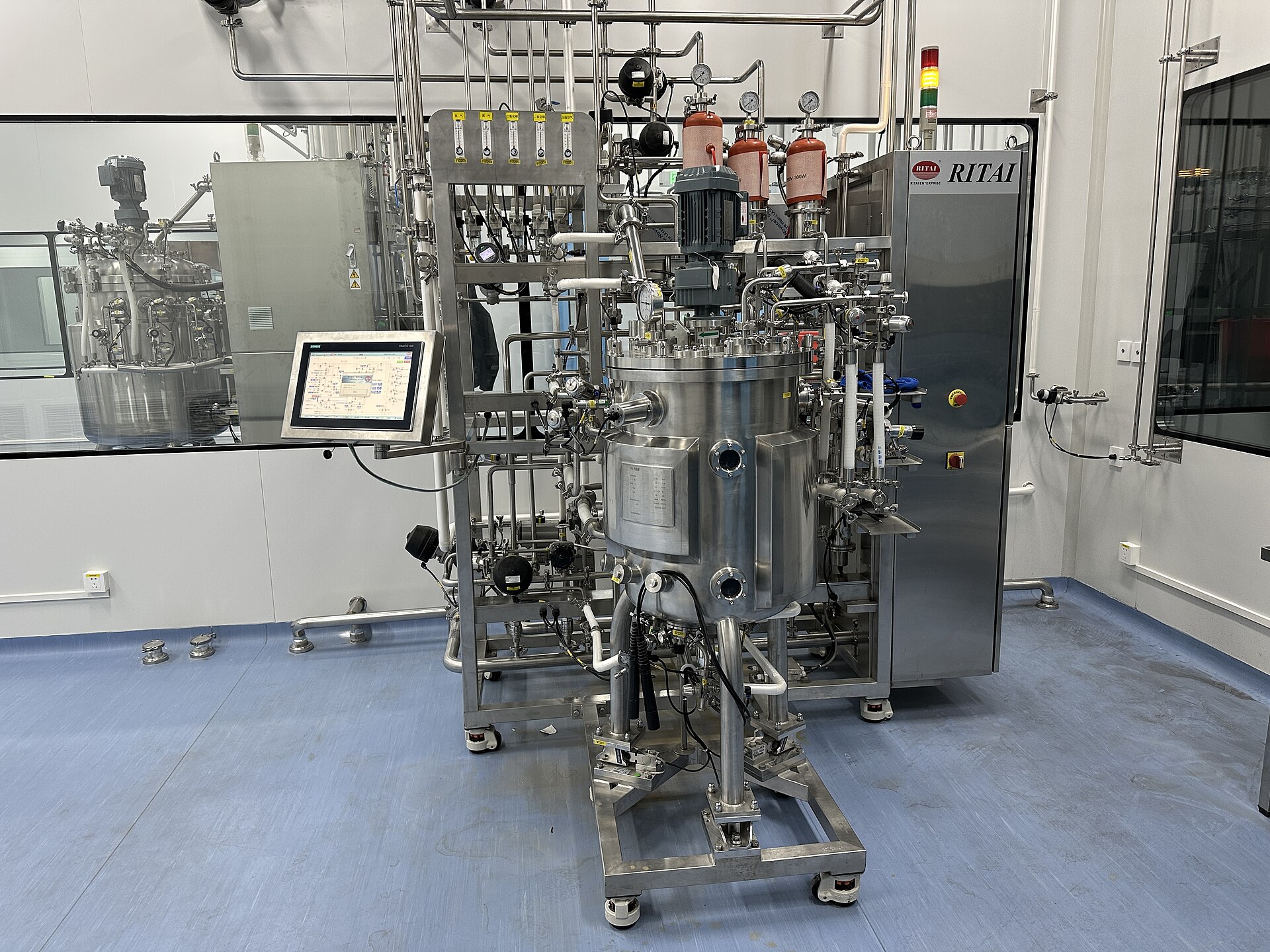
Featured image: Bioreactor in operation by Habin Zhang, via Wikimedia Commons (CC BY-SA 4.0).
Reporting is based on the publicly available sources listed above and has been independently written by Food Tech Insider.