React Foods Raises DKK 4.2 Million to Scale CO₂-to-Yeast Protein Without Farmland
Danish spin-out React Foods is raising the stakes in gas fermentation by trying to turn carbon dioxide and renewable hydrogen into yeast biomass that can be processed into food protein ingredients—without taking more farmland out of production. The company has secured DKK 4.2 million from the BioInnovation Institute and will base operations in Copenhagen while scaling at Aarhus University’s AU Viborg pilot campus.
The science sits on work from Aarhus University, Stanford University and the University of Tübingen, linked through the Novo Nordisk Foundation CO₂ Research Center (CORC). The operating team—CEO Michael Martin, CTO Nils Rohbohm and CSO Alberto Robazza—aims to prove that a two-step microbial route can run as one integrated system, not just as separate lab reactions.
From CO₂ to acetate to yeast protein
In the first stage, microorganisms consume CO₂ and green hydrogen and convert them into acetate, the main component of vinegar. In the second stage, that acetate feeds yeast, which grows into a protein-rich biomass. The biomass is not a finished food; it still has to be fractionated and formulated into ingredients with usable taste, solubility and functionality before it can replace or partially displace egg or dairy proteins in bars, bakery and other CPG formats.
That acetate-first architecture matters for foodtech investors. Sugar-fed fermentation competes with food and feed markets for carbohydrate feedstock. A CO₂-and-hydrogen route, if energy costs cooperate, decouples protein output from arable land and from weather-driven crop volatility—an argument React Foods’ CEO leans on when describing the company as a supplement to existing protein chains rather than a wholesale replacement.
Integration is the real pilot goal
Professor Lars Ottosen of Aarhus University, who sits on the scientific advisory board, has been blunt about the challenge: making each step work is not enough. The pilot at AU Viborg is meant to couple gas fermentation, acetate production and yeast growth so the partners can measure yields, contamination risk, energy use and downstream recoverability as a single train.
That data will decide whether React Foods can attract industrial offtakers and larger financing. Gas-fermentation protein plays have drawn attention across Europe, but few have shown food-grade ingredient economics at meaningful scale. Demonstrating an integrated pilot is the gate React Foods has to pass before claiming a place beside fermentation dairy proteins and biomass mycoprotein on buyer shortlists.
Where React Foods sits in the protein map
Aarhus University is already a partner in the Acetate Consortium, which explores CO₂-derived acetate as a sugar substitute in fermentation and has moved into food-prototype scale-up with Gates Foundation and Novo Nordisk Foundation support. React Foods is a commercial vehicle for a related but distinct path: yeast biomass grown on that acetate stream, aimed at ingredient markets rather than academic proof alone.
For food manufacturers tracking land-independent proteins, the signal is early but concrete—seed capital, a named pilot site, and a founder group that includes CORC principal investigators. The next milestones to watch are whether the integrated system holds over multi-week runs and whether the resulting yeast protein clears sensory and regulatory hurdles for European food use.
Sources & Credits
- Aarhus University – University spin-out sets out to turn CO₂ into food protein
- PPTI News – React Foods takes CO₂-to-protein technology from university research to pilot scale
- Cultivated X – React Foods launches with DKK 4.2M to pilot farmland-free yeast protein
- Renewable Carbon News – University spin-out sets out to turn CO₂ into food protein
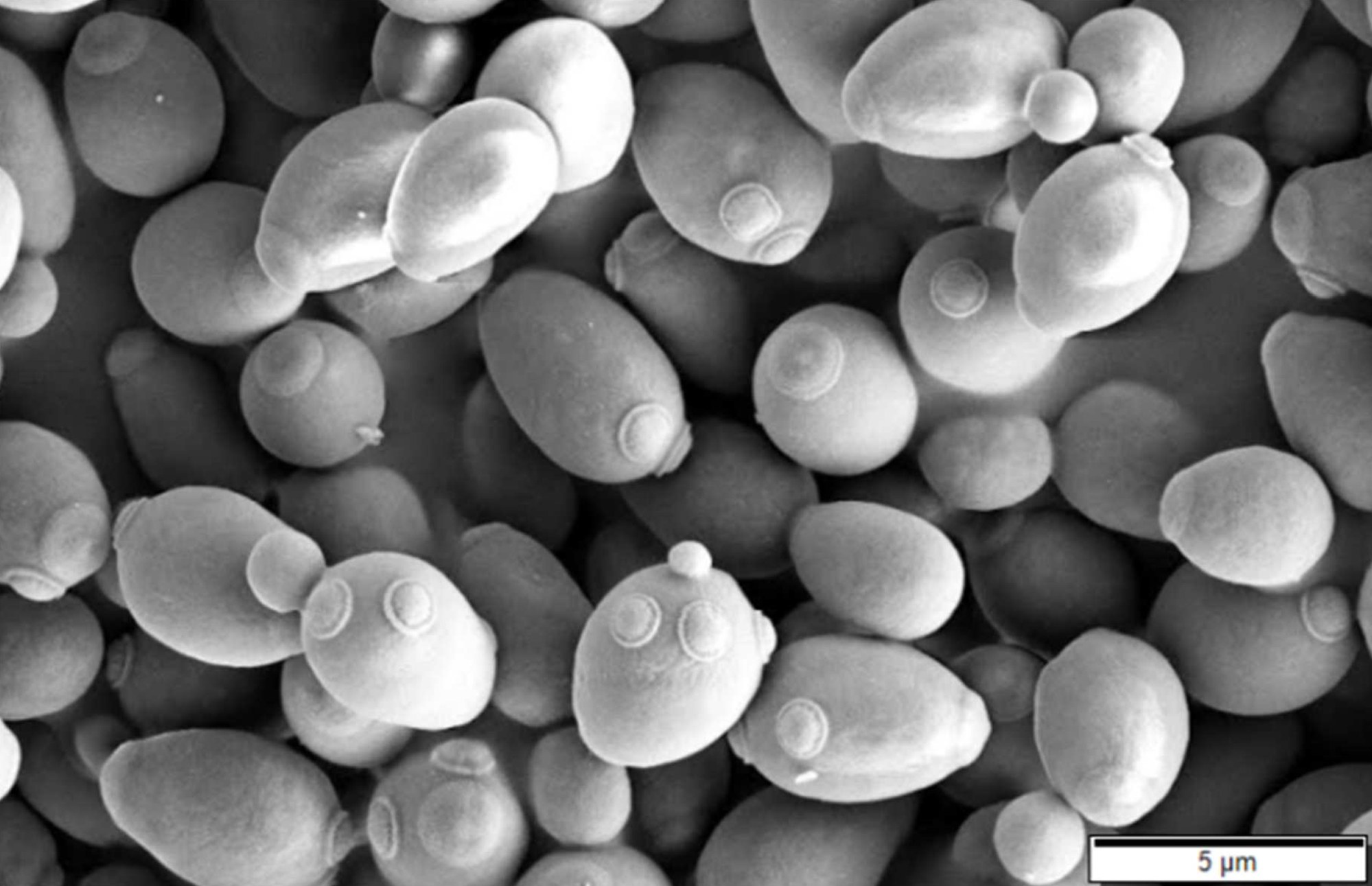
Featured image: Saccharomyces cerevisiae yeast cells (SEM) by Mogana Das Murtey and Patchamuthu Ramasamy, via Wikimedia Commons (CC BY 3.0).
Reporting is based on the publicly available sources listed above and has been independently written by Food Tech Insider.