Precision Fermentation Milk LCA: Beta-Lactoglobulin Drink Cuts Emissions 40% vs Cow’s Milk but Trails Oat Drinks, Peer-Reviewed Study Finds
A milk-style drink made with precision-fermented whey protein produces about 40% lower greenhouse gas emissions than UHT cow’s milk on an average European electricity grid, but 76% higher emissions than a plain oat drink, according to a new peer-reviewed life cycle assessment (LCA) published in The International Journal of Life Cycle Assessment.
The study, titled “Environmental impact assessment of dairy protein from precision fermentation”, is authored by Julian Quandt, Ulrike Eberle, Jan Paul Lindner, Birgit Handl and Rebekka Volk, and includes researchers from the Institute for Materials Resource Management at the University of Augsburg in Germany. It adds an independent data point to a debate that has so far leaned heavily on company-commissioned assessments.
Three shelf-stable drinks, compared head to head
The researchers modelled three shelf-stable beverages: a drink formulated with precision-fermented beta-lactoglobulin (BLG), the main whey protein in cow’s milk; conventional UHT cow’s milk; and a plain oat drink. Comparing finished drinks, rather than isolated protein ingredients, gives brand owners a closer read on what reaches the shelf.
The headline results, as reported by vegconomist, are mixed:
- Climate: the precision fermentation (PF) drink cut emissions by 40% versus cow’s milk on the average European grid, but emitted 76% more than the oat drink.
- Land: the PF drink used 60–68% less land than cow’s milk. Land use and biodiversity impacts were well below dairy but above the oat drink.
- Water: the PF drink used roughly five to ten times as much water as cow’s milk.
- Fossil resources: the PF drink used more fossil resources than both comparators in every scenario modelled.
Electricity source is the decisive variable
The single biggest swing factor was the power supply for fermentation and downstream processing. Running the process on renewable electricity cut emissions further. On Poland’s coal-heavy grid, however, the PF drink’s climate advantage over dairy shrank to just 10%.
Feedstock also mattered. Switching the sugar used to feed the microorganisms from sugar beet to sugarcane more than doubled the drink’s water scarcity footprint, a reminder that precision fermentation inherits the agricultural footprint of its carbon source.
Why results differ from earlier precision fermentation LCAs
The figures are less flattering than some earlier work. The peer-reviewed LCA released by French producer Bon Vivant, now Verley, reported an 81% reduction in water consumption, a 72% cut in greenhouse gas emissions and a 99% reduction in arable land use compared with conventional dairy protein production. That study used a cradle-to-gate scope covering production up to the factory gate. Research from Imperial College London has estimated land savings of up to 96%.
The Augsburg-linked authors say different methods account for much of the variation between studies. System boundaries, the choice of functional unit (a kilogram of protein versus a litre of finished drink), co-product allocation and energy assumptions can all move results substantially.
What it means for precision fermentation producers
For BLG producers such as Verley, Vivici and 21st.BIO, which recently filed an EU novel food application for its precision-fermented beta-lactoglobulin, the study points to three operational levers that shape environmental claims:
- Plant siting and power contracts: access to low-carbon electricity can determine whether a PF dairy ingredient delivers a large or a marginal climate gain over cow’s milk.
- Feedstock sourcing: sugar origin affects water scarcity impacts, which matters for buyers screening suppliers on water risk.
- Claim substantiation: with independent LCAs producing different numbers, B2B customers are likely to ask for scenario-specific data rather than single headline percentages.
The paper suggests that future research model oat drinks fortified with precision-fermented dairy proteins, a hybrid format that could combine the oat base’s low footprint with the nutritional and functional profile of whey protein. The authors describe PF milk as “a context-specific complement to plant-based alternatives” rather than a straightforward replacement for them.
Outlook
For food manufacturers weighing animal-free dairy proteins, the study does not overturn the case for precision fermentation against conventional dairy on climate and land use. It does, however, narrow the claims that can be made without qualification. The environmental case for precision-fermented whey will increasingly depend on where it is made, what it is fed and what it is compared against.
Sources & Credits
- vegconomist – Precision-Fermented Milk Cuts Emissions by 40% Versus Dairy but Trails Oat Drinks (19 Nov 2026)
- Springer Professional – The International Journal of Life Cycle Assessment 12/2026: Environmental impact assessment of dairy protein from precision fermentation (Quandt, Eberle, Lindner, Handl, Volk)
- PPTI News – Bon Vivant’s peer-reviewed LCA confirms precision fermentation’s environmental edge over dairy
- AgFunderNews – Precision fermentation startup Verley raises $38m Series A
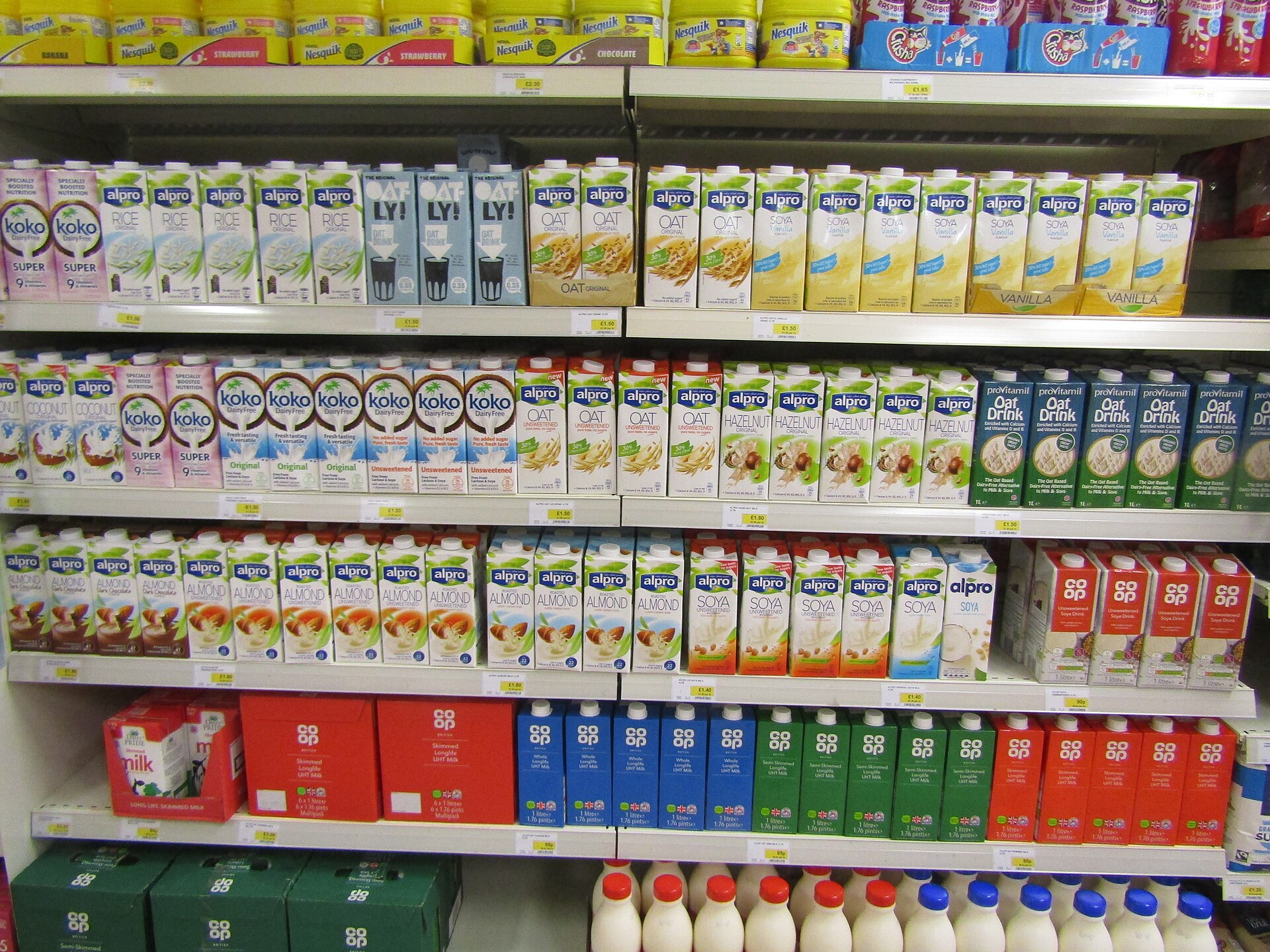
Featured image: UHT milk and specialist milk, Coop, Cromer by Kolforn, via Wikimedia Commons (CC BY-SA 4.0).
Reporting is based on the publicly available sources listed above and has been independently written by Food Tech Insider.