David Protein Wins Dismissal of EPG Antitrust Suit as Court Rejects “High-CFP Protein Bar” Market Over Epogee Fat-Replacer Deal
A federal judge in New York has dismissed, with prejudice, the antitrust lawsuit accusing David Protein of buying fat-replacer maker Epogee and then cutting rival food brands off from its patented ingredient, EPG. The decision ends a case that has been closely watched in the protein bar and better-for-you snack sector, where a single specialised ingredient can underpin a whole product line.
The ruling
In OWN Your Hunger LLC v. Linus Technology, Inc. (S.D.N.Y., No. 1:25-cv-04544), dated 2 November 2026, US District Judge Victor Marrero dismissed the plaintiffs’ third amended complaint on two grounds. Linus Technology trades as David Protein. First, the judge said the plaintiffs had not plausibly defined a relevant product market. Second, even if their proposed market were accepted, they had not plausibly shown that David’s conduct harmed competition in it.
The plaintiffs had defined the market as “High-CFP Protein Bars”, meaning bars whose calories-from-protein ratio goes beyond what is achievable with traditional fats and is achievable only with EPG. According to a VitalLaw summary of the order, that definition was built around the defining ingredient, and in practice the only bars in it were David’s. It also took the manufacturer’s point of view rather than the consumer’s and left out reasonably interchangeable products. “At bottom,” Marrero wrote, “David bars are protein bars that are reasonably interchangeable with other protein bars.”
Because the plaintiffs had already amended their complaint several times, the court found that a further amendment would be futile and closed the case. The Sherman Act, Clayton Act and New York Donnelly Act claims all failed.
How the dispute began
EPG (esterified propoxylated glycerol) is a plant-derived fat substitute that looks and behaves like fat in formulations. Because the body’s digestive enzymes extract few calories from it, AgFunderNews puts its energy value at about 0.7 kcal/g. Epogee holds the manufacturing patents and is the only producer. David Protein bought Epogee in May 2025.
A few weeks after the deal, Epogee stopped filling supply orders from several customers, citing uncertainty over raw material deliveries. OWN Your Hunger, Lighten Up Foods and Defiant Foods sued in June 2025. They alleged that David had bought its supplier in order to exclude competitors and create an artificial monopoly in an emerging protein bar segment. Several other former Epogee customers filed sworn statements describing the harm they said they had suffered. David argued that it had no obligation to keep selling a patented ingredient to companies without long-term supply contracts, and that formulators had an “abundance” of alternatives.
The court denied a temporary restraining order early in the case. In February 2026 Judge Marrero dismissed the second amended complaint and refused a preliminary injunction. Lighten Up Foods later settled, with each side paying its own legal costs. OWN Your Hunger and Defiant Foods continued to the third amended complaint, which has now been dismissed.
Why it matters for ingredient M&A
For investors and corporate development teams, the case shows that buying a sole-source ingredient supplier and then restricting outside sales is not, in itself, an antitrust violation. Plaintiffs still have to show harm to competition in a market defined by what consumers treat as substitutes. In its February ruling, the court had already said that losing access to EPG as a buyer was not the same as reduced output in the economic sense.
For brands, the case is a warning about supply risk. Companies that built products around a single patented ingredient without long-term supply agreements had little legal protection when the supplier changed hands. As specialised fat replacers, rare sugars, sweet proteins and precision-fermented ingredients move toward commercial scale, contract terms, second sourcing and reformulation contingency plans matter as much to the business as the technology does.
According to AgFunderNews, the litigation drew wide interest because of David’s rapid growth and because it tested how far a company can go in locking up a critical ingredient to shape a new product category. The court did not rule on the underlying facts. It found that the plaintiffs had not pleaded a viable antitrust claim.
Sources & Credits
- AgFunderNews – David Protein maker prevails in antitrust lawsuit over alt fat EPG (3 Nov 2026)
- VitalLaw – S.D.N.Y.: Epogee acquisition challenge dismissed with prejudice (Own Your Hunger LLC v. Linus Technology, Inc.)
- Bloomberg Law – David Protein bar maker again dodges ingredient monopoly lawsuit (Nov 2026)
- AgFunderNews – David Protein scores initial victory in antitrust case over EPG (Feb 2026)
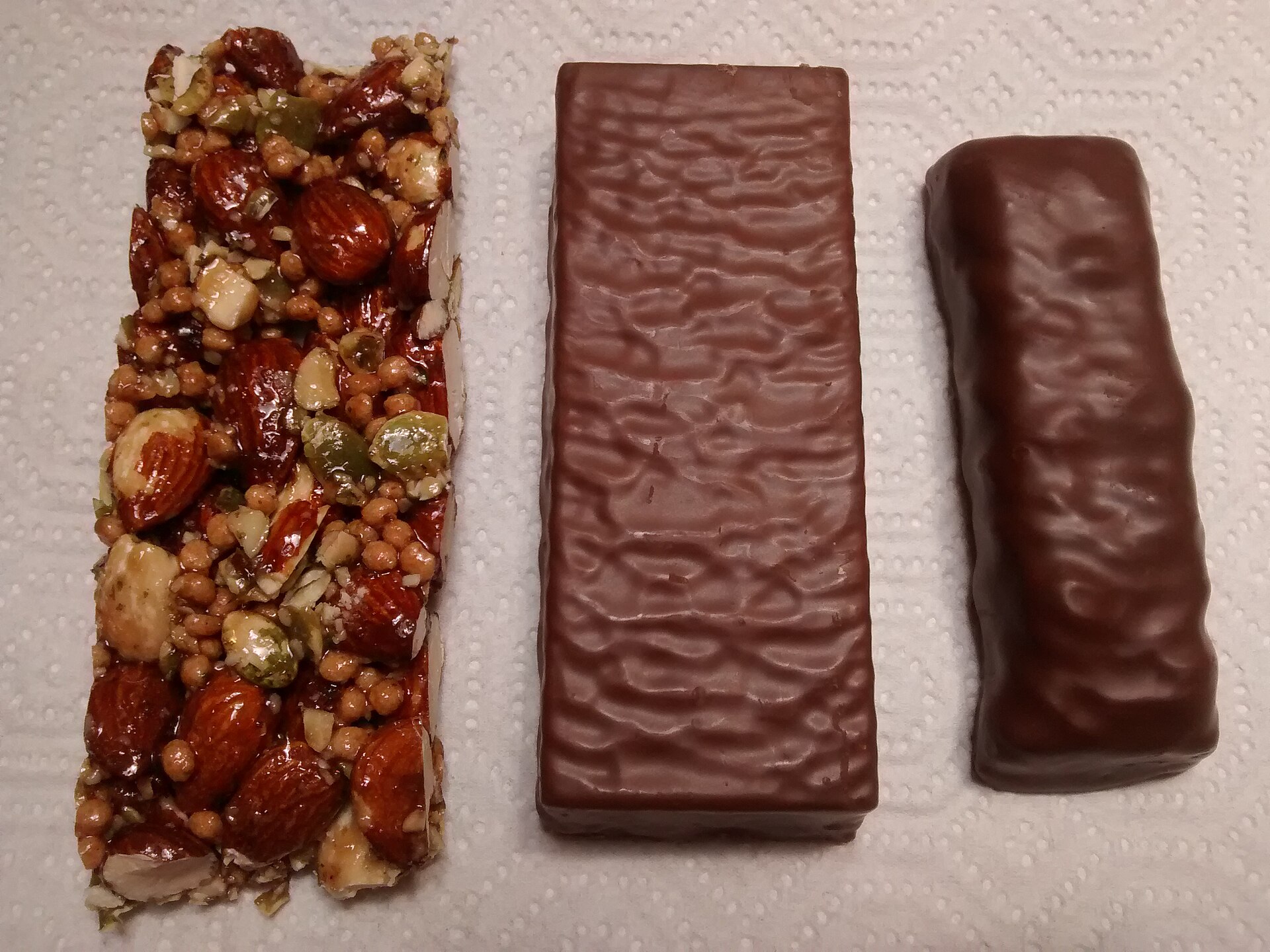
Featured image: Three protein bars by Mx. Granger, via Wikimedia Commons (CC0 1.0).
Reporting is based on the publicly available sources listed above and has been independently written by Food Tech Insider.