Invest-NL Report: Dutch Food Biotech Could Stall at €2B Without First-Plant Financing, Versus €8B Potential by 2040
Dutch national promotional institution Invest-NL has warned that the Netherlands risks losing its lead in food biotechnology. The reason, it says, is not weak science. Companies cannot find the money, production capacity and customer commitments needed to build their first commercial plants. Its report, Deep Dive: Agrifood Biotech, was presented on 30 October 2026. It puts a price on the gap: around €17 billion in additional annual Dutch revenue by 2040 across three agrifood biotech value chains if the main barriers are removed.
The study draws on more than 150 interviews with entrepreneurs, investors, researchers and policymakers, plus investment data from 2010 to April 2026. It covers seed breeding and genetics, biological agricultural inputs, and biotech-derived food ingredients. For foodtech investors and ingredient buyers, the third area matters most. It covers fermentation-derived ingredients, upcycled food streams and cultivated meat.
A €6 billion gap in fermentation-derived ingredients
Invest-NL’s scenario analysis puts Dutch revenue from biotech ingredients and food applications at about €8 billion a year by 2040 under improved conditions. Under current policies, it expects that figure to stay at around €2 billion. According to Protein Production Technology International (PPTI), the report also estimates that the Dutch share of the global biotech ingredients market could fall from about 3% today to around 1% by 2040 if nothing changes. Invest-NL describes the figures as scenarios, not forecasts, and acknowledges substantial uncertainty about adoption and market growth.
The wider data points the same way. EU-Startups, citing figures from the Netherlands Organisation for Applied Scientific Research (TNO) quoted in the report, notes that the Netherlands is home to 3.3% of biotech start-ups worldwide but only 1.3% of scale-ups. The country is good at producing new companies, but fewer of them reach industrial scale.
The first commercial plant is the bottleneck
The report says no clear financing route exists for first-of-a-kind production facilities, which can cost tens or even hundreds of millions of euros and still carry technical and operating risk that conventional lenders will not accept. Early-stage funding is active: PPTI reports that more than half of Dutch ingredient transactions were at seed stage, with capital concentrated in Series A and B rounds. Later growth capital is limited, and debt financing is almost absent.
Public instruments do not always fill the gap. Invest-NL says eligibility rules, departmental boundaries and state-aid requirements can keep relevant funding from reaching companies. One example is the EU’s “undertaking in difficulty” test, which can exclude companies precisely because they have run at a loss through long development periods.
“The science is becoming increasingly effective. The real challenge is financing the journey to commercial scale,” said Corjan van den Berg, co-founder of yeast-protein producer Revyve. “Venture capital alone is not enough. Scaling food biotech also requires loans, guarantees and grants to make the transition to industrial-scale production.”
Slower novel food approvals push companies to the US
Regulation adds time and cost. The report says novel food approval in Europe takes one to three years longer than in the United States, and PPTI notes that it describes EU approval timelines of two to six years or more. That gap is leading some companies to prioritise US market entry. Invest-NL recommends earlier guidance before applications are filed, more regulatory expertise, more predictable procedures and regulatory sandboxes. It stresses that faster approval should not mean lower safety standards.
What Invest-NL proposes
- Shared-risk project groups: technology developers, industrial operators and customers should share technical and commercial risk, with operators and customers investing alongside projects where feasible. Public guarantees, blended finance and patient capital would then cover the remaining, demonstrable gap.
- Graduated demand signals: financiers should give credit for paid trials, joint development agreements, customer qualification and conditional volume commitments, rather than treating binding long-term offtakes as the only proof of demand. The report suggests piloting purchasing coalitions on two or three projects.
- Better access to existing facilities: the report says total pilot capacity is not the main constraint. The problem is getting suitable equipment at the right time and an affordable price. It proposes vouchers, coordinated shared facilities and closer links to CDMOs.
- Focus on high-value ingredients: the Netherlands is unlikely to compete on cheap energy or feedstocks, so the report recommends specialised, differentiated ingredients and production placed within competitive European value chains, rather than building everything domestically.
EU-Startups reports that Invest-NL proposes an indicative €650 million to €1.1 billion in public financing capacity for 2026–2030. Its 2030 ambitions include doubling the number of agrifood biotech ventures, cutting time to market by a factor of three, and building five globally competitive companies able to raise more than €100 million each.
Why it matters beyond the Netherlands
Precision fermentation and cultivated meat companies across Europe face the same “valley of death” between pilot and commercial scale. The report’s argument that customers and industrial operators must take on part of the risk will be closely watched by ingredient majors. It names FrieslandCampina, dsm-firmenich, Corbion, Cosun and Unilever as potential customers, investors and partners. “The Netherlands is well positioned to lead in agrifood biotech, but this opportunity will not wait,” said Jellie Banga, Chief Business Officer at Invest-NL.
The report was handed to Marten van den Berg, Director-General at the Dutch Ministry of Agriculture, Fisheries, Food Security and Nature. It is part of a series of four Invest-NL deep dives on the country’s biggest biotechnology opportunities.
Sources & Credits
- Invest-NL – Deep Dive: Agrifood Biotech (30 Oct 2026)
- Protein Production Technology International – Invest-NL warns Dutch food biotech could lose ground as companies struggle to finance commercial production (30 Oct 2026)
- EU-Startups – The Netherlands risks losing its AgriTech crown, warns new report (30 Oct 2026)
- Food and Drink Technology – Dutch agritech faces a scale-up squeeze (30 Oct 2026)
- IO+ – Invest-NL: We risk losing our lead in agrifood innovation (30 Oct 2026)
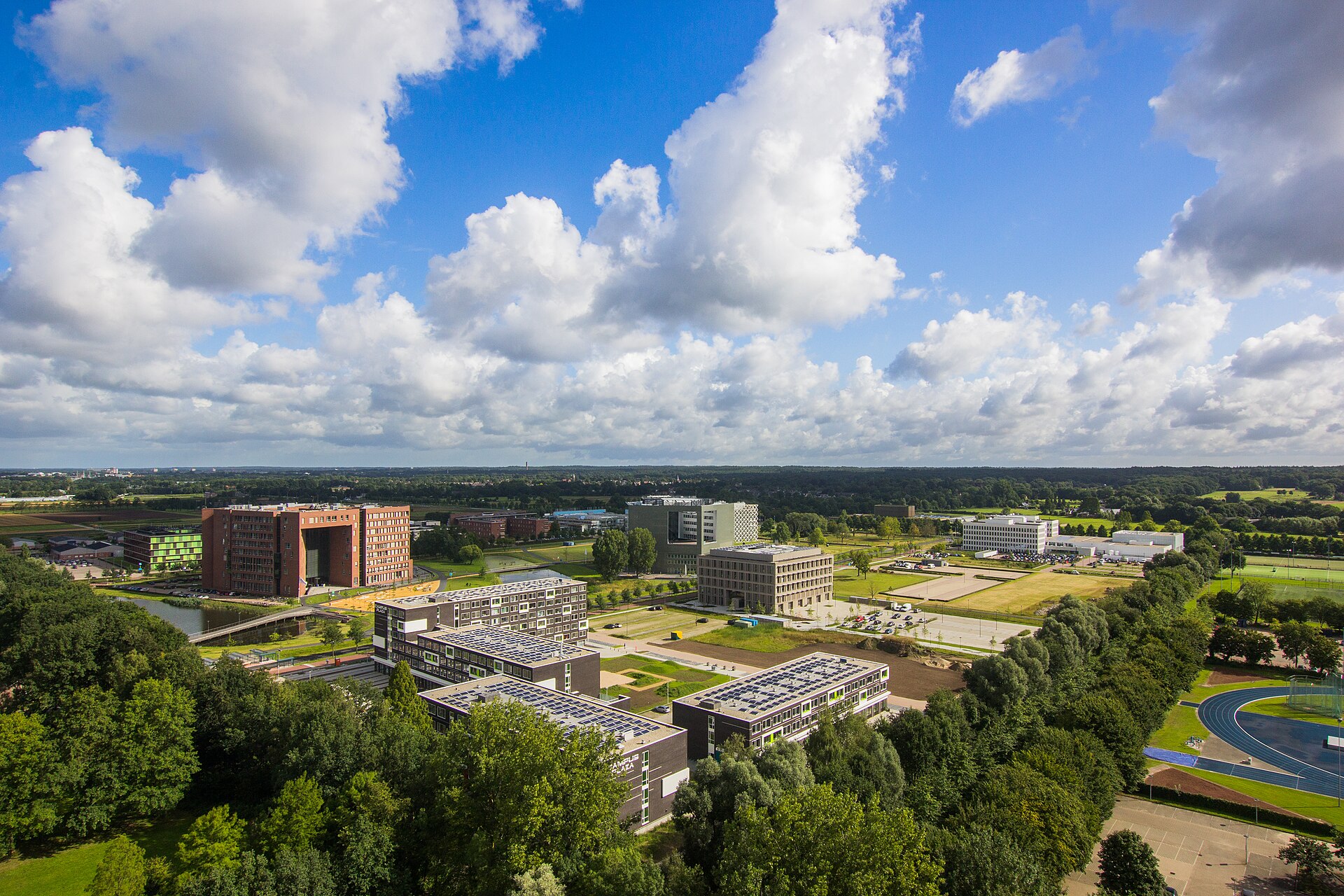
Featured image: Wageningen Campus, August 2017 by Van Gooien, via Wikimedia Commons (CC BY-SA 4.0).
Reporting is based on the publicly available sources listed above and has been independently written by Food Tech Insider.