Korean Researchers Develop Whole-Cut Hybrid Cultivated Steak With Fibre-Spinning Equipment, Targeting Half the Price of Hanwoo Sirloin
Researchers in South Korea have developed a whole-cut hybrid cultivated meat with visible grain and marbling, along with equipment to produce its muscle fibres at factory scale. The team, led by Professor Joo Seon-tae of Gyeongsang National University, projects production costs 70–80% lower than conventional cultivated meat methods.
The Korea Institute of Planning and Evaluation for Technology in Food, Agriculture and Forestry (IPET) announced the results this week. The work was funded through the high-value-added food technology development programme of the Ministry of Agriculture, Food and Rural Affairs (MAFRA) and IPET. According to Electronic Times, Chungbuk National University, Kyungpook National University and a biotech company also took part, and the project received government R&D support from April 2021 to December 2025.
From mince to whole cuts
Most cultivated meat prototypes so far have been minced formats such as burgers, nuggets and patties, because whole muscle structure is hard to reproduce. The Korean team uses a hybrid approach. Cultured muscle cells are combined with plant proteins from peas, soybeans and wheat, which serve as the scaffold. The mixture is spun into thin, thread-like artificial muscle fibres. These are then bundled into a three-dimensional whole cut with a defined meat grain.
To reproduce marbling, the researchers add a fat phase made from vegetable oil blended with beef tallow. According to Electronic Times, adjusting the fat content and where it is placed lets the team mimic the shape and tenderness of different cuts, such as sirloin, tenderloin and striploin.
The process equipment
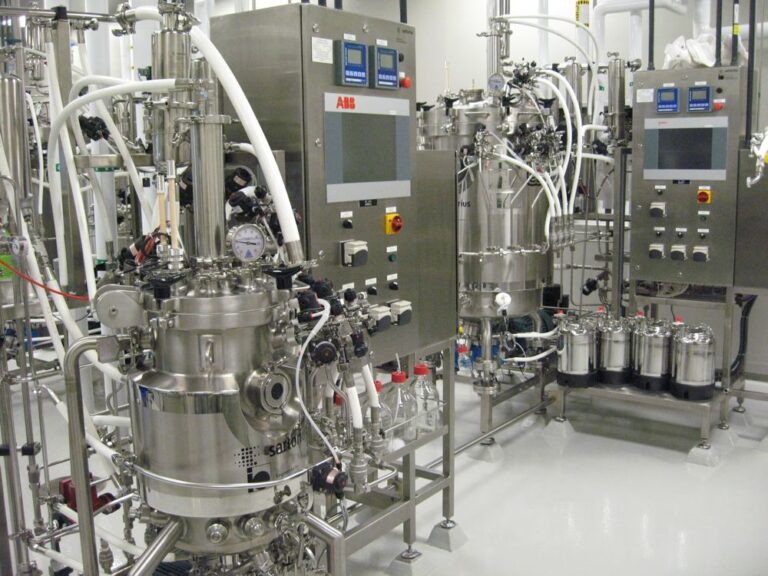
For manufacturers, the most relevant part is the process engineering. The team built its own factory-type machine that extrudes and bundles fine muscle fibres in large volumes. Seoul Economic Daily compares the process to making noodles. The researchers also use scaffolds for cell culture that can be reused several times, and they replace part of the cultured cell mass with plant protein. Both steps reduce raw material and culture costs.
When it announced an earlier prototype in May 2025, Gyeongsang National University said the group had also developed microcarriers made from edible materials. Conventional microcarriers for large-scale cell culture are usually inedible, which makes harvesting more complicated. The university said the edible version cut production costs by more than half.
Price target and its caveats
If the product is commercialised, the researchers expect it to sell for about 40,000 won per kilogram. Korean reports put grade-1 Hanwoo sirloin at around 80,000 won per kilogram, so the target is about half that price. Electronic Times stresses that this is a projected price that assumes commercial production. No retail price has been set, and the steps needed for mass production and product launch are still ahead.
To commercialise the technology, the team founded a laboratory spin-out, Orange Cow, in July 2024. The company is now pursuing commercialisation from a whole-cut prototype completed last year. In 2025, Joo said Orange Cow planned to reach the domestic market through B2B deals with large food companies and to develop export channels.
“Researchers at a Korean university have secured world-class cultured meat technology needed to address future food supply problems,” IPET president Park Hong-jae said, adding that the institute will support the work so that it “reaches actual dinner tables.”
Why it matters
Hybrid products that combine plant proteins and cultured cells are becoming a practical route to market for cultivated meat. They reduce the amount of expensive cell biomass in each kilogram and use established extrusion and spinning methods to create texture. The Korean project adds a specific engineering contribution: continuous fibre spinning and bundling for whole cuts. The cost and price figures are still the researchers’ projections. Key points to watch are independent cost validation, the cell content of the final product, and Orange Cow’s path through Korea’s regulatory framework for cell-cultured food ingredients.
Sources & Credits
- Seoul Economic Daily – Korean Team Develops Steak-Style Cultured Meat at Half the Price (22 Oct 2026)
- Electronic Times (etnews) – 경상국립대 연구팀, 한우 반값 ‘스테이크 배양육’ 개발 (21 Oct 2026, Korean)
- Food Journal (foodnews.co.kr) – 농기평, 덩어리형 배양육 개발 지원 성과 (Korean)
- Gyeongsang National University – Professor Joo Seon-tae develops marbled whole-cut cultivated meat (May 2025, Korean)
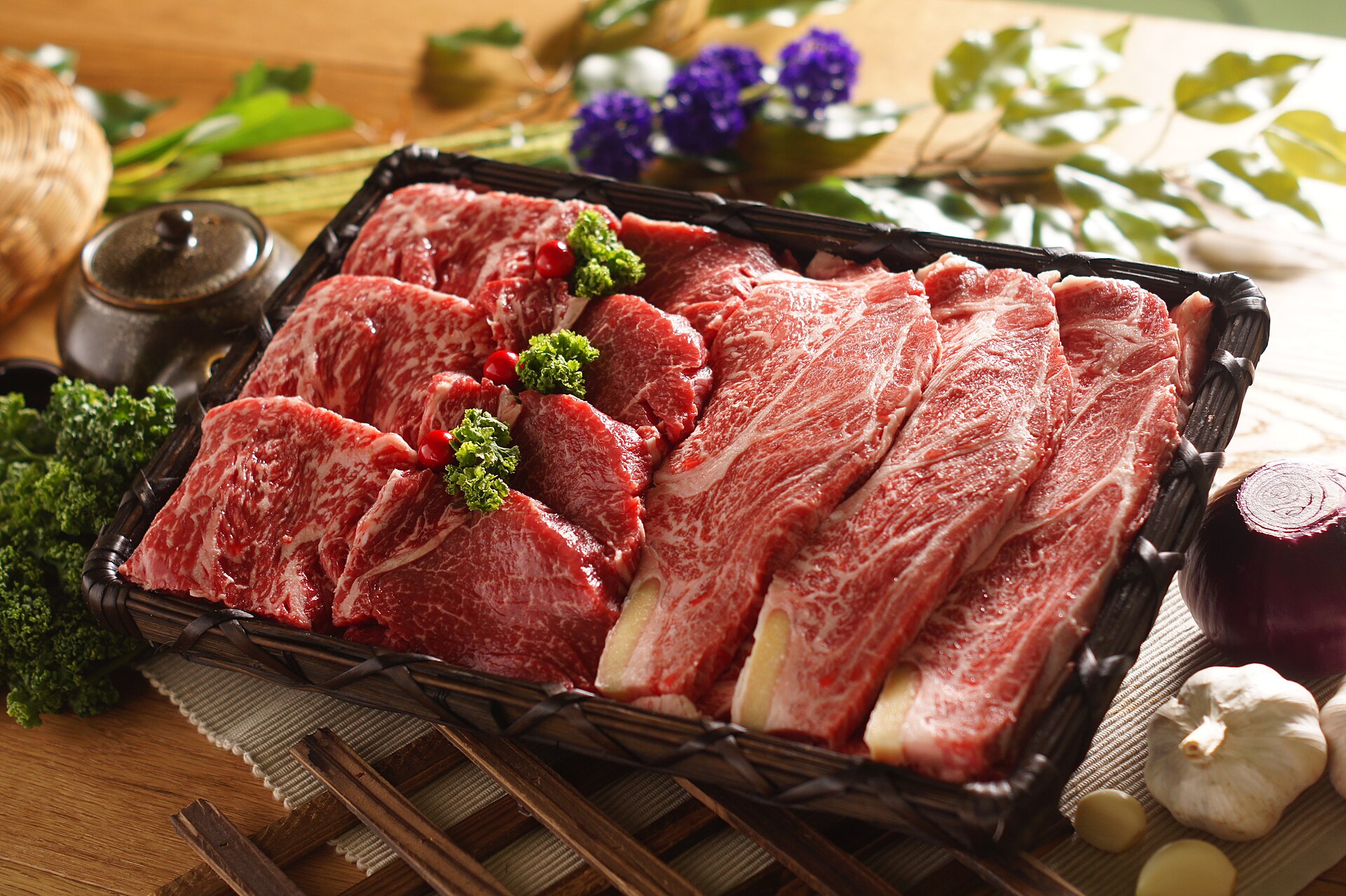
Featured image: 대통령상에 빛나는 행주한우 by Goyang Livestock Cooperative (고양축산농협), via Wikimedia Commons (CC BY-SA 4.0).
Reporting is based on the publicly available sources listed above and has been independently written by Food Tech Insider.