FOOD FOUNDERS Studio Raises €4 Million to Build Two New B2B Foodtech Ventures Around Manufacturer Needs
Swiss venture studio FOOD FOUNDERS has raised an oversubscribed €4 million (approximately $4.5 million) round from family offices and angel investors to build the next two companies in its portfolio, AgFunderNews reported.
The studio builds foodtech businesses around the most pressing operational and product challenges facing large food manufacturers, a model it positions as a corrective to the technology-led approach that characterised much of the sector over the past decade.
Problem first, founders second
Co-founder Giacomo Cattaneo has argued that too much foodtech innovation in recent years was built to excite investors rather than to meet the needs of industry or consumers. FOOD FOUNDERS reverses the sequence. It first defines an industrial problem and identifies technologies that could solve it, then builds the business, and only then recruits founders and chief executives to lead it.
Corporate partners remain involved throughout the venture-building process. The aim, Cattaneo said, is that by the time a company is formed, its first customers are already engaged.
SentiaNova as proof of concept
The studio’s first company, SentiaNova, emerged from stealth earlier this year to address off-flavours in pulse proteins, one of the most persistent barriers to wider use of pea, faba and other legume ingredients. SentiaNova holds patented technology to remove those flavours and improve protein functionality. It has recently appointed a chief executive and is working toward commercial production while raising its own funding round.
Widening the innovation pipeline
FOOD FOUNDERS initially sourced technologies exclusively from academia, reflecting a view that valuable innovation often stalls inside European universities. It now plans to broaden its pipeline to include corporate R&D teams and startups with promising technologies that have not yet found the right market, which Cattaneo describes as intellectual property that deserves a second chance.
The timing reflects a structural shift. Many large food companies have reduced internal R&D budgets, increasing their reliance on external sources of innovation. All opportunities will be assessed against the same industrial, technical and commercial criteria the studio applies to university research.
A focus on fast, capital-light B2B solutions
The studio’s current priority is B2B foodtech that improves taste, texture, affordability and nutrition, with proteins, fibres and fats named as potential areas. While its selection process is technology-agnostic, FOOD FOUNDERS is deliberately avoiding capex-heavy fields such as fermentation and cultivated meat, which also face lengthy regulatory pathways. Speed to market and alignment with current industry demand are central to its thesis.
Proceeds from the round will fund the two new ventures, for which the studio is actively recruiting founders and chief executives. It is also exploring a “Studio 2.0” phase that could extend into agriculture, health and longevity.
Industry perspective
The raise comes as investors and corporates reassess foodtech after several years of high-profile setbacks in alternative proteins and capital-intensive bioprocessing. Models that start with a validated customer problem and modest capital requirements are attracting renewed interest, particularly in ingredient functionality, where manufacturers face clear reformulation pressure from health regulation, clean-label demand and shifting diets.
Cattaneo summarised the lesson the sector has learned: a promising technology is only a starting point. Success requires a problem industry genuinely wants solved, a technology capable of supporting a business, and the right people to take it to market. FOOD FOUNDERS’ bet is that assembling those elements at the moment of company creation materially improves the odds.
Sources & Credits
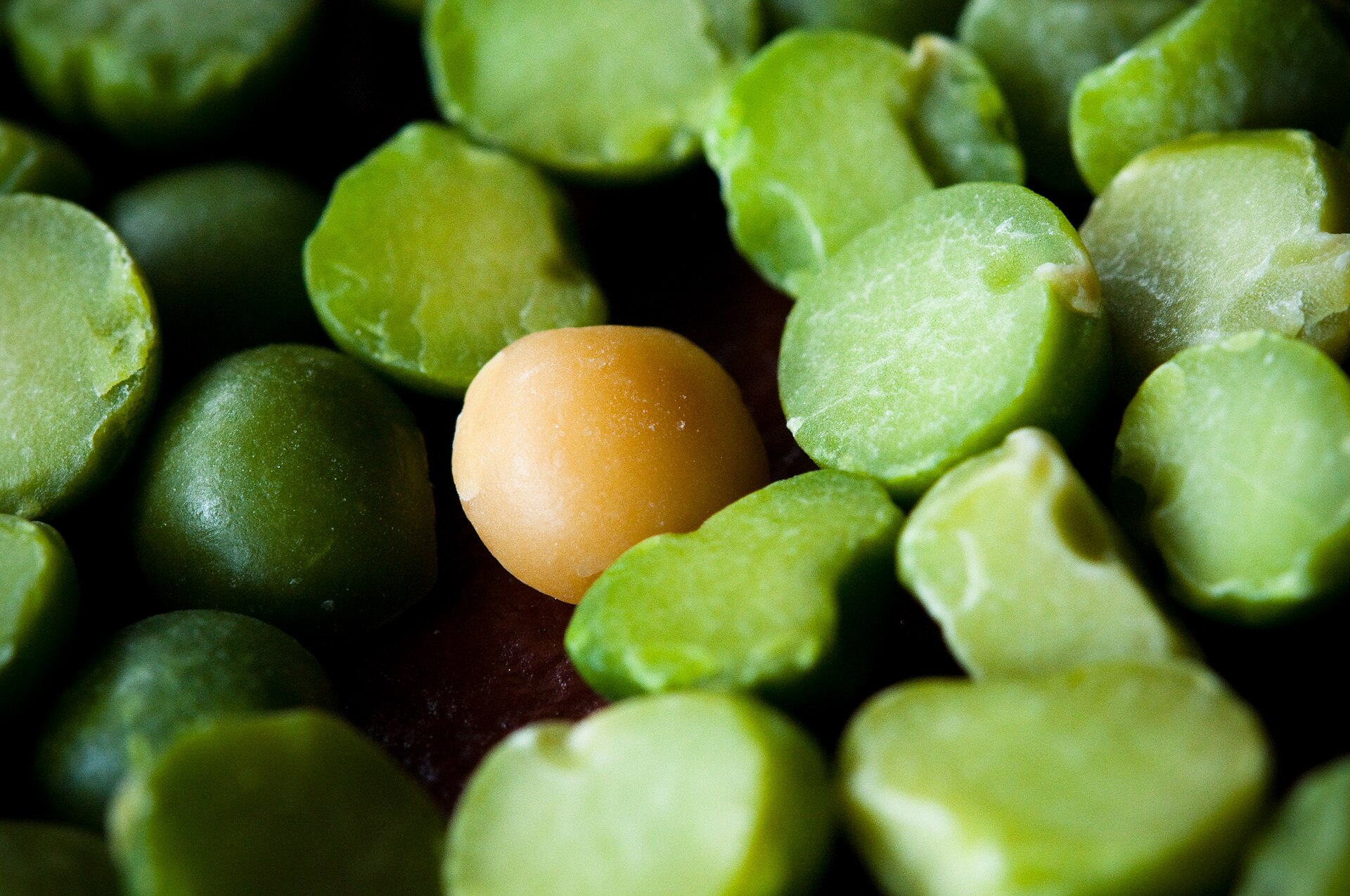
Featured image: Split peas (3145708237) by Liji Jinaraj, via Wikimedia Commons (CC BY-SA 2.0).
Reporting is based on the publicly available sources listed above and has been independently written by Food Tech Insider.