MOA Foodtech Raises €3.3 Million to Scale AI-Optimised Fermentation of Food Industry Side Streams
Spanish foodtech startup MOA Foodtech has raised €3.3 million (approximately $3.8 million) to scale its AI-driven biomass fermentation platform, which converts agricultural and food industry side streams into functional ingredients.
The round was backed by the European Innovation Council (EIC) Fund, Swanlaab Innvierte Agri Food Tech and CDTI-Innvierte, according to Global AgInvesting.
From by-products to ingredients
MOA was founded in late 2020 by chief executive Bosco Emparanza, chief scientific officer Susana Sánchez and chief financial officer José María Elorza. The company uses non-GMO yeast strains to ferment low-value side streams such as distillers’ grains and crop residues into ingredients for food and animal nutrition.
The new capital will support a move from 120,000-litre to 225,000-litre bioreactors to increase volumes of its initial product line:
- MOA Q5 – an egg replacer and emulsifier aimed at bakery products and sauces.
- MOA Yeast – an ingredient designed to improve taste, texture and nutritional profile in consumer foods.
- MOA Yeast FeG – a variant developed for pet food and livestock nutrition.
MOA Yeast FeG is already used in a commercially available pet food, while Q5 and MOA Yeast are in validation trials with European food manufacturers.
An asset-light production model
Rather than building its own plant, MOA manufactures through a contract development and manufacturing organisation (CDMO) in Spain and sells directly to manufacturers via an in-house sales team. It also runs co-development projects with companies that want to turn their own side streams into ingredients, and works with agricultural producers that together generate more than 100,000 tonnes of by-products a year.
Emparanza has said the commercial model for partner projects is set case by case and may involve external manufacturers, partner facilities or licensing, without necessarily requiring a fermentation plant on the partner’s site.
Albatross: AI for variable feedstocks
Using by-products as growth media introduces a significant technical challenge: their chemical composition varies from batch to batch. MOA’s proprietary AI engine, called Albatross, analyses feedstock composition alongside metabolic models built from the company’s library of more than 300 microbial strains to identify efficient fermentation conditions.
According to the company, the system has reduced development timelines dramatically. Optimising conditions for its first ingredient took six months in the lab; the same process now takes less than two weeks.
Emparanza has argued that sustainability alone is not enough and that lowering the cost of culture media is essential. Replacing refined carbon sources such as dextrose with agrifood side streams is central to that strategy.
Why it matters
Feedstock is one of the largest cost components in biomass fermentation, and many precision and biomass fermentation ventures have struggled to reach price parity with conventional ingredients. Combining cheap, abundant side streams with AI-driven process optimisation addresses that cost problem directly while giving food processors a potential revenue stream from material they currently sell cheaply or pay to dispose of.
Egg replacement is also a timely target. Bakery and sauce manufacturers have faced recurring egg price volatility linked to avian influenza, increasing interest in functional alternatives that can be supplied at stable prices.
Outlook
MOA’s next milestones will be converting its food ingredient trials into commercial contracts and demonstrating consistent quality at the larger bioreactor scale. Its CDMO-based model keeps capital requirements modest, a significant advantage in a funding environment that has become far more selective toward fermentation companies.
Sources & Credits
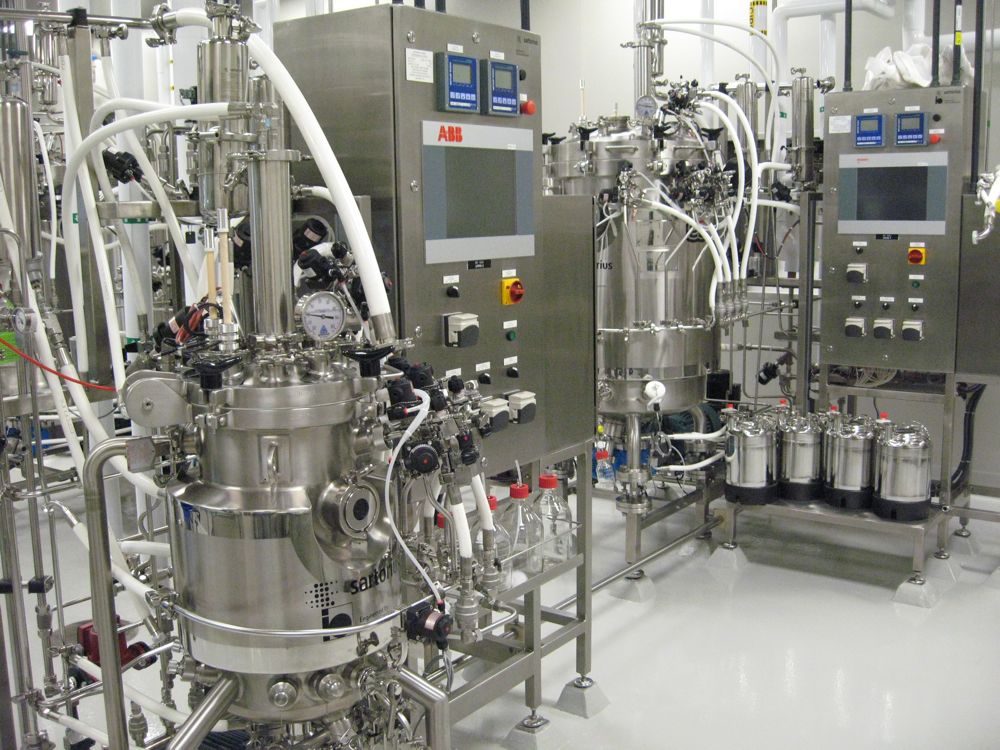
Featured image: BTEC Bioreactors by Rick Lawless, via Wikimedia Commons (CC BY 3.0).
Reporting is based on the publicly available sources listed above and has been independently written by Food Tech Insider.