All G Self-Affirms GRAS for Precision-Fermented Human Lactoferrin, Opening US Adult Nutrition and Supplement Market
Australian precision fermentation company All G has self-affirmed Generally Recognized as Safe (GRAS) status in the United States for its recombinant human lactoferrin, clearing the ingredient for use in adult nutrition and dietary supplement products. The Sydney-based business announced the milestone on 18 November 2026 and describes the protein as the first in a planned portfolio of human milk proteins.
The move gives All G two lactoferrin products in the US market. Its bovine-equivalent lactoferrin, LFX, went on sale in the country in July 2026 and received an FDA “no questions” letter in April. All G says it is now the only company offering both human and bovine lactoferrin commercially.
What self-affirmed GRAS does, and does not, cover
Under the self-affirmed GRAS route, a company and its expert panel conclude that an ingredient is safe for its intended use without a formal FDA review. All G’s determination applies to adult nutrition and supplements only. It does not cover infant formula, which would require a separate GRAS filing and additional safety data, and Nutrition Insight notes that uses for children fall outside the current scope.
Nutritional Outlook reports that the company’s release does not say whether the determination has been submitted to the FDA. Nutrition Insight adds that the agency has previously received three GRAS notices for recombinant human lactoferrin from other companies, but stopped evaluating them at the notifiers’ request. All G followed a similar sequence with LFX, which was self-affirmed before the FDA letter arrived.
Designed to match breast milk lactoferrin
Lactoferrin is an iron-binding glycoprotein found in milk and is one of the most abundant bioactive proteins in human breast milk, where it is associated with iron regulation, immune defence and gut health. All G says its recombinant version was engineered to mirror the breast milk protein on two points.
The first is structural. In about 94% of women, lactoferrin carries a cluster of four arginine amino acids at the N-terminus of the protein, a region linked to binding bacteria and human cells. A less common variant has only three. All G says its protein carries all four. “Think of a rowboat with four people. Lose one rower and the boat still moves, but pulls off balance and loses drive,” said chief scientific officer Dr Jared Raynes.
The second is iron saturation. According to Green Queen, All G’s human lactoferrin has around 4% iron saturation, achieved during fermentation rather than by downstream filtration, putting it in the low-iron “apo” form. The company claims no other GRAS human lactoferrin matches breast milk lactoferrin on either count.
In-house bioactivity data, not yet independently verified
All G ran side-by-side tests against a commercially available human lactoferrin, which it did not name. It reports 2.2 times the antimicrobial potency against a standard E. coli strain (W3110), 1.3 times stronger heparin binding, which is used as an industry measure of lactoferrin bioactivity, and 2.3 times higher iron-binding capacity. The results are unpublished and have not been independently verified, and the company says further trials are under way.
All G also cites published research indicating that human lactoferrin is not a cow’s milk allergen, is recognised by the human intestinal lactoferrin receptor, and released a peptide profile similar to breast milk lactoferrin in simulated digestion in a 2024 study of a different recombinant human lactoferrin.
Why the economics matter
Conventional bovine lactoferrin is extracted from milk at very low concentrations. Green Queen notes that at least 10,000 litres of milk are needed to produce 1kg of purified lactoferrin, putting prices at roughly $600 to $2,000 per kg. That supply constraint is the core commercial case for precision fermentation in this segment.
Human and bovine lactoferrin share about 70% of their amino acid sequence. All G says customers are looking at the human version for women’s health and early-life applications, and at the bovine version for immunity and gut health. It has filed patents covering production and applications of both.
A crowded but early market
All G enters a category where competitors are already active. Helaina’s human lactoferrin is used in around a dozen products in the US and the company is working with Nestlé on infant formula, while TurtleTree sells bovine lactoferrin and now manufactures and commercialises it with Novonesis.
All G has raised $36 million to date and is currently fundraising, according to Green Queen. In December 2025 it raised A$10 million and formed a joint venture with French supplier Armor Protéines to commercialise lactoferrin. It has also produced recombinant micellar human caseins, backed by an A$1.1 million New South Wales government grant, and is developing human alpha-lactalbumin.
The longer-term goal is an infant formula built entirely from human milk proteins. “Human lactoferrin is the first of many human milk proteins we will bring to market,” said CEO Jan Pacas. For ingredient buyers, the near-term question is whether All G’s structural and bioactivity claims hold up in independent testing, and whether the company pursues an FDA notice for its human protein as it did for LFX.
Sources & Credits
- Green Queen – All G Cleared to Sell Recombinant Breast Milk Protein in US, Targets Adult Nutrition & Supplements (18 Nov 2026)
- vegconomist – All G Adds Human Lactoferrin to US Portfolio With Self-Affirmed GRAS Status (18 Nov 2026)
- Nutrition Insight – All G self-affirms GRAS status for recombinant human lactoferrin (18 Nov 2026)
- Nutritional Outlook – All G Announces Self-Affirmed GRAS Status for Recombinant Human Lactoferrin (18 Nov 2026)
- All G – Research and announcements
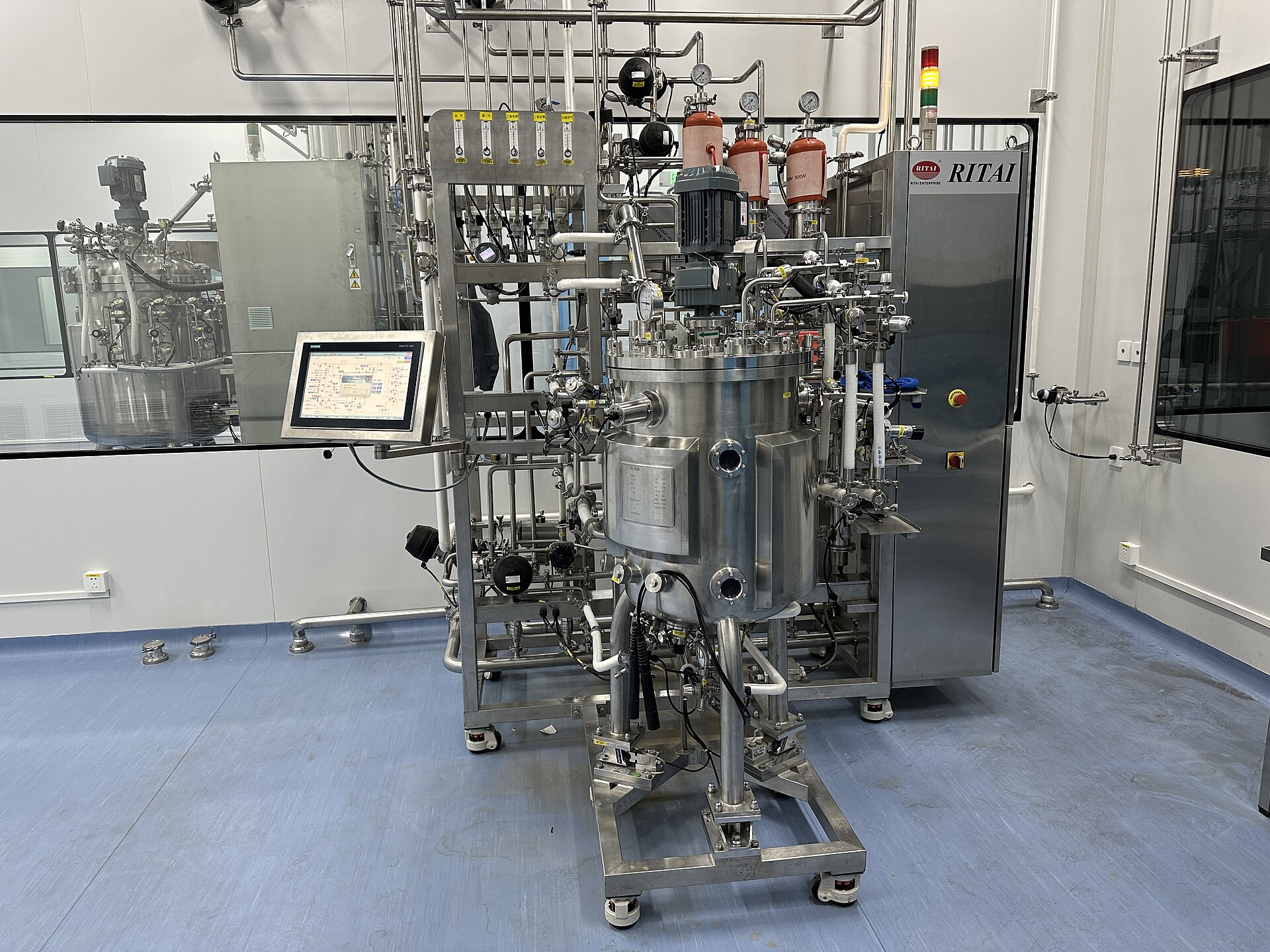
Featured image: Bioreactor in operation by Habin Zhang, via Wikimedia Commons (CC BY-SA 4.0).
Reporting is based on the publicly available sources listed above and has been independently written by Food Tech Insider.