Vivici Study Finds Precision-Fermented Beta-Lactoglobulin Resists UHT Aggregation That Clumps Milk Whey Protein
Precision-fermented beta-lactoglobulin (BLG) shares the folded structure of the whey protein found in cow’s milk but behaves very differently under ultra-high-temperature (UHT) processing, according to a study published in Food Research International by researchers from Vivici, dsm-firmenich, Fonterra and the Riddet Institute. Under UHT-like heating at 140 °C, the fermentation-derived protein showed no detectable aggregation, while most of the milk-derived version clumped within seconds.
The paper landed as Vivici, the Dutch precision-fermentation company backed by Fonterra and dsm-firmenich, prepares to show new beverage and wellness concepts built on its Vivitein BLG and its precision-fermented lactoferrin at SupplySide Global in Las Vegas.
Same structure, different behaviour in the heat
The team compared fermentation-derived BLG (f-BLG) with milk-derived BLG (m-BLG) from primary to quaternary structure. Mass spectrometry showed the fermented protein is made up of several proteoforms, mostly a mature sequence carrying a short four-residue “EAEA” extension at the N-terminus. Despite that difference, 2D methyl NMR and light-scattering measurements confirmed that the tertiary and quaternary structures of the two proteins are equivalent.
The divergence appeared once the proteins were heated:
- At 140 °C, milk BLG turned opaque after about 1,200 seconds, while the fermented protein stayed translucent for the full 1,800-second test.
- Chromatography showed 80–90% of milk BLG aggregated within 30 seconds at 140 °C; no aggregation was detected for f-BLG.
- Heated milk BLG approached close packing (a packing fraction of 0.68) at 6 wt% protein after 60 seconds, while the fermented protein stayed below 0.60, meaning a much smaller rise in viscosity.
Why the extra residues matter
The authors attribute the improved heat stability to the additional glutamic acid residues in the N-terminal extension, which give the protein a more negative surface charge and more electrostatic repulsion between molecules. Molecular dynamics simulations suggest these charged ends stay facing outward when proteins associate, which may keep repelling neighbouring proteins and limit further aggregate growth.
Vivici described the work as part of a “molecule-to-application” approach to supporting customers. The study is the company’s own research: several authors work for or hold equity in Vivici, which has a related patent pending. A Fonterra and Vivici-linked team had previously reported, in Food Hydrocolloids, that fermentation-derived BLG forms translucent, more elastic heat-set gels than milk BLG.
What it means for beverage formulators
Aggregation and gelling during heat treatment are among the main limits on how much whey protein can be packed into shelf-stable, clear or low-viscosity drinks. A protein that stays translucent and fluid through UHT conditions could let formulators push protein levels higher in ready-to-drink formats without the grittiness, sediment or thickening that milk proteins can cause.
Vivici is already pitching that use case. Its SupplySide concepts include an Italian-style lemon sparkling soda and a 100 ml mangosteen lassi shot delivering 25 g of protein per serving, according to eDairy News. The company is also positioning precision-fermented lactoferrin, a high-value iron-binding protein usually limited to infant formula and clinical nutrition because of extraction costs, for broader wellness products.
The caveats
The results come from controlled laboratory heating, not full commercial UHT lines, and they compare purified proteins rather than finished beverages. For ingredient buyers, the next proof points will be performance in real formulations, cost per kilogram against whey protein isolate, and regulatory clearance in each target market. Still, the paper is one of the clearer pieces of evidence that precision-fermented dairy proteins can be functionally different from, not just identical to, their milk counterparts, and that small sequence differences can be a selling point.
Sources & Credits
- Food Research International – β-lactoglobulin from precision fermentation and milk exhibit similar protein structure but distinct aggregation behaviour (2026)
- eDairy News – Vivici advances precision fermentation lactoferrin for wellness (25 Oct 2026)
- Vegan Brief – Precision-fermented milk protein survives UHT heat in new study (25 Oct 2026)
- Vivici – Same molecular structure, better heat stability (LinkedIn, Oct 2026)
- Food Hydrocolloids – Heat-set gelation of milk- and fermentation-derived β-lactoglobulin variants (2025)
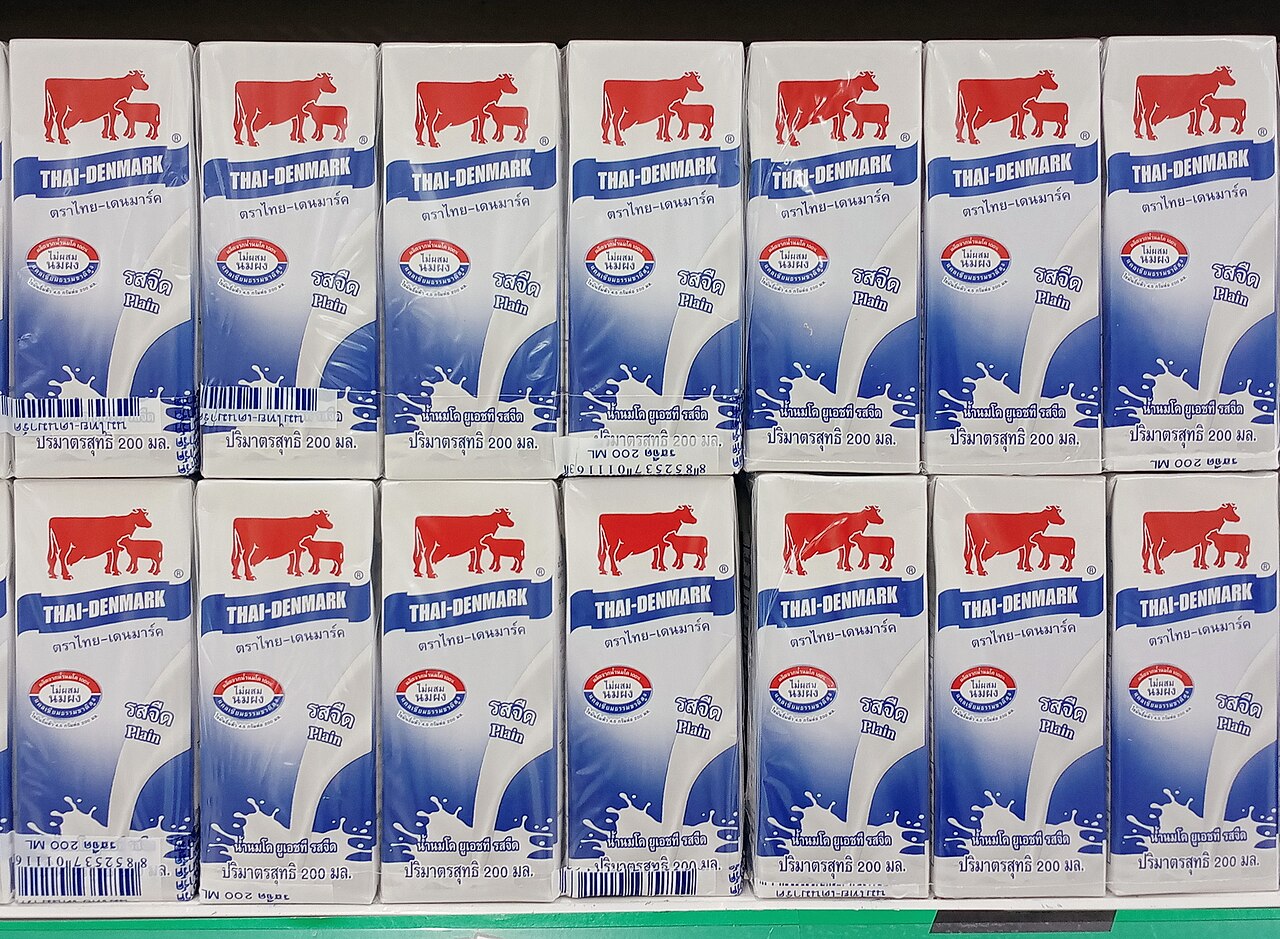
Featured image: Thai-Denmark UHT milk by Per Meistrup, via Wikimedia Commons (CC BY-SA 4.0).
Reporting is based on the publicly available sources listed above and has been independently written by Food Tech Insider.