Kayem Foods Recalls 1.58 Million Pounds of Ready-to-Eat Meat Over Warehouse Cooler Temperature Abuse, Putting Cold Chain Monitoring in Focus
Kayem Foods, the family-owned meat processor based in Chelsea, Massachusetts, is recalling approximately 1,584,361 pounds of ready-to-eat (RTE) meat and poultry products after a warehouse cooler failed to hold temperature. The U.S. Department of Agriculture’s Food Safety and Inspection Service (FSIS) announced the recall on Saturday 17 October, saying the products may have experienced temperature abuse during storage.
The recall sits in FSIS’s Class I category, the agency’s highest-risk tier, used where there is a reasonable probability that eating the product will cause serious health consequences. There have been no confirmed reports of illness.
What is covered
According to FSIS, the affected RTE products were produced from approximately 31 March to 7 October 2026 and bear establishment numbers “EST. M/P 7839,” “EST. P 20935A” and “EST. M 9520” inside the USDA mark of inspection. They were shipped to retail and foodservice locations nationwide and to Hong Kong. Food Safety News reports that the list runs to more than 100 products, including bacon, hot dogs, sausage, turkey breasts and hams, and notes that some items have a long shelf life, which is why FSIS is concerned product may still be in consumers’ refrigerators or freezers.
Retailers have begun posting their own notices. Wegmans lists various Al Fresco sausage items and Kayem thick-cut bacon lines, and describes the cause as a cooling system malfunction at a warehouse location that left temperatures “intermittently out of range,” which could allow pathogen growth.
Kayem’s own statement frames the window slightly differently from FSIS, saying the recalled products were stored and shipped between 7 June and 14 October 2026. Buyers reconciling stock should work from the product, UPC and lot code lists published by FSIS and the company.
Found at the dock, not in the cooler
The detail that will interest cold chain and quality teams is how the problem surfaced. FSIS says Kayem received a retail customer complaint on 1 October about warm product temperatures at the point of delivery. The company then investigated and determined that it had stored various RTE products in a warehouse cooler that experienced temperature deviations. The public recall followed 16 days later.
Neither FSIS nor Kayem has said how long the cooler was out of range, what temperatures were reached, or what monitoring was in place at the warehouse. What the sequence does show is that the deviation was first flagged downstream, by a customer receiving the goods, rather than announced as a warehouse alarm.
“Our business depends on providing consumers with safe food of the highest quality,” said Kayem president and CEO Matt Monkiewicz. “Out of an abundance of caution, we are undertaking this voluntary recall.” He added that the management team “takes full responsibility” and that the company has “learned from and corrected the issue.” Kayem says it is contacting each of its wholesale and retail customers directly with instructions to identify and dispose of the products.
Why it matters for RTE cold chain
RTE meats are eaten without further cooking, so storage temperature is one of the main controls between the plant and the consumer. A single warehouse cooler holding product from several establishments can turn one equipment fault into a multi-month, multi-brand recall, as the volume here shows.
For processors and third-party cold storage operators, the case adds weight to several investments the sector has been discussing for years: continuous, logged temperature monitoring at room and pallet level rather than periodic checks; alerts that escalate when a cooler drifts, not only when it fails outright; and lot-level traceability that ties each pallet to the storage conditions it saw. Those tools do not prevent compressor or control failures, but they shorten the time between a deviation and a hold decision, and they narrow the amount of product that has to be pulled.
Retail buyers are also likely to look harder at receiving checks. In this case, a temperature reading at delivery was what triggered the investigation.
Temperature control is on regulators’ agenda elsewhere too
A day after the FSIS announcement, India’s Food Safety and Standards Authority of India (FSSAI) issued an advisory on Sunday 18 October directing food business operators to keep perishable foods such as khoa, paneer, meat and fish under controlled temperature conditions across the supply chain, The Statesman reported. The regulator said it had become aware that such products are at times not handled, stored or transported at appropriate temperatures, and reminded operators that the prescribed temperatures apply from procurement through to delivery to the consumer. It also told operators to use clean, covered vehicles suited to food transport and food-grade packaging.
The two actions are unrelated, but they point at the same weak link. For perishable and RTE categories, cold chain performance between the plant and the shelf is now as much a compliance question as a quality one.
Sources & Credits
- USDA FSIS – Kayem Foods Inc. Recalls Meat and Poultry Products Due to Possible Temperature Abuse (17 Oct 2026)
- Kayem Foods – Kayem Foods Announces Voluntary Food Recall (Oct 2026)
- Food Safety News – More than 1.5 million pounds of hot dogs, bacon, sausage, turkey breasts and more meat products of various brands recalled (Oct 2026)
- WGCU (NPR/PBS) – More than 1.5 million pounds of meat, poultry products recalled nationwide (17 Oct 2026)
- Wegmans – Product recall: Various Al Fresco Sausage and Kayem Bacon Items
- The Statesman – FSSAI tightens norms for storage, transport of perishable food items (18 Oct 2026)
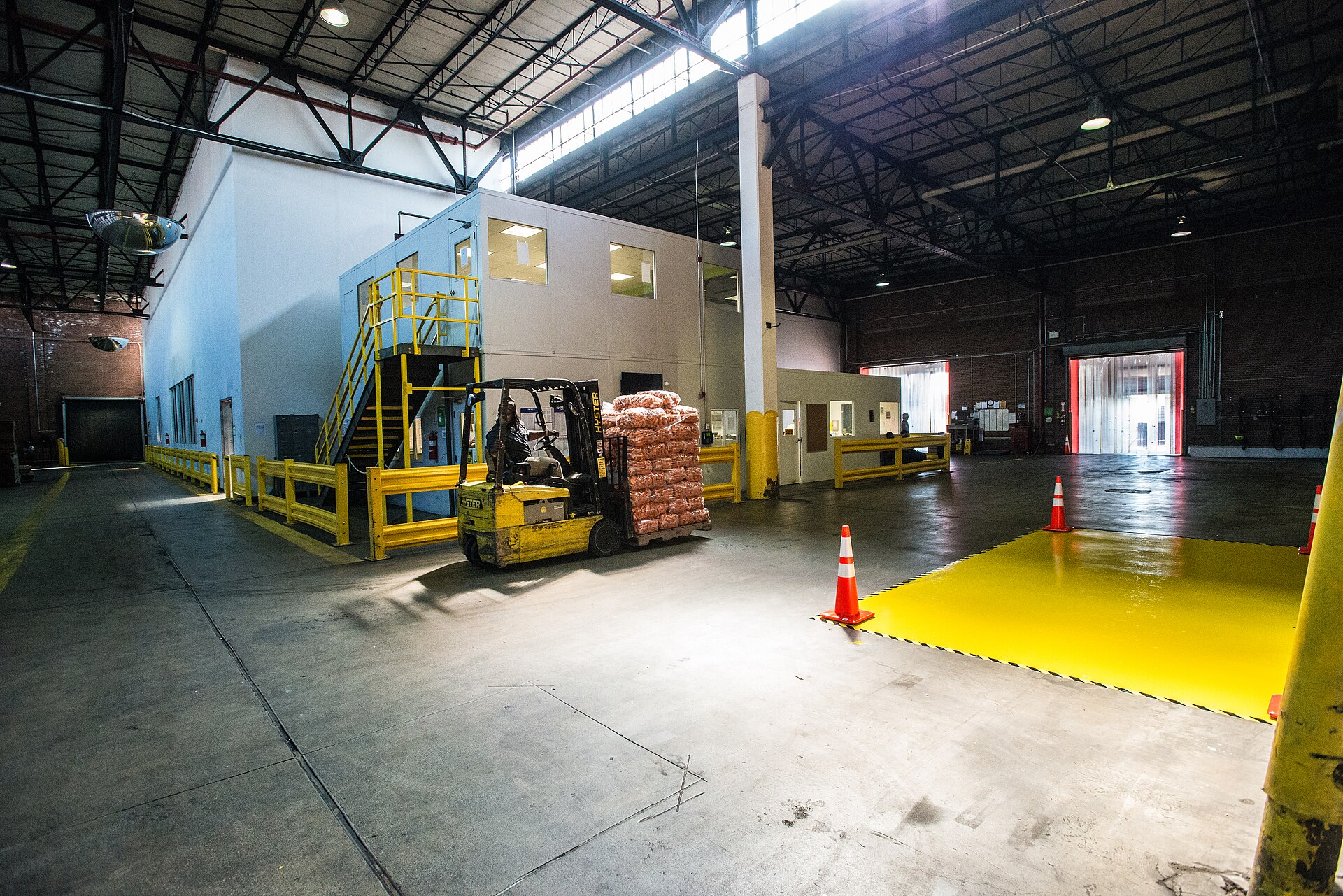
Featured image: 20150916-OSEC-LSC-0137 (21450664470) by Lance Cheung / U.S. Department of Agriculture, via Wikimedia Commons (Public domain (U.S. government work)).
Reporting is based on the publicly available sources listed above and has been independently written by Food Tech Insider.