FDA Final Rule Opens 139 Standardized Foods to Salt Substitutes, Giving Manufacturers New Room for Sodium Reduction
The U.S. Food and Drug Administration has finalised a rule that allows manufacturers to use salt substitutes in 139 standardized foods, removing a long-standing regulatory barrier to sodium reduction in products ranging from cheese and bread rolls to canned tuna, tomato products and mayonnaise.
The rule was published in the Federal Register on 13 October 2026 (docket FDA-2022-N-2226) and takes effect on 14 December 2026.
What changes for standardized foods
Standards of identity (SOIs) set out what a named food must or may contain, and sometimes how it is made. Until now, most SOIs that list salt as a required or optional ingredient did not allow it to be replaced, which left manufacturers few options to cut sodium without losing the right to use the standardized name.
FDA directly amends 80 standards. Because 59 more standards cross-reference those amended texts, the change reaches 139 SOIs in total. Affected categories include many cheeses; bread, rolls and buns; self-rising flour and cornmeal; macaroni and noodle products; canned fruits, vegetables and certain fish and shellfish; tomato products; chocolate and cocoa products; margarine, mayonnaise and some syrups.
No approved list, but a functional definition
Rather than naming specific ingredients, the rule defines a salt substitute as a safe and suitable ingredient, or combination of ingredients, that replaces some or all added sodium chloride, lowers sodium and performs at least one of salt’s functions in the food. That leaves formulators room to use potassium chloride blends and other sodium-reduction ingredients, provided they comply with existing food-safety requirements, including applicable food-additive rules.
Two guardrails apply. The finished product must keep the basic nature and essential characteristics of the standardized food, and the substitute must not compromise the other jobs salt performs. FDA notes that depending on the food, salt can matter for taste, microbial safety and texture, so the degree of replacement will vary by category.
The agency received more than 120 comments, including concerns about potassium-based substitutes for consumers who must limit potassium. FDA said the rule does not authorise any otherwise unapproved additive.
Timeline and the dairy exception
Because FDA used two legal procedures, most amendments take effect on 14 December without a further objection period. Standards for milk products and cheeses (21 CFR parts 131 and 133) fall under a provision that allows formal objections and hearing requests, and those are due by 12 November 2026. Dairy processors should therefore track that docket before relying on the change.
Policy context
FDA links the rule to its voluntary sodium reduction targets for processed, packaged and restaurant foods, which aim to bring average intake down to about 2,750 mg a day, roughly 20% below pre-2021 levels but still above the 2,300 mg Dietary Guidelines limit. More than 70% of Americans’ sodium comes from salt added during manufacturing and commercial preparation. The agency also framed the rule as support for the administration’s Make America Healthy Again agenda, and said it will publish a progress report on its Phase I targets later this year.
What it means for manufacturers and ingredient suppliers
For CPG brands, the rule removes a naming obstacle that pushed some reduced-sodium products out of standardized categories or onto awkward labels. Expect a wave of reformulation work in bread, processed cheese, canned seafood and condiments, and stronger demand for salt-reduction systems from ingredient suppliers. The practical challenges remain sensory parity, bitterness from potassium salts, cost per unit and preserving salt’s role in microbial control. Brands that already hold reduced-sodium formulations in non-standardized lines are best placed to move first once the December effective date arrives.
Sources & Credits
- Federal Register – Use of Salt Substitutes To Reduce the Sodium Content in Standardized Foods; Final Rule (13 Oct 2026)
- FDA – FDA issues final rule on salt substitutes in standardized foods (constituent update)
- FoodNavigator – FDA eases salt-substitute rules amid MAHA push for healthier foods (13 Oct 2026)
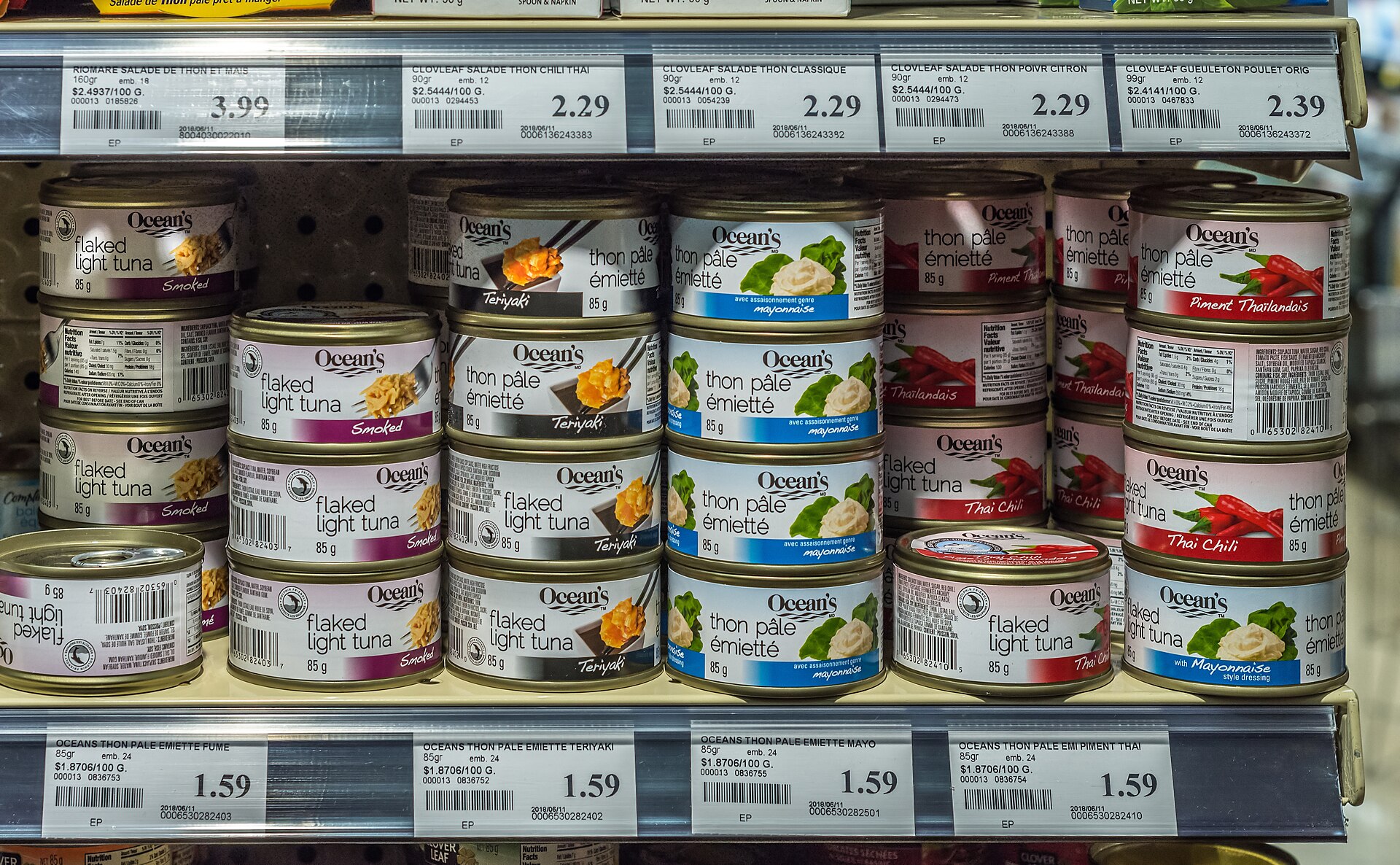
Featured image: Canned tuna on the shelf of an IGA store by Wilfredor, via Wikimedia Commons (CC BY-SA 4.0).
Reporting is based on the publicly available sources listed above and has been independently written by Food Tech Insider.