NTU Upcycles Okara With Oyster Mushroom Mycelium Fermentation Into Protein-Rich Umami Ingredient
Researchers at Nanyang Technological University, Singapore (NTU) have shown that fermenting okara, the pulp left over from soy milk and tofu production, with oyster mushroom mycelium can turn a perishable side stream into a more protein-rich, umami-forward food ingredient. The lab-scale work was carried out with Japanese food manufacturer Ichimasa Kamaboko and published in the journal Food Chemistry: X.
The results are proof-of-concept, but they address a long-standing problem for soy processors and give ingredient developers a natural route to savoury flavour without added flavour enhancers.
Why okara is hard to use
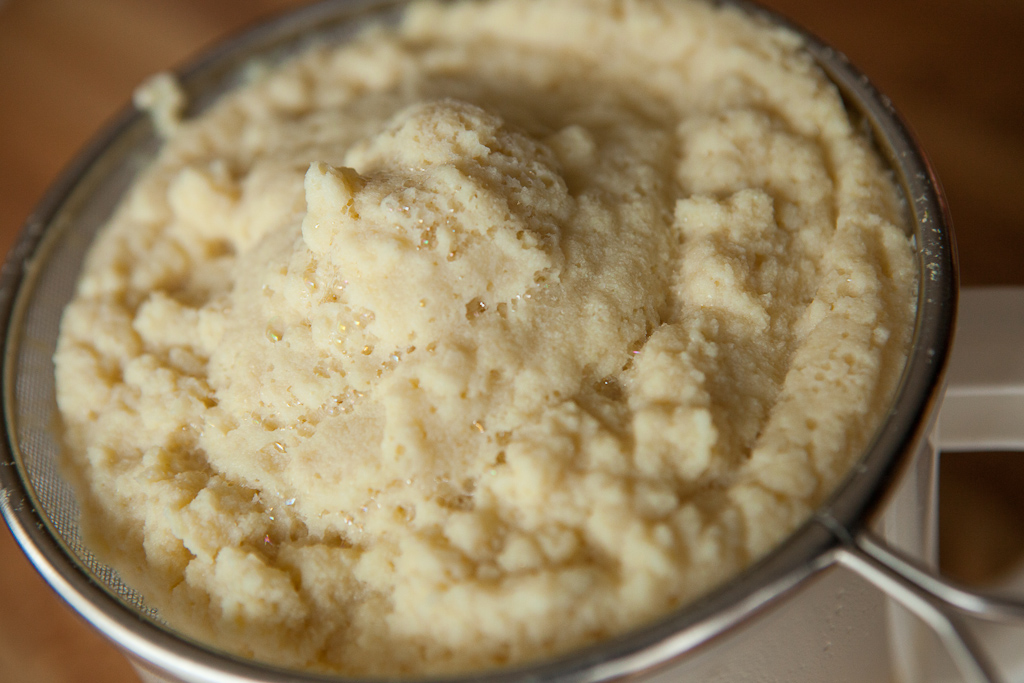
The soy food industry produces okara in large volumes. Its high moisture content makes it spoil quickly, and its high insoluble fibre, coarse texture and slightly sour taste limit its use in food for people. As a result, much of it is discarded or sold as low-value animal feed. Any process that stabilises it and improves taste and nutrition could turn a disposal cost into an ingredient revenue stream.
The fermentation process
The team used solid-state fermentation, a form of biomass fermentation in which microorganisms grow directly on a moist solid substrate rather than in liquid tanks. They tested fresh okara, dried okara, and blends of okara with common mushroom-growing materials such as wheat bran and sawdust, inoculated with Pleurotus ostreatus mycelium, the fine root-like network of the oyster mushroom.
Fresh okara performed best. It supported dense mycelial growth that fully colonised the material over an 11-day laboratory incubation. As the fungus grew, its enzymes broke down complex plant fibres into simpler, more digestible compounds, releasing sugars and amino acids.
Protein and flavour results
According to NTU, fermentation raised okara’s nitrogen level, an indicator of protein, with protein content reaching 27.7% to 30.2% by dry weight. Glucose concentrations rose 2.8 to 6.4 times from low starting levels as the mycelium converted complex carbohydrates.
The flavour chemistry shifted sharply:
- Free amino acids were 2.2 to 6.6 times higher than in unfermented okara.
- Glutamic and aspartic acids, the main umami amino acids, rose by up to 4.1 times, with fresh okara recording the highest levels of any medium tested.
- 5′-nucleotides, natural flavour boosters that work with amino acids to intensify umami, increased 3.2 to 6.3 times.
- Succinic acid, which has a savoury profile, became the dominant organic acid, rising up to 14.9 times in some formulations, while sour-tasting citric acid generally fell.
An electronic tongue, a sensor array that measures taste attributes objectively, confirmed lower sourness and stronger umami and overall richness. The researchers also recorded more bitterness and dryness in some samples, which they link to changes in bitter-tasting amino acids and other compounds, and they say the process needs fine-tuning to balance the flavour profile.
“Our findings show that oyster mushroom mycelium can naturally improve okara by changing its composition and producing compounds that give it a savoury, umami taste,” said Professor William Chen, director of NTU’s Food Science and Technology Programme and lead investigator. He cautioned that further research is needed on “pre-treatment requirements, energy efficiency, scale-up feasibility and production economics alongside food safety and consumer acceptance.”
First author Dr Malsha Samarasiri, a research fellow at NTU’s School of Chemistry, Chemical Engineering and Biotechnology, said the work shows mushroom fermentation “can create new, high value opportunities to use this soybean by-product in food applications.”
From lab to line
The next steps are the ones that decide commercial viability. NTU plans to evaluate operational energy requirements, food safety, storage stability, aroma and human sensory panels, optimise fermentation parameters and assess the financial case for scale-up. For manufacturers, the key questions will be throughput: an 11-day solid-state cycle needs space, humidity control and contamination management, and the substrate has to be handled quickly before it spoils.
Why it matters for side-stream valorisation
The study adds to a growing body of work using fungal and microbial fermentation to upgrade food industry side streams, from spent grain to fruit pomace, alongside start-ups such as MOA Foodtech. For tofu and soy milk producers in Asia, where okara volumes are highest, a fermented okara ingredient with natural umami could open applications in savoury snacks, plant-based meat, seasonings and bakery. It could also offer an alternative to added flavour enhancers at a time when clean-label pressure is rising. Whether that potential holds depends on proving the process economics at pilot scale, not just in the lab.
Sources & Credits
- EurekAlert! / NTU Singapore – NTU Singapore scientists demonstrate mushroom fermentation method to enhance protein content and flavour of soybean by-product
- NTU Singapore – A mushroom-powered boost for soybean by-products
- Food Chemistry: X – Taste characterization of okara and okara-derived substrates fermented by Pleurotus ostreatus mycelium
- Green Queen – Can Oyster Mushrooms Unlock the Umami Potential of Tofu's Protein-Rich Byproduct? (15 Oct 2026)
Featured image: Okara (soybean pulp) by Pax Ahimsa Gethen, via Wikimedia Commons (CC BY-SA 3.0).
Reporting is based on the publicly available sources listed above and has been independently written by Food Tech Insider.