Ever After Foods and Roslin Technologies Report 19x Cultivated Pork Protein Yield on Edible-Scaffold Bioreactor
Israeli cultivated meat manufacturing specialist Ever After Foods (EAF) and Scottish cell-line developer Roslin Technologies say a joint trial produced 19 times more cultivated pork protein per litre than a conventional stirred-tank process. The two companies combined Roslin’s pig stem cells with EAF’s edible-scaffold bioreactor, and they argue the result points to a cheaper route to industrial cultivated meat.
The figures are company-reported and have not been independently validated at commercial scale. EAF says it will share full test details on request.
What the trial measured
Roslin’s porcine pluripotent stem cells were first expanded in suspension as multicellular aggregates in serum-free, animal-component-free media. The aggregates were then mechanically broken up and seeded directly into EAF’s Edible Packed-Bed (EPB) bioreactor, where they attached to PlantriX, the company’s plant-based scaffold.
According to the companies, the process reached a density of 150 million cells per millilitre in nine days, a 62-fold expansion. Against a stirred-tank suspension benchmark, the scaffold system delivered:
- Cell density about five times higher in the same cultivation volume.
- Protein and dry biomass per cell about four times higher.
- Cultivated protein and dry biomass productivity 19 times higher, and wet biomass productivity 11 times higher.
In volumetric terms, the companies report 326 g of wet biomass, 57 g of dry biomass and 40 g of cultivated protein per litre. The scaffold makes up less than 2% of the final product by weight, and the reported biomass and protein values exclude both the scaffold and the media.
From cell counts to edible output
For a decade, cultivated meat developers have mostly benchmarked progress on cell density. EAF chief executive Eyal Rosenthal says that metric misses the point. “The industry has become very good at growing cells, but cells are not the final product,” he told vegconomist. What matters commercially, he said, is how efficiently those cells turn into edible protein and tissue.
That framing matters for production economics. Higher output from the same bioreactor volume means potentially less steel, smaller facilities and lower operating cost per kilogram. Because EAF’s process grows structured tissue directly on a scaffold that stays in the product, it can also cut out separate cell-harvesting and downstream structuring steps. Rosenthal told Green Queen that the company’s techno-economic modelling points to substantial reductions in both capital and production costs compared with stirred tanks, while acknowledging that those projections still need to be proven at commercial scale.
Who brings what
EAF was formed as a joint venture between cellular agriculture company Pluri and Tnuva Group, Israel’s largest food company. It positions itself as a manufacturing technology supplier rather than a consumer brand, aiming to supply its EPB platform to cultivated meat producers. It has been developing a 200-litre modular production system with Swiss equipment group Bühler, with industrial-scale validation named as the next milestone. In August it acquired Belgian fish-cell specialist Fishway to extend into cultivated seafood.
Roslin Technologies, a University of Edinburgh spinout, supplies genetically stable pluripotent stem cell lines that can grow to high densities in low-cost, food-safe media. It has previously raised £11 million in a round led by Novo Holdings. Chief executive Ernst van Orsouw said the results show the versatility of its porcine cells across bioreactor systems and offer an example of how complementary technologies can address scale-up challenges.
Regulatory and commercial path
EAF has not yet filed for regulatory approval. Rosenthal said requirements will depend on each partner’s product, cell line and target market, and that the company is preparing for priority markets including Singapore, Israel and the United States. Pet food is being explored as a possible early application, but not the only route to market.
Why it matters for the cultivated meat supply chain
Capital intensity remains the biggest barrier between cultivated meat pilots and commodity-scale production. If scaffold-based tissue bioreactors can sustain these productivity gains at hundreds or thousands of litres, the economics of cultivated pork and other species could shift away from pharmaceutical-style stirred tanks. The next data point to watch is the Bühler-built 200-litre system: validation there would show whether this lab-scale result survives contact with industrial engineering.
Sources & Credits
- Green Queen – Ever After Foods, Roslin Technologies make cultivated meat breakthrough (13 Oct 2026)
- vegconomist – Ever After Foods and Roslin Technologies report 19-fold rise in cultivated pork protein output (13 Oct 2026)
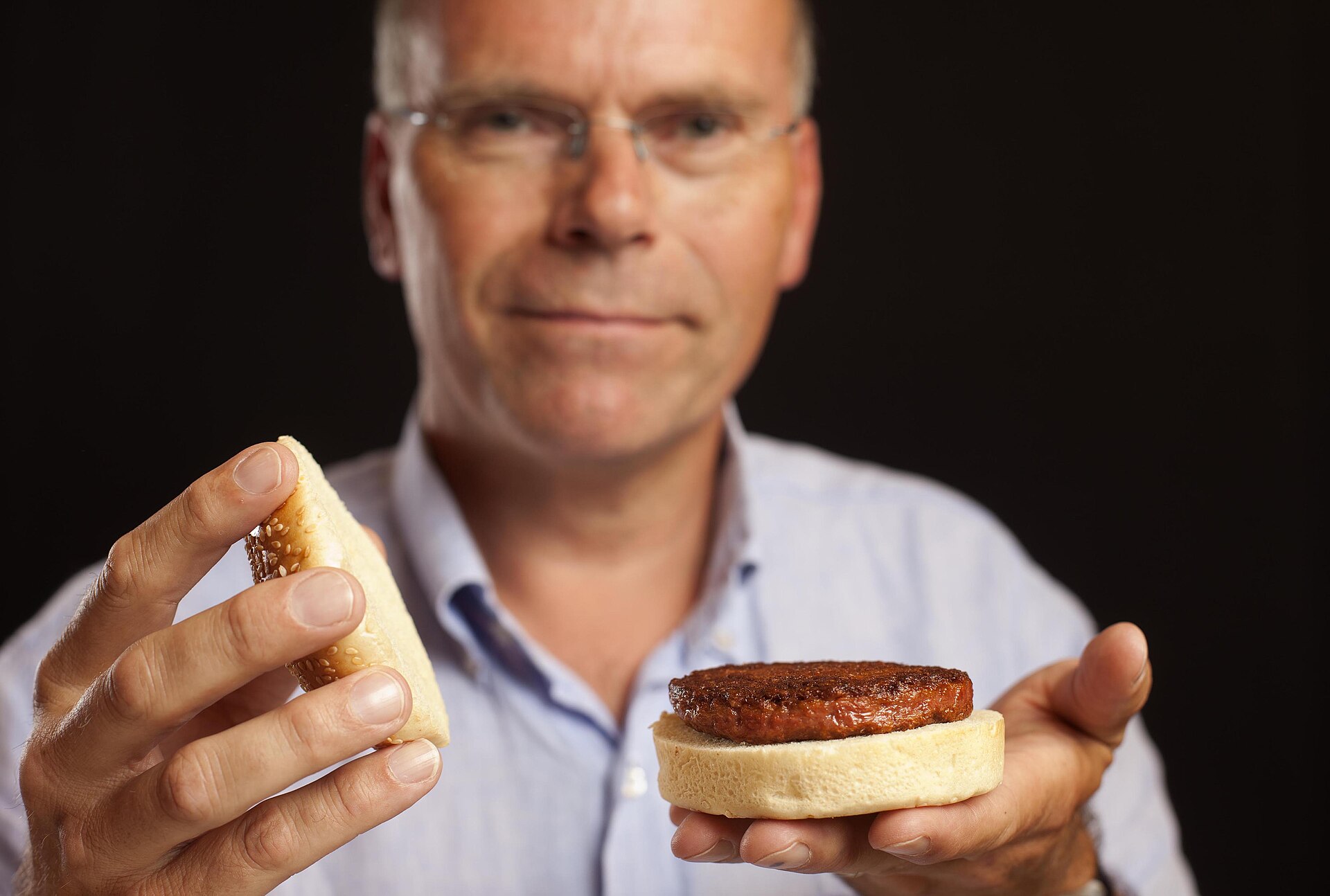
Featured image: Mark Post with Maastricht Burger by Mosa Meat, via Wikimedia Commons (CC BY 4.0).
Reporting is based on the publicly available sources listed above and has been independently written by Food Tech Insider.