ECOFERM Consortium Targets Continuous Precision Fermentation With Cell Agglomeration to Cut Whey Protein Costs
A Dutch public-private consortium is setting out to fix one of the most stubborn cost problems in precision fermentation: the stop-start rhythm of fed-batch production. The ECOFERM project (Efficient Continuous Fermentation for Alternative Proteins) brings together NIZO Food Research and its Biotechnology Fermentation Factory (BFF), fermentation technology developer DAB.bio, precision-fermented dairy protein producer Vivici, ingredients group dsm-firmenich and Van Hall Larenstein University of Applied Sciences.
The two-year programme is funded through TKI Agri & Food, the Dutch mechanism under which industry, research institutes and government co-finance food innovation work. The partners have not disclosed a budget.
Why fed-batch economics hold precision fermentation back
Almost all commercial precision fermentation today runs in fed-batch mode. A tank is filled, inoculated and fed until the run ends, then it is emptied, cleaned, sterilised and restarted. Every turnaround is time in which an expensive vessel produces nothing, and that downtime feeds directly into the cost per kilogram of proteins such as animal-free whey, casein and egg white.
Continuous fermentation keeps the vessel producing while product is harvested, which in principle raises volumetric productivity and carbon yield. In practice, conventional continuous set-ups such as chemostats have drawbacks of their own. The productive microbes wash out of the reactor along with the product stream, long runs are exposed to contamination and genetic drift, and output can decline over time. Separating cells from product also normally depends on membranes or centrifuges, which add energy use and capital cost downstream.
Cell agglomeration as the retention mechanism
ECOFERM’s central idea is to keep the biomass in the tank by making it clump. Using controlled cell agglomeration and in-situ biomass retention, the consortium wants the production organisms to stay inside the bioreactor as aggregates while the protein-bearing liquid is drawn off, without the energy-intensive separation step.
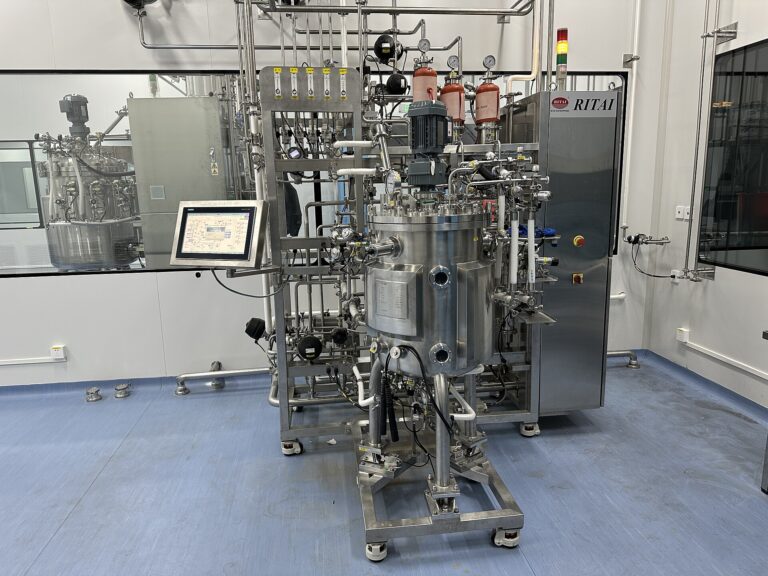
The experimental work will run on DAB.bio’s FAST reactor. The partners say the research will cover the biological, engineering and operational parameters needed to keep agglomeration stable over long runs, the robustness of the process, and strategies for taking it to industrial scale.
“Continuous fermentation is widely viewed as a critical next step for the maturation of precision fermentation,” said DAB.bio chief executive Eric van der Meer, adding that the goal is to make continuous production practical for the alternative protein industry.
Robyn Eijlander, project manager at NIZO Food Research and the BFF, said precision fermentation still needs process innovation to improve its production economics, and described the combination of continuous operation and efficient biomass retention as one of the most promising opportunities in the sector.
Beta-lactoglobulin as the test case
The project will use precision-fermented proteins including beta-lactoglobulin (BLG), the main whey protein in cow’s milk, as demonstration cases. That choice puts a commercial producer at the centre of the trial. Vivici, which was set up with backing from dsm-firmenich and Fonterra, already markets precision-fermented BLG under its Vivitein brand, has US clearance for the ingredient, and works with contract manufacturers in Europe and the US. Vivici also runs a dairy protein application lab at NIZO.
The consortium expects its findings to transfer to other fermentation-derived ingredients beyond BLG, with the aim of establishing a platform process rather than a one-product fix.
What it means for alt-protein manufacturing
For ingredient buyers and investors, the significance lies in where the cost is. Strain performance has improved steadily across the sector, but capacity remains scarce and expensive, and downstream processing can account for a large share of total production cost. A process that runs longer between turnarounds and removes a separation step would change the capacity maths for contract manufacturers and brand owners alike.
The work also lines up with European policy. The partners frame ECOFERM as a contribution to the competitiveness of Europe’s biotech and food innovation base, in step with the European Commission’s food research and innovation strategy, which identifies the need for more precision fermentation infrastructure.
Continuous bioprocessing has long been used in sectors such as wastewater treatment and some biopharma steps, but it has not yet become standard for food proteins. ECOFERM’s two-year results will be an early test of whether cell agglomeration can deliver the stability that food-grade, high-volume production demands.
Sources & Credits
- Green Queen – Dutch consortium to advance continuous precision fermentation for alternative proteins
- vegconomist – Vivici, dsm-firmenich and DAB.bio test cell clumping as a route to continuous precision fermentation
- PPTI News – ECOFERM consortium targets lower-cost precision fermentation
- De Molenaar – New production method for precision fermentation
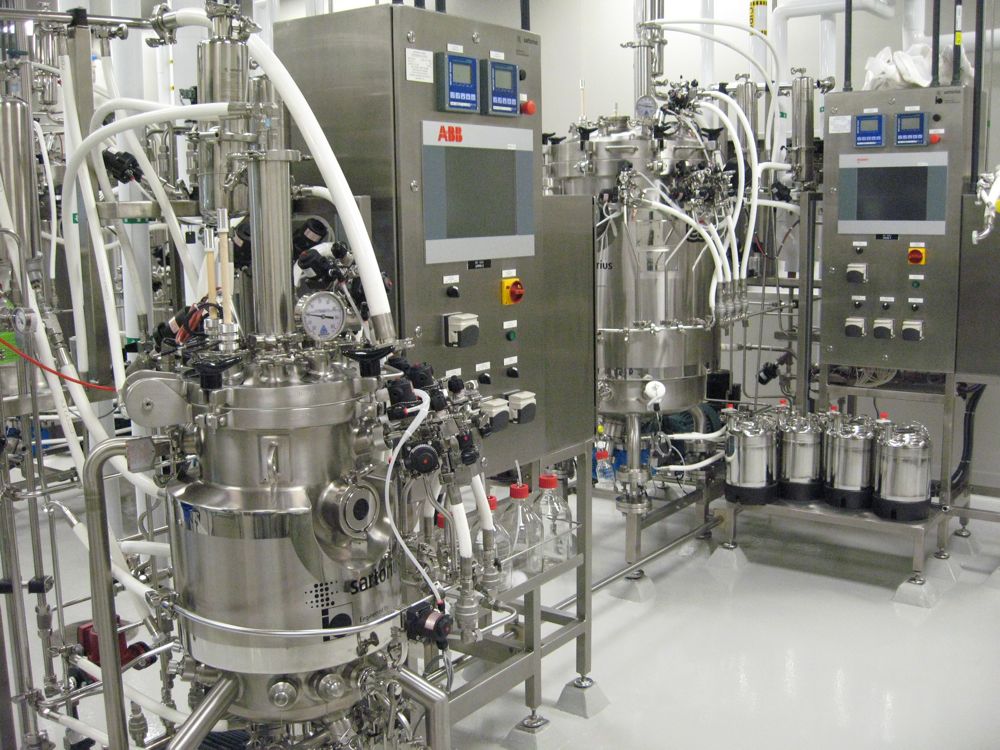
Featured image: Bioreactors at the BTEC facility by Rick Lawless, BTEC, via Wikimedia Commons (CC BY 3.0).
Reporting is based on the publicly available sources listed above and has been independently written by Food Tech Insider.